


How have prices progressed in the Iranian stock market?
Iran has experienced an upward trend in its oil exports over the past six months. This has strengthened the government's financial position, allowing it to intervene in the foreign exchange market to stabilize the Iranian rial when the dollar exceeded 53 tomans. By injecting foreign currency into the market, the government successfully reduced the exchange rate.
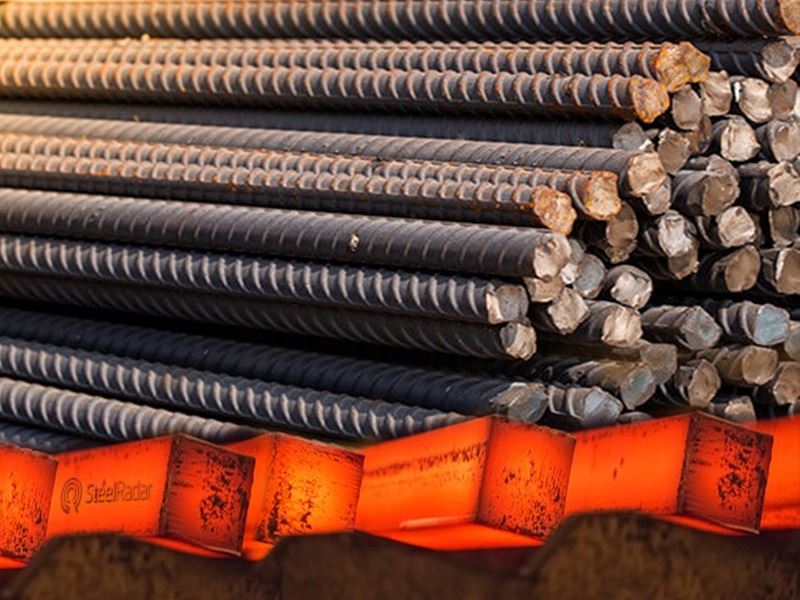
Meanwhile, the Iran Commodity Exchange has recently facilitated the supply of over 188,000 tons of 5sp billet. Demand for this billet reached 0.9 times the supply, and including matching transactions, 99% of the supplied billet was traded.
Furthermore, the highest billet price in today's transactions was linked to Chadormalu Industrial and Mining Company, with an average price of 19,418 tomans per kilo. Due to the ongoing stagnation in the steel market, it is anticipated that, should the exchange rate remain relatively stable and the base price formula for billet supply remains unchanged, further price decreases could be witnessed in the coming week. These developments come as the government strives to maintain economic equilibrium amidst fluctuating global oil exports.
Iran billet (30,000 t) $476.5 FOB (mid-November shipment):
The agreement, priced at $476.5 per ton on an FOB, signifies Iran's continued presence and competitiveness in the global steel market. The 30,000 tons of billet, a semi-finished steel product, is expected to meet the growing demand for steel raw materials in global markets. As Iran continues to navigate a dynamic and competitive global steel market, trade agreements like this one are instrumental in maintaining a steady flow of essential steel products. The November shipment is poised to provide a timely supply of high-quality Iranian billet to international buyers, supporting their production needs.
How are price trends progressing in rebar market in Egypt, Algeria, UAE and Jordan?
Egypt's steel industry is experiencing fluctuations in rebar prices. According to daily monitoring of iron prices in Egypt, rebar prices recently ranged between EGP 34,000 and EGP 31,800 EXW ($ 1100,31-1029,14), reflecting shifting dynamics in the sector.
Notably, some companies have maintained their rebar prices in the face of these fluctuations:
Ezz Steel is offering its rebar at EGP 32,135 ($1039,95), while Suez Steel holds the line at EGP 32,050 ($1037,23).
Beshay Steel and Egyptian Steel are both selling rebar at EGP 34,000 ($ 1100,31), and El-Garhy Steel maintains a price of EGP 31,500 ($ 1019,40).
Conversely, other companies have raised their rebar prices, possibly in response to market forces:
El-Marakby Steel has increased its prices from EGP 31,800 to EGP 33,377($1029,11-1080,14), reflecting a notable upward shift. Ashry Steel has also adjusted its prices, moving from EGP 32,000 to EGP 33,000 ($ 1035,58-1035,58).
Misr Steel, El Komy Steel, El-Ola Steel, and Al Gioshy Steel have seen price increases as well.
Misr Steel has raised its prices from EGP 31,000 to EGP 32,500 ($ 1003,22-1051,76), while El Komy Steel adjusted from EGP 30,500 to EGP 32,500($ 987,04-1051,76) . El-Ola Steel has increased its prices from EGP 30,000 to EGP 32,500 ($ 987,04-1051,76), and Al Gioshy Steel now offers its rebar at EGP 31,800, up from EGP 30,200 ($ 1029,11-977,33).
These price fluctuations indicate the ongoing dynamics within Egypt's steel market, with companies responding to a range of factors that influence supply and demand. As the industry continues to adapt to changing conditions, stakeholders will be closely monitoring how these developments affect the sector's stability and competitiveness.
Algeria's rebar prices dropped by $24 to $630 last Wednesday, maintaining a flat trajectory for a week.
The United Arab Emirates is preparing for changes in its rebar prices, with adjustments expected to take effect on November 1. Rebar prices will be set at $687 CPT Abu Dhabi and $689 CPT Dubai, reflecting the evolving dynamics in the region's construction materials market.
This shift in rebar prices highlights the UAE's commitment to maintaining competitiveness in the industry and providing stable pricing for stakeholders. The new price level is designed to align with market conditions, facilitating trade and supporting the growth of the construction sector in the UAE.
Additionally, in the region, Jordanian rebar prices are expected to range between JOD 510-514, which translates to $719-725 EXW. This price range underscores the economic interconnections in the Middle East's construction materials market and the region's importance in the global construction industry.
Saudi Arabia's Investment Minister, Khalid Al-Falih, revealed that the Kingdom's trade with European Union (EU) countries has reached $80 billion at the Saudi-European Investment Forum. He emphasized the growing economic partnership between Saudi Arabia and the EU, with 1,300 European companies investing in the Kingdom. Al-Falih highlighted Saudi Arabia's competitive advantages and its role as an international hub connecting Asia, Europe, and Africa. The forum provides a platform for business leaders to explore mutual economic growth opportunities between Saudi Arabia and the EU.
The steel industry in Saudi Arabia is abuzz with the latest pricing update, as Hot Rolled Coil (HRC) prices are announced at $585 per ton on a CFR for Dammam, a key industrial and trade hub in the Kingdom.



Comments
No comment yet.