


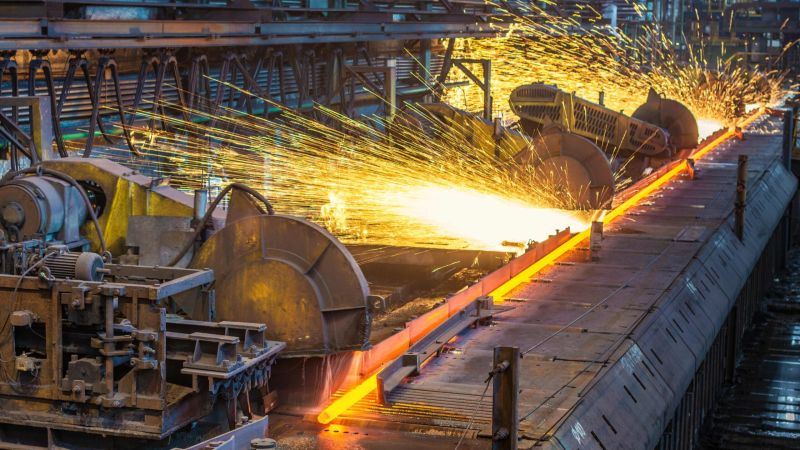
UAE Government Lifts Scrap Export Ban, Imposes Customs Duties
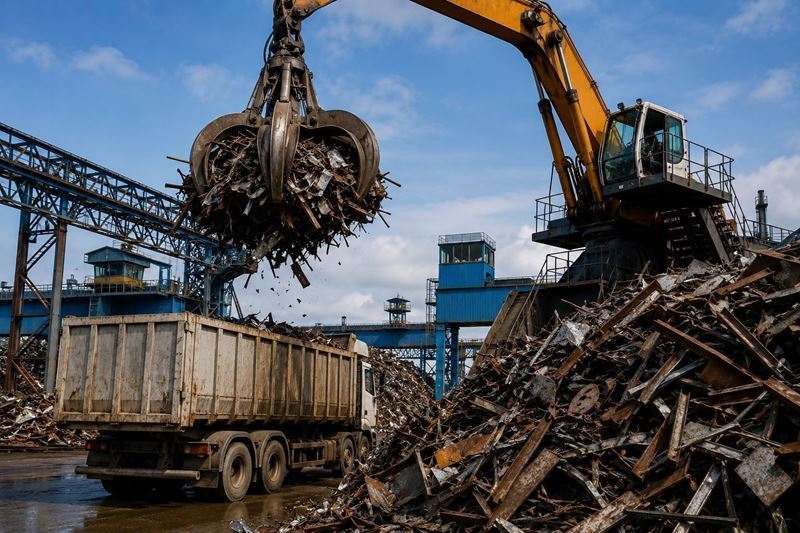
In a recent announcement, the United Arab Emirates government has officially ended the ban on the export of iron scrap and other industrial waste. However, to regulate this trade, customs duties have been introduced on exported goods. The imposition of a fee amounting to 400 dirhams ($109) per ton applies specifically to scrap falling under codes 720450, 720449, 720441, 720430, 720429, 720421, and 720410.
Emirati suppliers are anticipated to broaden their trade horizons, particularly in the Middle East and North Africa, with the lifting of the export ban on scrap. Previously constrained to domestic markets, this move is expected to open up new avenues for international commerce.
Nevertheless, concerns are raised among buyers who believe that to remain competitive in global markets, Emirati exporters will have to absorb the cost of customs duties. Failure to do so could potentially hinder their ability to present attractive offers to customers.
The removal of the scrap export ban may inadvertently pose challenges for small-scale smelters within the UAE, impacting their ability to source scrap materials.
Official reports on the imposition of export tariffs were disseminated through the official media on December 15, 2023, with enforcement commencing 30 days thereafter. Notably, in October 2023, the UAE government extended the ban on scrap exports for three months until December 19. The initial restrictions were instituted in May 2020 for a four-month period, later extended to ensure the supply of essential raw materials for domestic factories. It's worth noting that the export of scrap from the UAE to Pakistan, Bangladesh, and India remains unaffected by these measures.
Iran's Steel Market: Pricing Stability, Export Commitments, and Geopolitical Dynamics Unveiled
Report on Sponge Iron Supply Shortage
As of the latest update in Iran's market, the supply of sponge iron has dwindled to its lowest levels, triggering a surge in market prices. In February, the sale of sponge iron on the Iranian stock market witnessed 1,500 tomans per kilo compared to previous rates.
The preceding week witnessed a significant constraint in the availability of billet in the open market within Iran, leading to an uptick in its price. This increase is attributed to a dual challenge of supply constraints and a concurrent rise in the exchange rate. The effects of this scarcity and market dynamics were evidently reflected in Iranian stock market transactions.
The shortage in sponge iron supply has created a notable discrepancy in market pricing in Iran, with sellers capitalizing on the limited availability to command higher premiums. The impact of these developments is clearly observable in the Iranian stock market, where the price surge has been particularly pronounced.
Examining the sheet market reveals a distinct perspective, characterized by a sharp increase in prices coupled with a weakened demand. The notable price surge, juxtaposed with the subdued demand, has resulted in a decline in customer requests.
In the current week, FOB price for Iran's exported billet remained steady, maintaining a range of 487 to 490 dollars per ton. Notably, several steel companies opted to distance themselves from the export market, citing prior commitments to fulfill billet deliveries in February. Projections indicate that in the coming weeks, Iranian steelmakers may reintroduce export auctions, with a focus on billet deliveries scheduled for early March.
Concurrently, the ex-work price of Iran's exported rebar experienced a 2.8% decrease this week, settling in the range of $435-$440 per ton. This downturn is attributed to the heightened political developments and the escalation of conflicts, introducing significant political and geopolitical risks. The rebar market, predominantly serving neighboring countries, particularly Iraq, witnessed a pronounced price drop as a consequence.
the price of Iran's export slabs remained unchanged at 490 dollars per ton, indicating stability in this segment of the market.
In a significant development within Egypt's steel market, the prices of rebar have experienced a substantial upswing for the majority of companies this week. Compared to the previous week, prices have surged by amounts ranging from EGP 3,000 to EGP 6,500. This week's pricing spectrum spans between EGP 42,900 and EGP 48,500, whereas last week's prices ranged from EGP 41,000 to EGP 44,500 on an Ex-Works (EXW) basis.
A detailed breakdown of the current prices for various steel companies reveals the following figures:
Ezz Steel: EGP 48,300
Suez Steel: EGP 48,300
Bishay Steel: EGP 42,900
El Marakby Steel: EGP 48,300
Egyptian Steel: EGP 44,500
Ashry Steel: EGP 45,000
Garhy Steel: EGP 47,500
Misr Steel: EGP 48,500
El Komy Steel: EGP 44,500
El Ola Steel: EGP 44,500
Al Gioshy Steel: EGP 47,000
In a recent announcement, Ezz Steel Company has disclosed the revised prices for flat steel effective from January 20, 2024.The new pricing structure is set at EGP 49,300 per ton, reflecting a noteworthy increase of EGP 3,800 compared to the prices observed in the previous week and month. These prices are EXW and include the applicable value-added tax.
$1= EGP 63
In the aftermath of a recent ship hijacking incident in the Red Sea, the transportation and insurance costs associated with the export of rebar from Türkiye to Yemen have experienced a significant surge. This has consequently led to an increase in the prices of Türkiye's rebar in various Yemen.
Yemeni Rebar Prices (12-32 mm): The wholesale prices of Türkiye's rebar (12-32 mm) in Yemeni cities are as follows:
Mukalla: The wholesale price of rebar in Mukalla is currently at $750 per unit.
Aden: In Aden, the wholesale price has risen to $740 per unit.
Hudedah: The wholesale price of rebar in Hudedah stands at $778 per unit.
Sanaa: Sanaa has witnessed a wholesale price increase, with rebar at $790 per unit.





Comments
No comment yet.