


Global fluctuations and Iran's economic measures
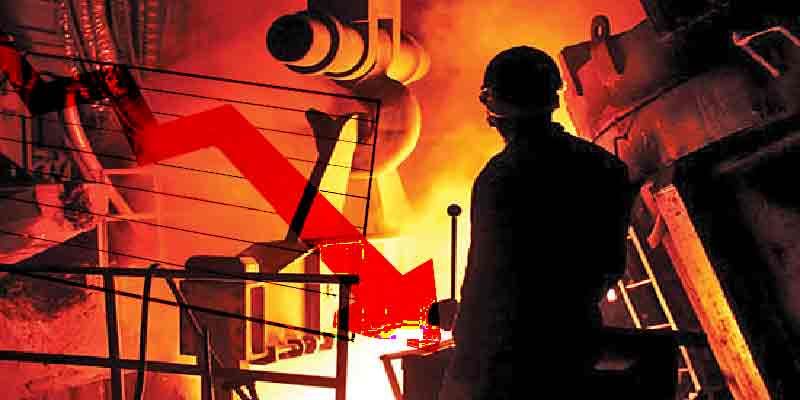
The steel market, both globally and in Iran, experienced fluctuations in prices and demand over the past year. In foreign markets, billet prices declined from $600 per ton to $450 per ton between December and July. Iranian billet prices also mirrored this trend, dropping to 212,240 rials by August.
Global prices rebounded to $470 per ton due to producer resistance, impacting the Iranian market positively until September, when government interventions caused a decline. Government measures, such as levies on mineral exports and restrictions on sponge iron purchases, aimed at controlling prices for facilitating exports but resulted in shutdowns of many rolling mills.
Credit sales increased transaction volume but hindered price growth. The market entered a semi-closed phase towards the end of the Iranian year, coinciding with Ramadan, with minimal demand and sales. Despite these challenges, efforts to maintain prices around $500 per ton FOB continued, with producers proposing prices ranging from $450 to $507 per ton FOB. The Khuzestan Steel Company (KSC) managed to secure sales in the Persian Gulf region, while Saba Gulf Steel Company plans to re-enter the market. Market conditions suggest ongoing support for price stabilization at a minimum level in the near term.
Green initiatives and production surge in Iraq
The Iraqi Ministry of Oil is spearheading various energy initiatives, including a green hydrogen project and solar energy station. Minister Hayan Abdul-Ghani presented a draft law for renewable energy, aiming to secure contracts for 3,700 megawatts of clean energy by year-end. Additionally, the ministry launched its first tender for carbon conservation projects. Collaborations with international firms, such as Total Energy, are underway to enhance gas production. Iraq also plans to launch new energy projects, while its oil production has doubled in recent years to exceed 4.7 million barrels per day.
March fluctuations in UAE rebar prices
In the first week of March, there were significant fluctuations in construction steel prices in the United Arab Emirates (UAE) markets. By the end of February 2024, there had been a notable increase in rebar prices. Factory gate producer prices rose by $15, reaching $740 per ton.
During the second week of March, the UAE. market experienced a strong surge in demand. Due to limited supply in response to the increased demand, prices continue to move upward. Despite the sudden hike, prices have stabilized this week.
Saeed Ghumran Al Rumaithi, CEO of Emirates Steel Group Arkan, highlighted the UAE's remarkable surge in rebar demand amidst global conditions and reiterated the company's commitment to maintaining stable rebar prices locally.
Amidst a surge in sales and market share, the company emphasizes stability in local rebar prices, emphasizing growth in value-added rebar products.
Saudi Arabia's steel market witness price fluctuations
In the latest update from the Saudi Arabian steel market, significant changes in prices have been observed across various steel products.
The price of Hot Rolled Coil (HRC) has experienced a notable decline, dropping by $10 to $680 CFR in Dammam, reflecting market adjustments.
Billet prices have seen a substantial decrease, plummeting by $20 to reach $550 CFR in Jaddeh, indicating a significant shift in market.
In contrast to the fluctuations seen in HRC and billet prices, the price of Rebar has remained stable at $630.00, indicating resilience in this segment of the market amidst broader changes.
These developments highlight the nature of the steel market in Saudi Arabia, with prices responding to various factors including global trends and local demand.
Egypt and China discuss collaborative industrial zone
In a significant development, Egyptian and Chinese officials have entered into discussions regarding the establishment of a collaborative industrial zone along the picturesque Mediterranean coast. The proposed initiative aims to position Egypt as a thriving manufacturing and export hub for Chinese products.
Egypt’s Minister of Trade and Industry, Ahmed Samir, and Zhang Tao, the acting Chinese Ambassador to Cairo, recently convened to deliberate on the progress made since their last meeting with Samir’s Chinese counterpart, Wang Wentao, in Cairo.
The envisioned industrial zone will be strategically located along the Mediterranean Sea, providing easy access to both local and international markets. Its primary objective is to facilitate exports to Europe and America.





Comments
No comment yet.