


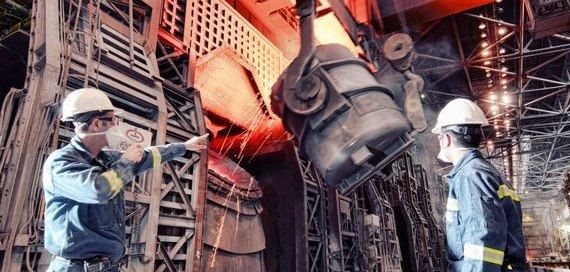
China
Rebar futures in China have recently witnessed a decline, slipping below the critical threshold of CNY 3,860 ($606.62 USD) per tonne, which brings them close to the lowest levels observed in a month. This downtrend is occurring against the backdrop of persistent concerns surrounding the sluggishness of the Chinese economy, particularly in the wake of the extended Lunar New Year festivities.
Simultaneously, in the iron ore market, the most traded May contract on China's Dalian Commodity Exchange experienced a decrease of 0.52% during daytime trading, settling at 951.5 yuan ($132.20) per metric ton. Additionally, other key indicators such as coking coal and coke also saw declines, with DJMcv1 falling by 4% and DCJcv1 by 3%. Meanwhile, on the Singapore Exchange, the March iron ore reference indicator, SZZFH4, saw a notable decline of 2.91%, reaching $127.45 per tonne.
The dynamics in steel futures were mixed, with rebar (SRBcv1) and hot rolled coil (SHHCcv1) experiencing declines of 1.0% and 0.88% respectively on the Shanghai Futures Exchange. Conversely, wire rod (SWRcv1) saw an increase of 0.52%, while stainless steel (SHSScv1) rose by 0.55%.
Turning to spot prices, as of February 18, the first working day following the Lunar New Year break, the spot price of Q235 4.75mm HRC in China stood at Yuan 4,101/tonne ($570.1/t) including VAT, representing a modest 0.6% increase from February 9.
Amidst these market movements, China finds itself grappling with a notable reversal in scrap usage, casting doubt on the country’s ambitious goal of reaching a 15% share of EAF steel production by 2025. The cyclical and long-term challenges contributing to the lower-than-expected scrap utilization are expected to persist in the short term. Consequently, this scenario has positioned iron ore and coking coal as beneficiaries, with China’s scrap utilization currently at its lowest level in six years.
India
The Indian government has reportedly allocated capital expenditure worth 11 trillion rupees ($134 million) for the 2024/2025 fiscal year (starting in April). This figure is higher than 11.1% in the previous year.
According to Dilip Oommen, President of the Steel Association of India, this decision will lead to an increase in domestic steel demand, encouraging private investments and job creation.
The Indian scrap import market remains subdued due to cautious buyers amid a slowdown in demand. European-origin mill scale scrap was offered at $417-427/ton, while HMS 80:20 was priced at $389-393/ton CNF India.
Buyers are hesitant, opting to retain excess stock from previous bookings at lower rates. With dwindling end-user demand, offers are now $10-15/ton lower.
In Alang, Gujarat, ferrous scrap prices have continued their upward trajectory, rising by Rs 200-300/ton compared to last weekend.
The current price for HMS (80:20) scrap stands at Rs 34,200 ($412)/ton ex Alang shipyard.
Taiwan
Taiwan's iron and steel industry is experiencing a series of fluctuations and adjustments, reflecting broader trends in global markets. Feng Hsin Steel Co., Ltd., a significant player in Taiwan's electric furnace mills, recently announced changes to its pricing strategy. This week, the company decreased its purchasing price of scrap by NT$200/ton to NT$11,000/ton, while simultaneously dropping the price of rebar by NT$300/ton to NT$19,700/ton. However, the section price saw an increase of NT$400/ton to NT$26,700/ton, while the surcharge of channel sections decreased by NT$400/ton.
The adjustments in pricing were influenced by various factors, including international market dynamics. Feng Hsin Steel noted the absence of offers from US scrap shipments last week. Meanwhile, the prices of Japan’s H2 scrap and US containerized scrap both experienced a 1.3% decline week on week, settling at US$378/ton and US$370/ton, respectively. Additionally, Australia's iron ore price decreased by 0.8% week on week.
In contrast, Tung Ho Steel Enterprise Corporation, another prominent player in Taiwan's construction steel products sector, raised the base prices of its H-beam by NT$500/ton for the second half of February. The company kept other surcharge methods unchanged.
Further contributing to the industry landscape, China Steel Corporation (CSC), Taiwan's largest carbon steel manufacturer, announced new prices for March. CSC's adjustments ranged from NT$0 to NT$300 per ton across various steel products. Notably, prices for certain types of electro-galvanized steel coil and hot-rolled plate/coil experienced increases, while others remained unchanged.
The rationale behind these price adjustments includes global economic forecasts and market trends. The International Monetary Fund (IMF) raised its projection for global economic growth to 3.1% for 2024, with a concurrent slowdown in global inflation. This cycle suggests an upward trend in the global manufacturing industry, leading to gradual replenishment demand in the steel sector.
In terms of trade dynamics, Taiwan's steel imports and exports have shown significant fluctuations. January 2024 saw a notable increase in imports, with hot-rolled stainless steel flat-rolled products soaring by 143% month on month. However, exports also increased, particularly for cold-rolled stainless steel products, which saw a month-on-month rise of 32%.
Vietnam
Vietnam's hot rolled coil import market experienced a decline in prices this week due to Chinese suppliers cutting prices amidst weakened market sentiment and a downturn in steel futures in China.
HRC offers from China (3-12 mm thickness) are at approximately $548-555/ton CNF Vietnam.
Offers for Q235 and Q195 HRC from China are prevailing at around $550-555/tonne cfr Vietnam, with limited trading activity observed after the Lunar New Year holiday. Similarly, rerolling SAE 1006 HRC from China is offered at $585-590/t cfr Vietnam, down from previous levels around $600/t cfr.
Despite lower prices, recent deals for SAE 1006 HRC were not reported. This indicates a responsive import market in Vietnam, with prices reacting to domestic and international factors.
Japan
Japan's iron and steel industry is witnessing strategic pricing decisions from key players amid fluctuating market conditions. Tokyo Steel Manufacturing Co Ltd, a prominent steel manufacturer, recently announced its decision to maintain steel product prices unchanged for March. This move aims to allow the market to absorb the price increase implemented in February, which saw a 1.9% hike in response to evolving market dynamics and escalating raw material costs. Consequently, the prices of hot-rolled coils will remain steady at 107,000 yen per ton ($713), while H-shaped profile prices will hold at 127,000 yen per ton ($846).
Meanwhile, Meiji Steel, another significant coil producer in Japan, has unveiled plans for price adjustments slated for April 2024. The company intends to raise the sales prices of coated steel sheets and construction materials by 10,000 yen per ton, effective for deliveries commencing in April. This increase encompasses various products, including electro-galvanized steel sheets, hot-dip galvanized steel sheets, and those boasting high corrosion resistance. Additionally, the adjustment will also factor in logistics costs, indicating a comprehensive approach to pricing strategies.
South Korea
The South Korean iron and steel industry experienced mixed trends in January, with notable shifts in production, sales, and market dynamics. Data reveals that sales of hot rolled coil (HRC) by major blast furnace steelmakers such as POSCO Steel and Hyundai Steel recorded a slight decrease compared to the previous month. This decline coincided with a reduction in HRC production by 100,000 tons, accompanied by a 45,000-ton decrease in sales. However, amidst this trend, domestic demand surged significantly, witnessing a notable increase of 65,000 tonnes to reach 590,000 tonnes. Remarkably, domestic sales accounted for 61% of the total sales of both factories, indicating a notable uptick in the local market.
Indonesia
Indonesia lowered the coal benchmark price for its high grade coal to $124.95 per metric ton for February, from $128.85 in January, while prices for the other grades were mixed, an energy ministry decree showed on Monday.




Comments
No comment yet.