


Turkey's billet import volume weakened in the first quarter of 2023. The biggest factor in the weakening of this volume is considered to be the decrease in Turkey's export demand. It is due to the billet import duty of 22.4%, which can be avoided under the processing regime if the finished steel product made from billet is exported as a result of the decline in export demand.
Billet purchases slowed down
Due to the lack of demand for long steel exports, Turkish steelmakers can no longer benefit from this system. As another option, mills had to choose to use more imported scrap for production, and slowed down their billet purchases.
According to the assessments made to SteelRadar, one of the market experts, this trend will continue in 2023 if export demand for rebar does not recover.
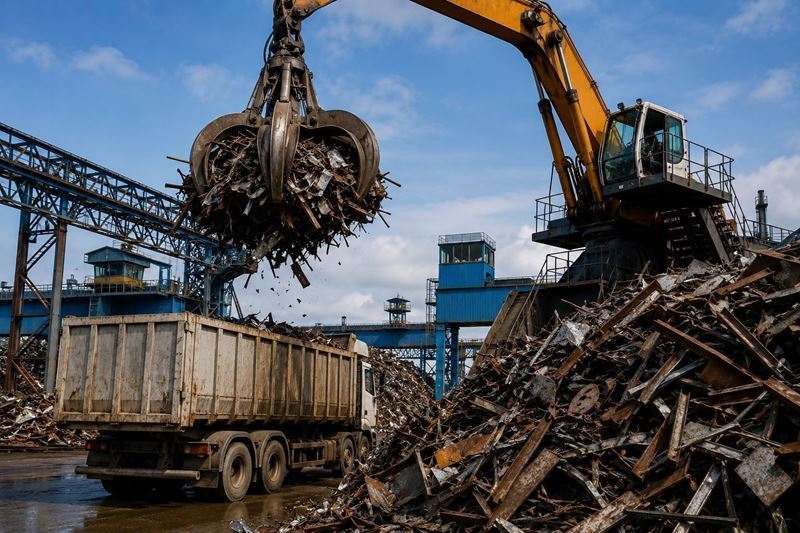
Together with all these developments, Turkish steel producers have directed more import scrap for production and support scrap prices. Click here for a detailed review on the subject.
Turkish producers showed no interest in Russian billet
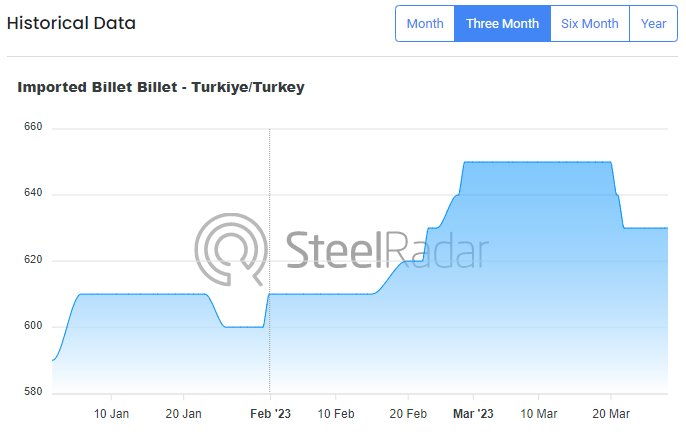
For rebar production, billet offers from various origins were trading in the range of $590-610/ton at the beginning of 2023, gradually increasing in the second half of February to $650/ton cfr Turkey at the end of February. Imported billet prices decreased to $620-630/ton range in the second half of March due to slowing demand. By the end of the first quarter, the biggest factor in the slowdown in demand was the uncertain and negative market expectation in Turkey. While the slowdown in purchases due to the sluggish market in the past weeks has reduced the offers for scrap, Turkish mills have not shown any interest in Russian semi-finished products.
In the short term, billet prices are expected to continue to weaken.






Comments
No comment yet.