


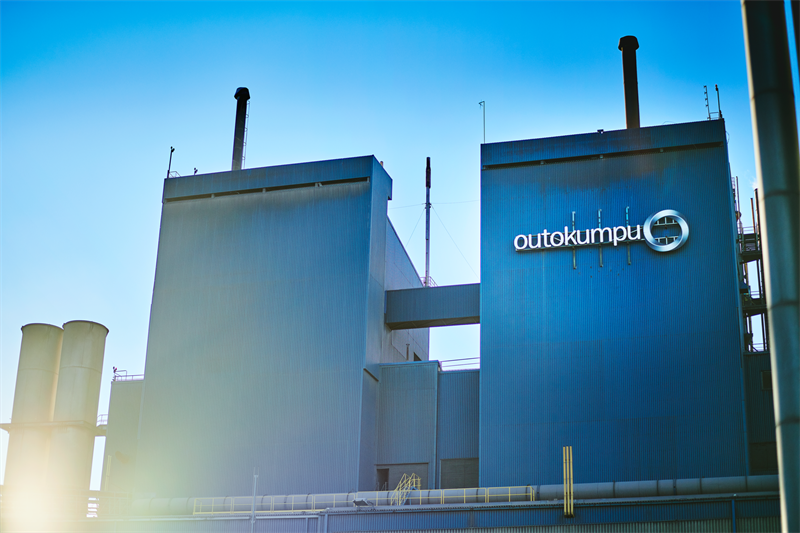
Outokumpu has welcomed the provisional agreement reached between the European Commission, the European Parliament, and the Council of the European Union on a new trade measure designed to protect the EU steel sector from global overcapacity.
The agreement establishes a new tariff-rate quota system that will come into force after the current steel safeguard measures expire on July 1, 2026. Under the new framework, steel import quotas are expected to be reduced by approximately 47% compared to 2024 levels, while tariffs on out-of-quota imports will be increased to 50%.
Outokumpu stated that the regulation will strengthen protection for the European steel industry against global overcapacity, unfair competition, and carbon leakage risks. The company noted that weak demand, low-priced imports from Asia, and high tariffs in the United States have significantly reduced capacity utilization among European producers.
The company also emphasized its support for free trade, while stressing that it can only function under fair competition conditions. It said that subsidized steel imports from Asia and circumvention of existing safeguard measures are creating imbalances in the sector.
In the statement, comments from Outokumpu CEO Kati ter Horst were also included. She highlighted Europe’s low-carbon stainless steel production and stated that the Carbon Border Adjustment Mechanism (CBAM) is an important balancing tool, but not sufficient on its own.
The company also expressed support for the inclusion of the “melt and pour” principle in the regulation, which defines the country of origin based on where the steel is produced, aiming to prevent quota circumvention via third countries.
Under the new system, unused import quotas will be allowed to be carried over between quarters in the first year, while this flexibility will be reassessed product by product by the European Commission in subsequent years. Outokumpu said this flexibility is important for supply chain stability.



Comments
No comment yet.