


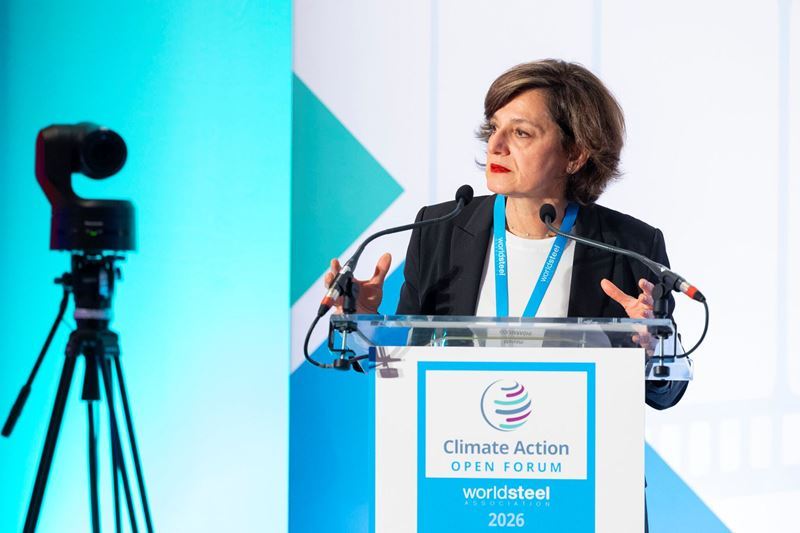
The two-day conference, which brings together steel producers, equipment manufacturers, suppliers, policymakers, environmental NGOs, financial institutions, and academics, emphasized that the future of the steel industry lies in collaboration and knowledge sharing. This year’s forum is assessing the steel sector’s progress in its green transition journey to date while discussing the key enablers that can help producers accelerate efforts toward achieving ambitious climate targets.
The forum officially commenced with an opening session that provided a comprehensive assessment of the global transition process. Following opening remarks by Edwin Basson, Uğur Dalbeler, and Åsa Ekdahl, a panel titled “When Risk Takes Centre Stage – Physical Risk and Insurance” was held under the moderation of Andrew Purvis.
As part of the panel, Maryam Golnaraghi delivered a strategic presentation based on her study, “Strategic engagement with the insurance industry to enhance core business climate resilience,” outlining the climate-related risks facing the steel and broader industrial sectors.
In her presentation, Dr. Golnaraghi stated that intensifying extreme weather events and slow-moving climate trends are directly affecting companies’ assets, operations, supply chains, workforces, and logistics networks. She emphasized that decarbonization and climate resilience are deeply interconnected, adding that global economic losses are not driven solely by climate change. According to Golnaraghi, socio-economic factors such as poor land-use planning, outdated building codes, and aging infrastructure are also increasing the vulnerability of businesses.
She noted that resilience challenges cannot be addressed by companies alone and require coordinated action from a complex ecosystem of stakeholders ranging from local governments to financiers. Insurers and reinsurers, she said, ultimately bear the financial consequences of this increasingly dynamic risk environment.
Golnaraghi further highlighted that rising insurance costs and growing difficulties in securing coverage are beginning to constrain the design, construction, and operation of industrial projects. She argued that the traditional model, under which insurers become involved only during the construction and operational phases, is no longer sufficient.
According to Golnaraghi, insurance risk engineers should be integrated into projects at the earliest stages, including site selection and feasibility assessments. She added that strategic partnerships with the insurance industry—covering forward-looking risk modelling, research and development of resilience solutions, and risk-sharing mechanisms—will play a vital role in helping industrial companies achieve their decarbonization objectives while reducing insurance premium costs.




Comments
No comment yet.