


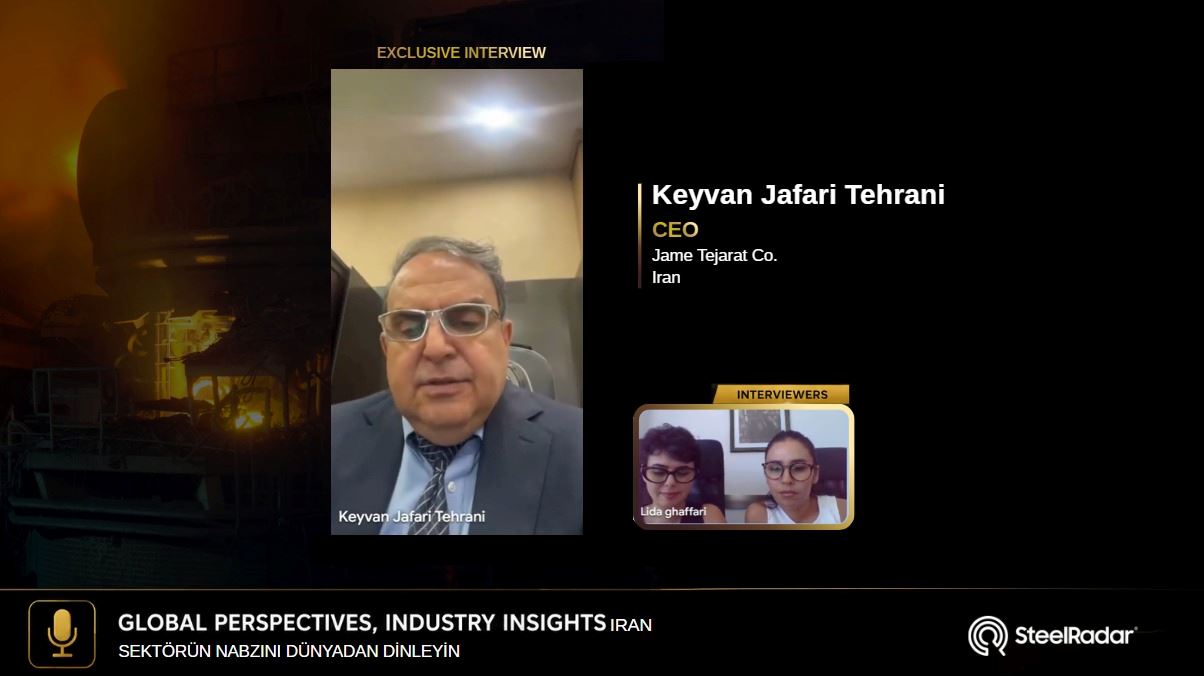
What kind of impact have the Iran–US tensions and the war situation had on production, exports, and logistics in the Iranian steel sector?
First of all, I would like to thank SteelRadar for this interview. I know you are already aware of the developments of the past 10 days. We were pleased that the tensions had come to an end. However, on July 8, a new US attack took place in southern Iran. Because of these developments, the situation has become more complicated.
Obviously, in a war situation, the number of buyers interested in loading cargoes from southern Iranian ports decreases. We were hopeful that something positive could happen, but according to the latest reports, we have seen a number of missile strikes in Iran.
We have to wait and see what happens. We do not yet know whether exports will continue if the war persists. Freight rates are expected to increase accordingly. If you are a purchasing manager, I believe you should wait a while to see how the situation develops. I hope these tensions will end soon.
Iranian producers are continuing production without interruption
Has normalization begun in Iran’s steel and raw material shipments following the reopening of the Strait of Hormuz?
Regarding production, after the attacks that occurred a few months ago, we observed that repair work was carried out successfully, and Furnace No. 8 at MSC has returned to operation. As you know, MSC has eight furnaces. Furnace No. 8 was damaged in the attack, but it has now resumed production. Generally speaking, as far as steel production is concerned, Iranian companies are able to continue their operations properly. Compared with last year, steel production this year may be slightly lower.
As for exports, as I explained, everything had been proceeding smoothly during the past three weeks. Based on vessel movements, the overall situation was stable, and the number of vessels passing through the Strait of Hormuz was increasing day by day. However, because of the new attacks and the reactions that followed, we now have to see whether vessel traffic will continue or whether it will be disrupted again.
Gas and electricity shortages are affecting production costs
How have recent developments affected the competitiveness of Iranian steel producers through energy costs, freight charges, and insurance premiums?
The Iranian steel sector has always been competitive in terms of production costs, provided there are no major energy shortages. If we look back five years, we did not face such issues. However, over the past four to five years, Iran has experienced electricity shortages during the summer and gas shortages during the winter, both of which have affected steel production. I believe these factors have increased production costs.
In addition, due to sanctions—and especially during periods of war—freight rates have increased significantly. Before the war, and up to February 9, freight rates for some vessels sailing from southern Iranian ports to destinations such as China were below USD 25 per metric ton. However, because of port congestion, vessel owners also had to bear additional costs while ships remained at anchorage.
Overall, during the recent war, freight rates from southern Iranian ports to southern, northern, and river ports in China increased to USD 36, USD 37, and USD 38 per metric ton, respectively. Even after the reopening of the Strait of Hormuz and the removal of the US blockade approximately three weeks ago, rates remained high despite the decline in oil prices to around USD 70 -75 per barrel.
All of these factors, together with the costs associated with the war situation, have reduced the competitiveness of Iranian steel products, including raw materials. As I mentioned earlier, I hope these challenges will be resolved, cargo movements will increase, and Iranian steel products will regain their competitiveness in the international market.
The main challenge is international competition
What will be the biggest risks and opportunities for the Iranian steel sector in the second half of 2026?
The first and most important issue is the war situation. One point I would like to add is that, because of the war, some buyers of Iranian steel products and raw materials have already started turning to other countries. During the 12-day war, which lasted from June 13 to June 24, 2025, as well as during the recent Ramadan War, regular buyers of Iranian products began looking for alternative suppliers.
Therefore, I believe this will be one of the main challenges. Vietnam is also competing with Iran and has recently overtaken Iran as the world’s tenth-largest steel producer. I believe that this growing competition in the international market could become the sector’s primary challenge.
From a production perspective, the main challenge in the second half of 2026 will be gas supply shortages. I hope Iran will overcome these difficulties successfully and emerge from this situation stronger.




Comments
No comment yet.