


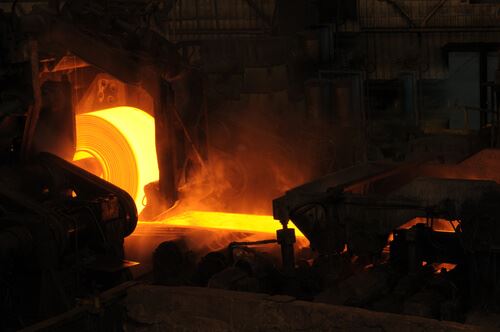
Russia has officially resumed HRC exports to India after a notable pause, marking a significant shift in its export strategy. Severstal, one of Russia’s top steel producers, has sold approximately 35,000–40,000 tons of hot rolled coil at $460–470/t CFR India for June shipment. This pricing is aggressively low and undercuts not only Indian domestic producers but also other international suppliers. It signals Russia’s renewed focus on price-sensitive markets in Asia, especially as it seeks to offset European lost volumes due to sanctions and trade restrictions.
Additionally, Russia is expanding into Latin America, where margins seem to be more advantageous. Severstal recently sold HRC to Brazil for $540/t CIF. The $70–80/t price differential demonstrated Russia's flexibility in adjusting pricing policies in response to market situations and reflected the diverse regional dynamics.
Although the pricing is generally regarded as uncompetitive, Indian mills have renewed HRC offers to the Gulf Cooperation Council (GCC) at about $590/t CFR. Due to lower-priced options and weak demand in the Gulf, regional traders say that buyers are hesitant to make reservations at these levels. If Indian exporters want to keep their market share, they may have to lower their offers in light of this, particularly when new Asian deals put further pressure on prices.
This week, Japan, likely Nippon Steel, closed two significant deals in the GCC, selling 10,000 tons of HRC to Saudi Arabia and 25,000 tons to the United Arab Emirates at a price of $505/t CFR. These agreements set a reasonable price standard for the area while also reaffirming Japan's presence in the Middle East.
In Europe, Turkish mills continue to offer HRC to southern EU markets at €550–570/t CFR, even with anti-dumping duties included. However, the European market remains sluggish, and many local buyers are delaying purchases. According to regional market participants, HRC prices in Europe are expected to fall further in the coming weeks. Buyers are in a wait-and-see mode, relying on existing inventories, while downstream demand continues to weaken, putting pressure on finished steel prices.
Market participants in Europe anticipate further declines in HRC prices due to low demand. Because they can afford to postpone purchases, buyers are in a wait-and-see attitude. They are sitting on large stocks, and downstream prices are declining due to final demand. The last few months of this year are anticipated to see a high level of imports as buyers and trading companies stock up before January 1, 2026.







Comments
No comment yet.