


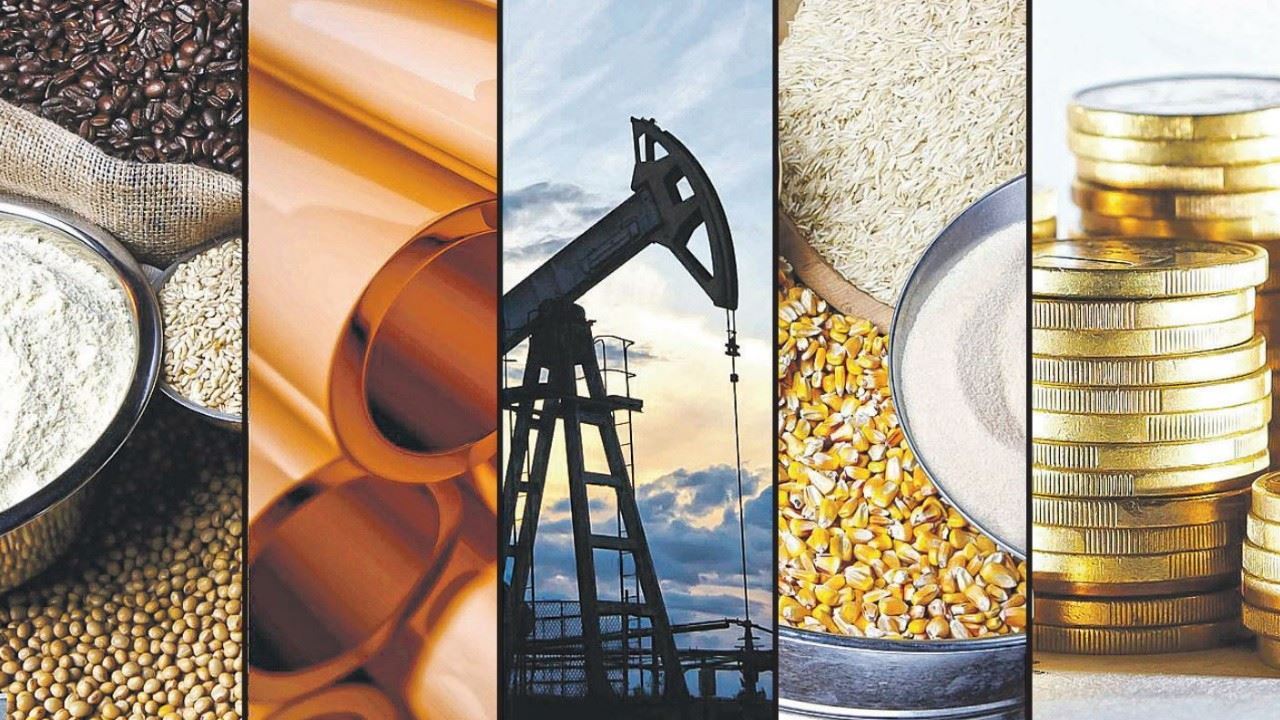
Commodity markets followed a negative course last week as demand for the dollar increased.
In the previous week, commodity prices, which started to appreciate against the dollar with the lower than expected inflation data in the USA, showed that the US Federal Reserve's (Fed) July meeting minutes announced last week that interest rate hikes will continue until the inflation in the country drops significantly, and that the Fed officials will continue to respond to inflation pressures. After pointing out that there is no tangible evidence of a decrease in value yet, it closed the week with depreciation.
While the indecision in the pricing of money markets continues to come to the fore, it is estimated that the Fed will increase interest rates by 50 basis points with 55 percent probability and 75 basis points with 45 percent probability in September.
Housing starts in the US fell 9.6 percent in July to 1 million 446 thousand, the lowest level since February 2021. Construction permits decreased by 1.3 percent on a monthly basis in July and decreased to 1 million 674 thousand.
The sharp decline in housing construction due to high mortgage (housing loan) rates and material prices supports the concerns that the housing market may contract further in the third quarter of the year. After the recent macroeconomic data, the pricing that the USA will enter into recession continues to strengthen.
The dollar gained 1.1 percent weekly against the Chinese yuan since September 2020, with the People's Bank of China (PBOC) lowering the 1-year borrowing rate from 2.85 percent to 2.75% last week, despite the risk of recession. It reached its highest level with .8171.
As the grain-laden ships started to set off within the scope of the grain shipment agreement, the dwindling supply concerns had a particularly negative impact on agricultural commodities.
On the other hand, with the increasing drought and high temperature concerns in Europe and the world, cotton prices tested 1.2 dollars and closed the week at 1.16 dollars with an increase of 6.7 percent after seeing the highest level in the last two months.
With these developments, gold depreciated by 3.1 percent, platinum by 6.9 percent, silver by 8.5 percent and palladium by 4.5 percent last week.
In the over-the-counter market, copper prices fell 0.2 percent, lead 4.2 percent, zinc 1.4 percent, aluminum 2.1 percent and nickel 3.6 percent.
Energy prices were mixed
On the energy side, which followed a mixed course last week, Brent oil decreased by 1.9 percent, while natural gas traded on the New York Mercantile Exchange gained 5.8 percent.
Expectations for a decrease in oil demand due to concerns about the global economic slowdown, the production increase planned by the Organization of the Petroleum Exporting Countries (OPEC) and OPEC+ group, which consists of some non-OPEC producer countries, the US's record crude oil exports, the resumption of production in Libya, as well as Russia Continuing exports, albeit less, from Iran and decreasing supply concerns suppressed oil prices.
Due to the "technical" problems experienced in the main pipelines carrying Russian gas to Europe, the shipments from the country decreased significantly, and the concerns about the increased supply of natural gas were reflected in gas prices.
Wheat and corn prices fell sharply after grain corridor agreement
A negative trend was observed in agricultural commodities last week, excluding cotton.
In line with the grain corridor agreement, there were downward movements in wheat and corn prices, with the departure of grain-laden ships in Ukrainian ports.
Wheat traded on the Chicago Mercantile Exchange fell 6.1 percent, corn 3, soybeans 3.3 percent and rice 0.4 percent.
While cotton gained 6.7 percent, coffee decreased by 4 percent, sugar by 3.1 percent and cocoa by 0.9 percent.
The ongoing inflation and recession dilemma continue to affect agricultural commodities negatively.








Comments
No comment yet.