


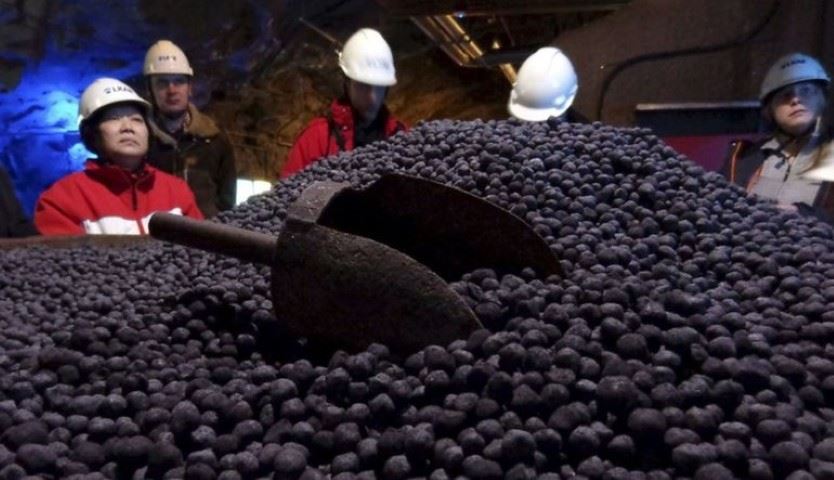
China is considering establishing an iron ore pricing center to increase the country's influence in the market, as part of its broader efforts to ensure stable supplies and prices following the recent price hikes that have had a significant impact on Chinese industries. Experts said on Sunday that creating a relevant financial system to enable active online transactions will help gain the upper hand in pricing power.
Xi Zhiyong, managing director of Dalian Commodity Exchange, said at the 17th China (Shenzhen) International Futures Conference that the exchange will increase its influence on key commodity prices and accelerate the establishment of soybean and iron ore pricing centers to serve businesses. and ensure supply chain security in agriculture, steel and other related industries.
Wang Guoqing, research director of Beijing Lange Steel Information Research Center, told the Global Times on Monday that with the establishment of a relevant financial system, online trading of iron ore will become more active, which will have an impact on pricing.
“China, the world's largest consumer and largest buyer of iron ore, will witness more contracts, thereby increasing pricing power,” Wang said. "Increased pricing power also helps prevent individual iron ore producers from dominating market prices. Better pricing power for China's steel industry can reduce costs and increase profits," he added.
China is making efforts to diversify its iron ore import sources. At least 60 percent of China's iron ore imports come from Australia, but other suppliers such as Brazil and South Africa are believed to have the potential to increase supply to China.
Iron ore prices fell in November due to weak demand. Industry analysts said that iron ore prices will fall further as China's steel demand slows and global players increase production.
In the first 10 months of 2021, China's crude steel production was 877 million tons, down 0.7 percent year on year.
"The iron ore pricing center is unlikely to face any difficulties in terms of implementation, but it may trigger some backlash from the international bulk commodity trading markets," Wang said. said.
As for when such a center can be established, he said, this should be in line with national policy, as gaining pricing power is a long-term process and the steel industry is closely linked to the country's carbon targets.
China is improving its scrap steel utilization rate, which is seen as a necessary move to help reduce reliance on iron ore imports. According to media reports, China's scrap usage reached 260 million tons in 2020 and is expected to reach 320 million tons by 2025.






Comments
No comment yet.