


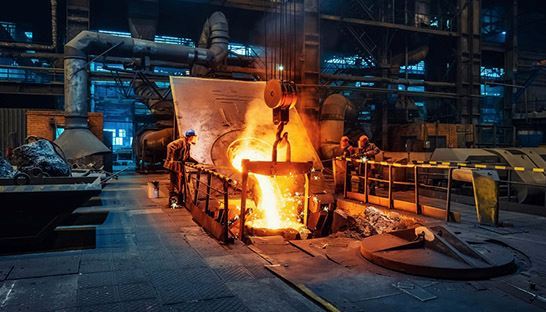
In the final week of October, rebar and billet prices in the Middle East steel market moved in different directions across countries. Prices declined with downward corrections in Oman and Qatar, while limited increases were noted in Jordan and Kuwait. This divergence was shaped by changes in regional demand dynamics, production costs, and the impact of logistical conditions.
Order volumes declined in Oman
Muscat Steel's offer for 12–32 mm construction steel bars fell to USD 648/ton FOB, down USD 2 from the previous day. The price of 150x150 mm billets also dropped by USD 3 to USD 479/ton CFR. This decline in prices was due to weaker export orders and stock pressure in the domestic market.
A similar trend was seen in profile products. The angle price fell by USD 2 to USD 725/ton EXW. The contraction in order volumes played a decisive role in the downward revision of prices.
Investments in Qatar are balancing the market
Qatar Steel's rebar price remained at the region's highest level of USD 725/ton EXW, but saw a limited correction of USD 3. Ongoing construction investments and stable demand outlook in Qatar kept prices high. However, rising production costs limited further price increases.
Supply-demand balance in Jordan
Jordan Steel raised its rebar price by USD 2 to USD 560/ton EXW. Stable domestic demand and supply constraints supported the upward movement of prices. This contributed to maintaining price stability in the Jordanian market.
Investments gaining momentum in Kuwait have had a positive impact on the market
Al-Oula Steel's rebar offer rose by $4 to $560/ton EXW. Public infrastructure projects gaining momentum in the country supported demand, causing prices to remain resilient. The sustainability of investment projects may continue to be decisive for price levels in the coming weeks.
Producers in Syria are trying multi-pronged approaches to stand firm
Hama Hadeed's 6–32 mm rebar price fell by $2 to $569/ton EXW. The product was offered for sale both in the domestic market and through export channels. This dual-track sales strategy, maintained despite currency fluctuations and logistical difficulties, demonstrated the producer's efforts to remain flexible.
Iron ore prices in Iran positively impacted billet production
The price of iron ore pellets from Iran remained stable at USD 95/ton FOB, providing cost advantages to billet producers in the region. DRI offers for shipments at the end of November were announced at USD 230/ton FOB and became the reference price for production planning.
However, a new inspection process has been introduced in Iran's foreign trade. With the introduction of strict controls on ships and aircraft, a slowdown in export speed and an increase in transportation costs are expected. In particular, the rise in insurance and freight costs for container-based mineral products has increased export costs, creating a scenario that could strain the country's trade balance.





Comments
No comment yet.