


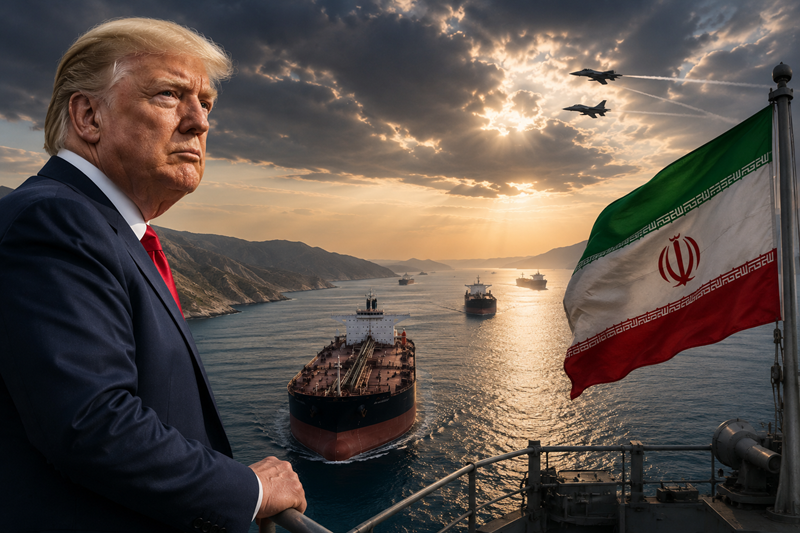
Recent tensions between the United States and Iran, which have escalated again following reciprocal military strikes, entered a new phase after President Donald Trump's announcement regarding the Strait of Hormuz.
In a statement posted on social media, Trump declared, "We are reinstating the blockade against Iran," confirming that the United States has reimposed its blockade on Iranian ports.
Trump added that "The Strait of Hormuz is open and will remain open. All other nations will continue to enjoy fair and unrestricted access to the waterway," while emphasizing that the U.S. will continue to provide maritime security in the Strait.
20% Security Transit Fee Based on Cargo Value
Trump also announced that commercial vessels transiting the Strait of Hormuz will be required to pay for the maritime security provided by the United States.
Referring to the U.S. as "the Guardian of the Strait of Hormuz," Trump stated that a 20% security transit fee, calculated on the declared cargo value of all shipments, will be imposed as compensation for safeguarding one of the world's most strategic energy shipping corridors.
He added that the necessary administrative procedures and regulatory framework for implementing the measure would be initiated immediately.
Islamabad Memorandum Effectively Suspended
The U.S. blockade of Iranian ports had previously been lifted under the Islamabad Memorandum of Understanding (MoU), which was signed to establish a lasting ceasefire and facilitate a comprehensive peace agreement between the two countries.
Under the agreement, both parties had committed to lifting their respective blockades in the Strait of Hormuz. Iran also undertook to ensure the safe passage of commercial shipping and, where necessary, to complete mine-clearance operations within 30 days.
However, the recent exchange of military strikes between the United States and Iran has reignited tensions across the Gulf region.
UN Calls for De-escalation
UN Secretary-General António Guterres expressed deep concern over the renewed escalation in the Gulf.
In a statement, Guterres said that attacks on commercial vessels in the Strait of Hormuz, coupled with U.S. military operations targeting Iran, risk further destabilizing the region. He urged all parties to exercise restraint and halt further military escalation.
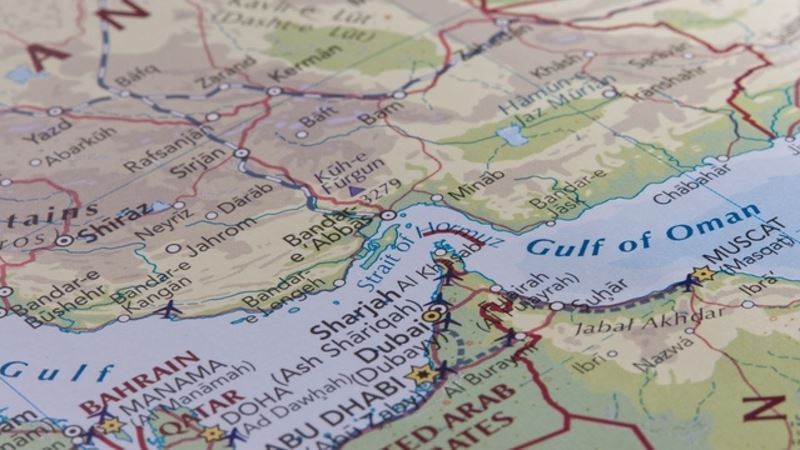
The Strait of Hormuz holds strategic importance for global energy markets, as it serves as a major transit route for a significant share of worldwide crude oil and liquefied natural gas (LNG) shipments. Any further developments in the region are expected to have a direct impact on oil prices, maritime transportation, freight markets, and global commodity trade flows.




Comments
No comment yet.