


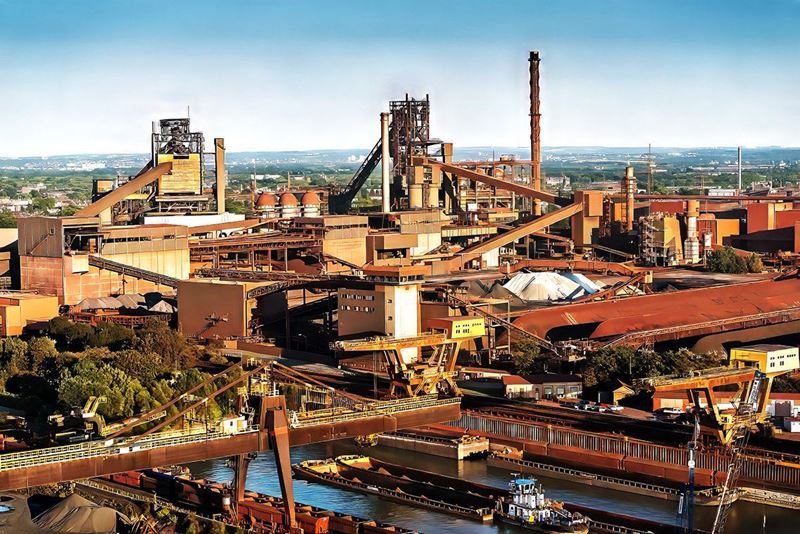
The work is being carried out to improve operational stability in hot metal production and maintain the reliability of the blast furnace, which is one of the key elements of steel production at the Duisburg site.
As part of the revamp, work will be carried out on the blast furnace’s central cooling systems and the refractory lining in its lower section. Cooling components will be replaced, certain sections of the refractory material will be renewed, and additional copper cooling elements will be installed.
The copper cooling elements, known as “mini staves”, are intended to improve cooling in the lower section of the blast furnace, where operating conditions are particularly demanding, and help protect the furnace lining.
Additional maintenance work will also be carried out on auxiliary facilities, including the gas cleaning and slag granulation systems. The work is aimed at increasing the technical availability of the blast furnace and supporting its reliable operation over the long term.
Europe’s largest blast furnace to be temporarily taken offline
Commissioned on October 28, 1993, the Schwelgern 2 blast furnace has a hot metal production capacity of approximately 12,000 tonnes per day and a hearth diameter of 14.9 metres. thyssenkrupp Steel describes the facility as Europe’s largest blast furnace.
During the revamp, which is expected to last approximately six weeks, occasional noise may occur, particularly between 10:00 p.m. and 6:00 a.m. The company stated that the work has been planned to minimise the impact on nearby residents as much as possible, although isolated noise cannot be completely avoided.



Comments
No comment yet.