


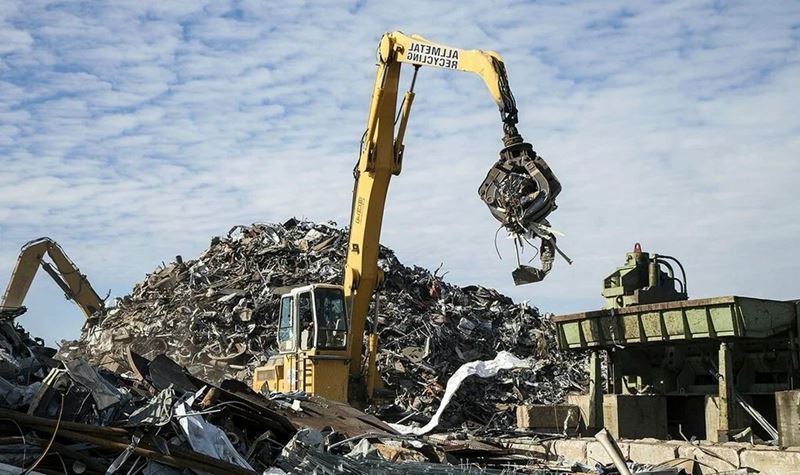
The global scrap market is facing various challenges and uncertainties. Political tensions, rising transportation costs and higher freight rates have pushed scrap prices down. The global scrap market has been trying to recover since the summer. Although a large-scale recovery is not expected in the short term, it is said that these prices are not sustainable in the long term.
SteelRadar's scrap connections see this in a number of ways. In the scrap market in the South Asian region, the Bangladeshi population is scared by the political situation and is not taking any steps forward. Demand for scrap is weak in India and Pakistan with rising transportation costs and higher freight rates. Pakistan is operating at 30% capacity. Cargoes from Bangladesh to India have been diverted to India's Chennai port due to difficulties in payment terms amid political uncertainties and a large number of distressed cargoes have been offered (these shipments have been diverted to India's Chennai port).
The downward trend in scrap continues and the US is currently in a recession due to political issues, banking problems and the election. Maintaining cash flow balance is very important. There are no big sales from Europe and the prices on the deals that have taken place are quite low. The major scrap exporters are not expected to give up so easily and European suppliers are expected to return to the central market soon.
US exporters believe that these prices in the $364-369 range do not reflect the European market as the Derichebourg dock price is a few dollars below the Bellwether ARAG (ARAG = Dutch and Belgian market similar to Benelux) dock price. Most industry representatives agree that there has been a big drop in the market. The restrictions we are facing on billet intake and incoming flows are not balancing each other out.
The correct market level should not be below 385, as Turkish mills need material to meet the better outlook for September and October. The market is expected to be in a stabilization cycle throughout August. This means that conditions will be quite difficult.
High supply continues to fight low demand
Recent developments in China and the decline in prices have had a major impact on the scrap trade, with Türkiye still ranking first in scrap imports, but high supply continues to battle with low demand in global markets. China cut bank loans in July. Bank lending is now said to be at its lowest level in China in 15 years. They are introducing a new rebar standard in China.
It is rumored that after the new standards, factories will be banned from using the products in their stocks and will move on to new products. Domestic market sellers had to pull back their price levels to finish their stocks. As the latest standards in China were renewed in 2018, many large-scale rebar producers gradually upgraded their steelmaking technology and added alloys to meet the standards.
With the mandatory implementation of the standards, only some small producers are required to meet the standard. Most steelmakers are also expected to start supplying the new standard products from mid-August. This has a major impact on the global markets and has a major impact on the scrap trade.
According to recent deals;
Deal from Europe to the Aegean region;
HMS 80:20 1/2 (35k) $369 CFR Türkiye
HMS 80:20 1/2 (25k) 368,5$ CFR Türkiye
Bonus (10k) 390.5$ CFR Türkiye
Deal from Europe to the Marmara region;
HMS 80:20 1/2 364,5$ CFR Türkiye





Comments
No comment yet.