


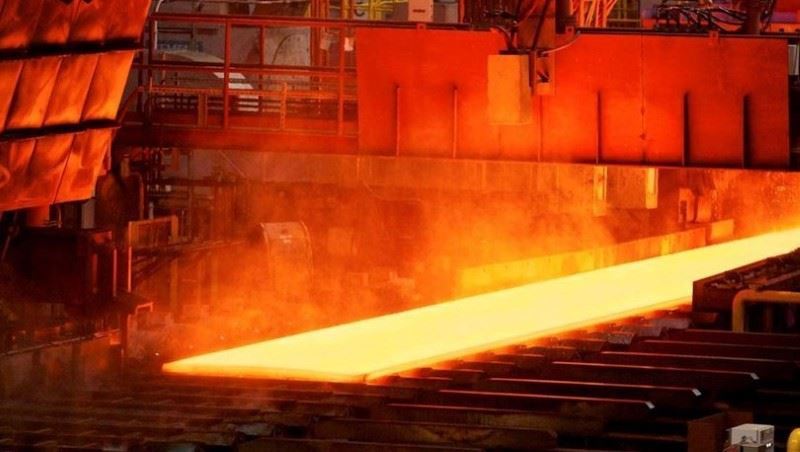
Considering the steel figures exported by Turkey to the European Union, it is estimated that the cost of the EU's carbon limit implementation to the steel industry may be between $436 million and $581 million annually.
According to the data of the Turkish Exporters Assembly, Turkey exported approximately 6.6 million tons of steel to the EU in 2020. While the data did not share how much of the exported amount is from ore and how much is from scrap, sources speaking to Bloomberg HT said that steel produced from scrap constitutes a large part of exports to the EU.
75% of steel production in Turkey is from scrap
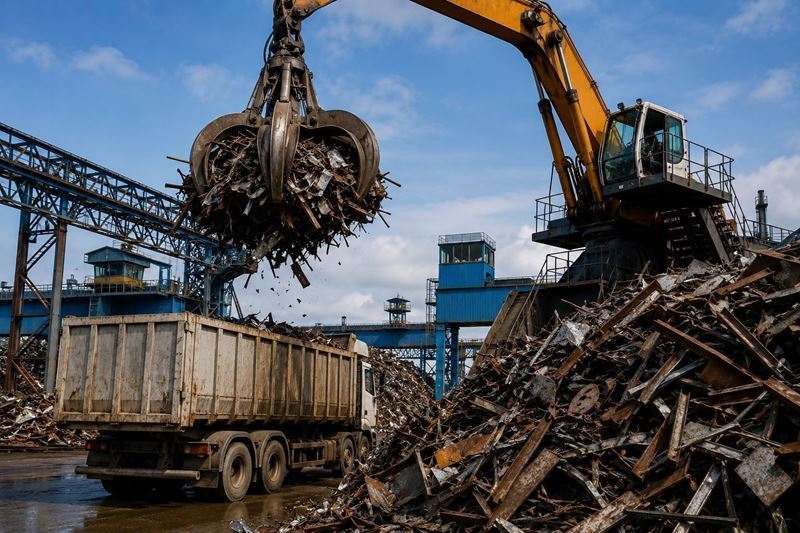
According to the reports of the Ministry of Industry and the Turkish Steel Producers Association, 75% of the steel production in Turkey consists of scrap.
According to Kardemir's 2020 sustainability report, the carbon emission of the company that produces steel from ore is 2.3 tons per 1 ton of steel produced, while the average carbon emission per 1 ton of steel produced from scrap is about 1 tonne, according to a study published in Nature Communications.
Tariff variance plays out $145 million
Gökçe Mete, Chief Secretary of the Climate and Policy Team of Stockholm Environment Institute, commented on the latest report of CBAM, “It is necessary to look at whether the carbon tax will be tariffed according to the country average or according to each company's own emissions. Because sometimes there is too much difference between the cleanest producers and the most polluting companies.”
Two different options in the carbon limit application
The EU, in a report it published in July, stated that for goods imported from outside the EU, importers may either have to pay at a fixed carbon emission value or they can pay according to their carbon emissions on a company basis.
Accordingly, responsible importers will have to determine their costs according to the country's average carbon emissions for the products they import, or take full responsibility and inspect the carbon emission figures of the companies they import and pay carbon tax on these figures.
The calculation of the cost of carbon emissions that the steel industry in Turkey may face for both scenarios is as follows:
Assuming that taxes will be paid at least as much as the carbon prices determined within the scope of the ETS, this requires a calculation based on current carbon prices.
The price per metric ton of carbon permits with December on August 9, tmaturity under the ETS stands at 56.66 euros. The amount companies have to pay for roughly 1 tonne of carbon emissions is around 56.66 euros.
Accordingly, considering that the carbon emission per 1 ton of steel produced from scrap, which constitutes a large part of the export, is around 1 ton, the cost of carbon emission is 436 million dollars at current prices for 6.6 million tons of steel exported to the EU in 2020.
The average carbon emissions of the entire steel industry in Turkey, weighted according to production from ore and scrap, is at the level of 1.33 tons of carbon emissions per 1 ton of steel. Thus, according to the carbon emission average of the sector, the cost of carbon emission of 6.6 million tons of steel exported is 581 million dollars.
Carbon tax will be paid at least as much as local producers
The EU, on the other hand, emphasized that within the scope of the Border Carbon Regulation Mechanism (CBAM), which will be implemented in 2026, carbon pricing will be applied to sectors such as cement, steel, iron, fertilizer and aluminum.
With CBAM, the EU makes it clear that exporters must pay the same carbon prices as local producers pay under the Eurozone ETS, while committing to equal treatment between products manufactured and imported within the EU to avoid carbon leakage.
The price of carbon contracts could rise as gratuitous permits dwindle
However, it should be noted that there is a possibility that carbon prices, which may be encountered under the ETS in the future, will increase exponentially. When the EU established the ETS system, 80 percent of the carbon permits were given for free, while the rate of these permits decreased every year to 30 percent in 2020. These free permissions are expected to disappear completely after a certain period of time.
The decrease in free permits may increase the demand for the limited number of carbon permit contracts in the market and increase the prices of these contracts. This may mean an increase in prices for the floor price practice specified under CBAM.




Comments
No comment yet.