


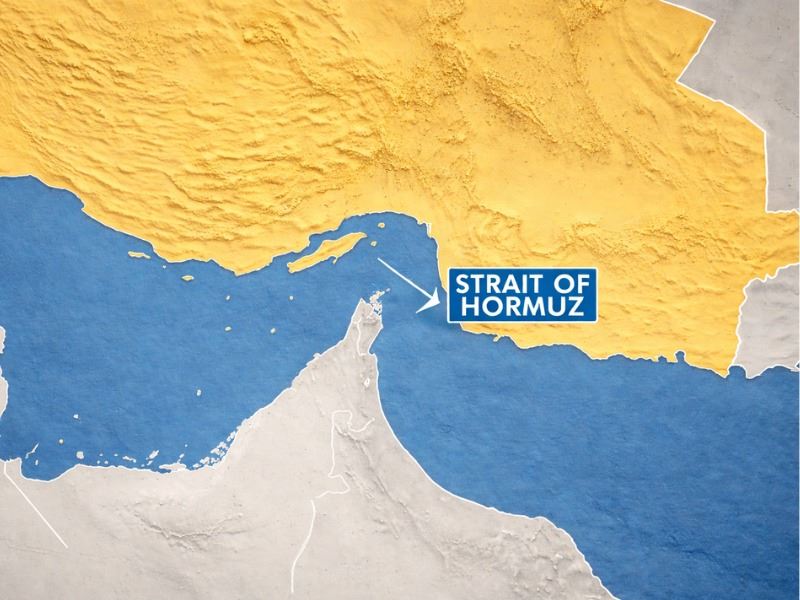
Earlier that day, Israel carried out strikes on Iran, and the United States stepped in to support Israel. Within the first five hours of the escalation, markets had already reacted sharply. Oil and gold prices rose, freight risk premiums increased, and overall market volatility spiked. Analysts emphasize that this is not a physical supply crisis but a risk premium shock, reflecting heightened uncertainty over one of the world’s most critical energy corridors.
Shipping lines responded quickly to the situation. Maersk announced the suspension of all vessel crossings through the Strait of Hormuz until further notice. The company also paused transits through the Bab el-Mandeb Strait and rerouted key services around the Cape of Good Hope. Hapag-Lloyd similarly suspended all vessel transits through the strait, while MSC halted new bookings to the Middle East region and instructed vessels currently in the Gulf or en route to proceed to designated safe shelter areas. These measures increase logistics costs, fuel consumption, and insurance premiums, even without direct disruption to shipping lanes.
The escalation has notable implications for the steel industry. Rising energy costs are expected as steel production and transport depend heavily on oil and gas. Logistics costs are also under pressure due to rerouted vessels and higher freight premiums. In addition, financing conditions are likely to tighten, as volatility and geopolitical risk make trade finance more expensive and selective. While there is no immediate supply shortage, the risk premium shock has already added a layer of cost and uncertainty across energy, shipping, and steel markets.
The Strait of Hormuz remains a focal point of global trade risk, highlighting how rapidly markets and shipping lines respond to geopolitical developments. The coming days will determine whether the disruption remains a temporary risk shock or evolves into a longer-term challenge for global energy and trade flows.




Comments
No comment yet.