


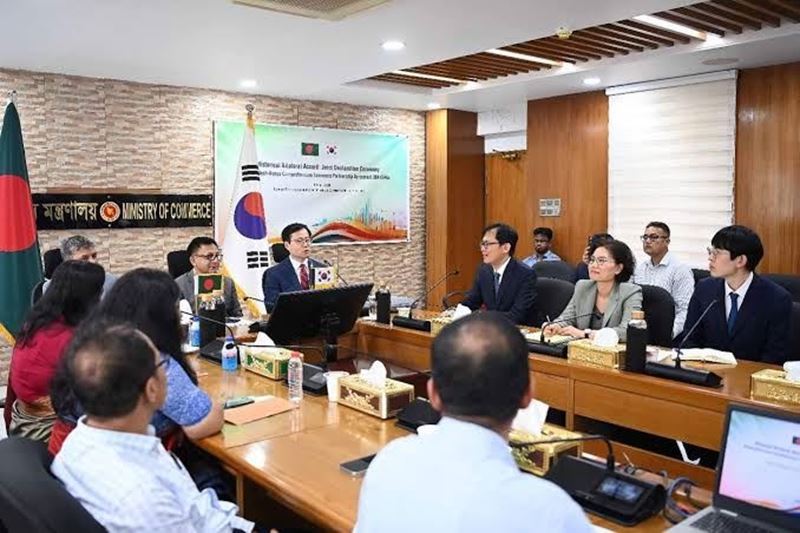
Under the agreement, tariffs on South Korean vehicles, automotive parts and various industrial products are expected to be eliminated or reduced, while access to the services and infrastructure markets of both countries will be expanded.
South Korean Trade Minister Yeo Han-koo and Bangladeshi Trade Minister Khandaker Abdul Muktadir announced the completion of the CEPA negotiations in Dhaka.
The agreement will be South Korea's second CEPA with a South Asian country after India.
Yeo Han-koo stated that the South Korea Bangladesh CEPA would connect South Korean companies with a major market of approximately 170 million people.
Tariffs to be eliminated on automotive and industrial products
Under the agreement, Bangladesh will eliminate the 6% tariff on diesel, South Korea's largest export item to the country.
The agreement also provides for the elimination of tariffs on important semi knocked down (SKD) vehicles and all automotive parts.
South Korea's Ministry of Trade stated that fully assembled vehicles produced in the country will also not be subject to less favorable conditions than vehicles imported by Bangladesh from its other trading partners.
The agreement covers not only industrial and automotive products but also South Korean food exports. Bangladesh will eliminate tariffs on South Korean instant noodles, coffee products, seasoned seaweed and snack products, which are currently subject to tariffs of up to 85.6%.
Negotiations began in November 2024
South Korea and Bangladesh began CEPA negotiations in November 2024, with the two sides holding five official rounds of negotiations to date.
Following the preliminary agreement, the two countries will complete work on the technical details of the agreement. After the final text is signed, the agreement will need to undergo the necessary domestic approval procedures in both countries before it can enter into force.



Comments
No comment yet.