


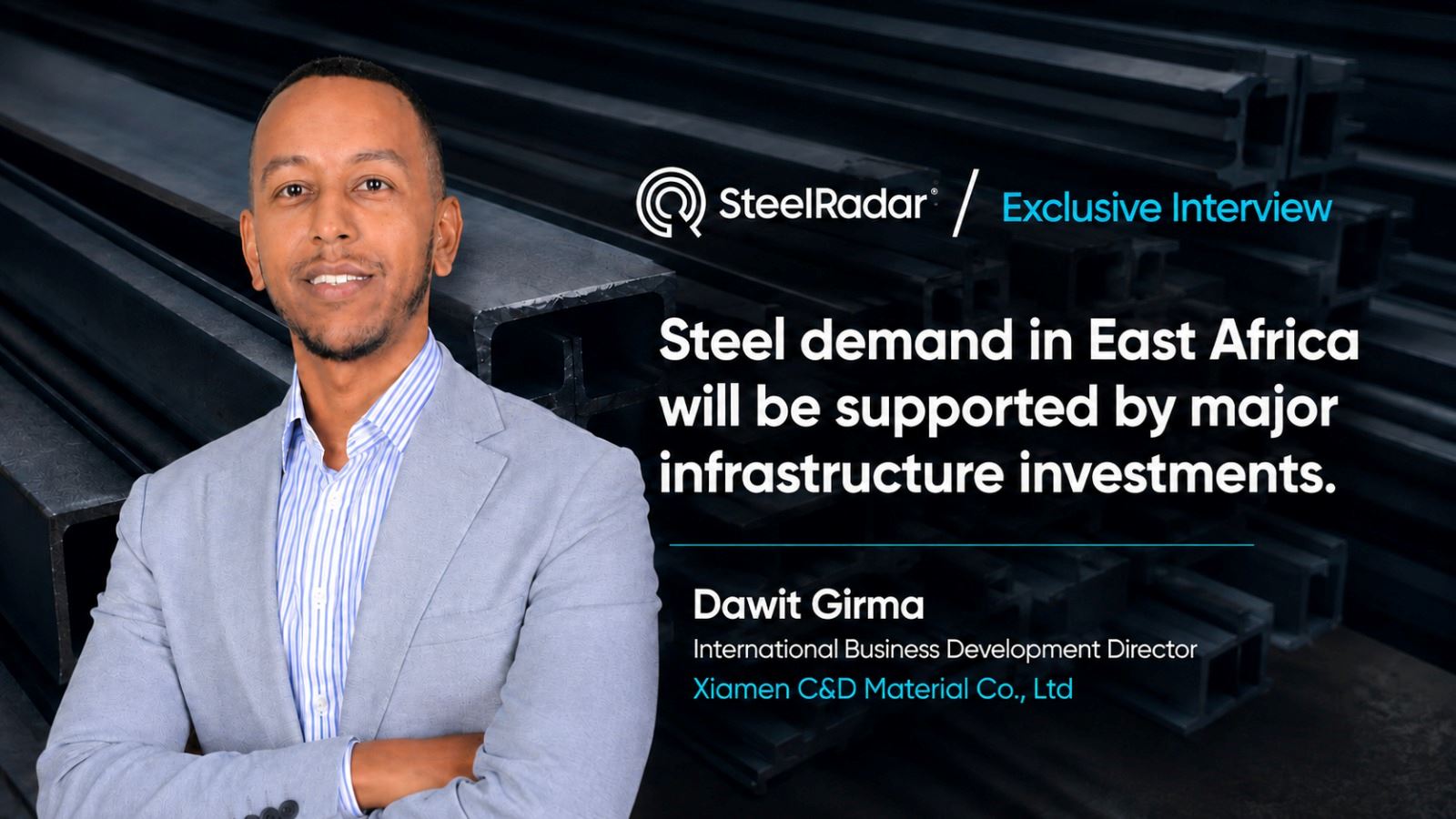
How would you assess the current state of the steel market in Ethiopia and the wider East African region? What are the most important dynamics and trends shaping the market today?
The regional steel market is showing strong growth driven by industrialization and large-scale infrastructure projects. Ethiopia's construction sector, in particular, is developing rapidly thanks to real estate investments and government-led mega projects. These include the $12.5 billion Bishoftu International Airport, Dangote's $4 billion gas and fertilizer plant, and the planned $17 billion oil refinery in Kenya. I believe these infrastructure investments will strongly support demand for steel and construction materials across the region in the long term.
“The Red Sea security crisis has increased freight and insurance costs”
How are the ongoing Houthi threats in the Red Sea affecting logistics activities and trade through the Port of Djibouti?
The security crisis in the Red Sea has had a serious negative impact on trade flows to the region. Since most vessels calling at Djibouti also call at Jeddah, freight and insurance costs have increased significantly. In addition, some shipowners have completely stopped serving this route. We expect this situation to continue until the security issue is resolved.
“Backward integration will increase in the East African steel sector”
What are the most prominent investment areas in Ethiopia's steel sector recently? What kind of contribution do you expect these investments to make to the Ethiopian and East African steel markets in the coming period?**
The most prominent trend today is investment aimed at increasing production capacity. Existing producers are investing in new plants, machinery and equipment, and advanced technologies in order to meet growing demand. In addition, high import duties imposed on finished steel products are supporting domestic production. This trend is not limited to Ethiopia; we are seeing new investors from China, India and Türkiye entering markets across East Africa. In the coming period, I expect more backward integration. In other words, rather than importing semi-finished products such as billet, slab and hot-rolled coil (HRC), the sector will increasingly invest in steel production based on locally sourced iron ore, scrap and direct reduced iron (DRI).
How would you assess the current state of steel trade between Türkiye and Ethiopia, and what is the potential for further development in the coming period?
Steel trade between Türkiye and Ethiopia was quite strong in the past, and Turkish rebar was regarded by Ethiopian buyers as a benchmark product in terms of quality. However, after domestic producers increased their production capacity, the government introduced a 35% import duty on rebar and other long steel products. As a result, imports from Türkiye declined, while China became the most important supplier of raw materials. Nevertheless, Turkish rebar still enjoys a strong reputation in the market. Going forward, I expect cooperation between the two countries to evolve beyond finished steel trade toward investment and technology partnerships. In particular, I believe Turkish companies can contribute more to the region through plant construction, machinery, and technical know-how.




Comments
No comment yet.