


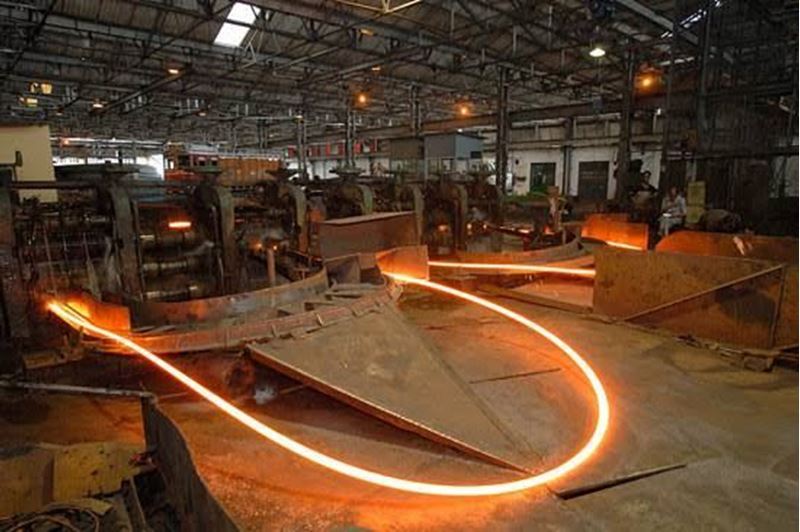
The country's different production technologies in the steel sector and the potential prioritization of low emission products for the EU market could significantly reduce the overall cost.
The European Union's Carbon Border Adjustment Mechanism (CBAM) has been criticized by some developing countries as a discriminatory policy. However, the impact of the mechanism on India could be more limited than previously anticipated.
According to Sandbag's analysis, India ranks fifth among the countries most exposed to CBAM due to the steel sector's high emissions intensity and the large volume of India's iron and steel exports to the EU.
Last year, India exported more than EUR 5 billion worth of CBAM covered products to the EU. This amount accounted for more than 8% of India's total exports to the EU, with steel products making up the majority. Aluminum and cement were also among the country's major CBAM covered export products.
Cost estimated at EUR 762 million based on average emissions
According to Sandbag's report, calculations based on India's national average emissions intensity indicate that Indian exporters could face carbon costs of approximately EUR 762 million in 2034, when CBAM is expected to be fully implemented.
However, the think tank argues that this approach doesn't adequately reflect the structure of India's industry.
The report highlights significant differences in carbon intensity and production methods among steel plants in India. As a result, assessing all production based on the national average could overestimate actual CBAM liabilities.
Low emission steel expected to be directed to the EU
Sandbag expects Indian producers to direct their existing low emission production toward the EU market in order to comply with CBAM.
Taking this scenario and the impact of CBAM on market prices into account, India's total CBAM payments could decrease to approximately EUR 407 million.
When price effects are also considered, the country's net cost could remain at only around EUR 79 million, according to the report.
Impact of expanded scope could remain limited
The European Commission's proposal to expand the scope of CBAM to include downstream steel and aluminum products is also expected to have a limited additional impact on India.
Sandbag estimates that the proposed expansion could increase India's CBAM payments by approximately EUR 35 million, while the net cost could increase by around EUR 10 million.
India could even benefit from CBAM
According to a more ambitious long term scenario presented in the report, India could potentially turn CBAM into an economic advantage.
If previously announced low emission production projects are implemented and competitive low carbon products are prioritized for the EU market, India could achieve a net gain under CBAM.
Sandbag's modeling suggests that India's net gain could reach EUR 44 million under such a scenario.
The report states that these findings indicate that the diversity of production technologies within India's steel sector could provide a significant advantage in dealing with CBAM.



Comments
No comment yet.