


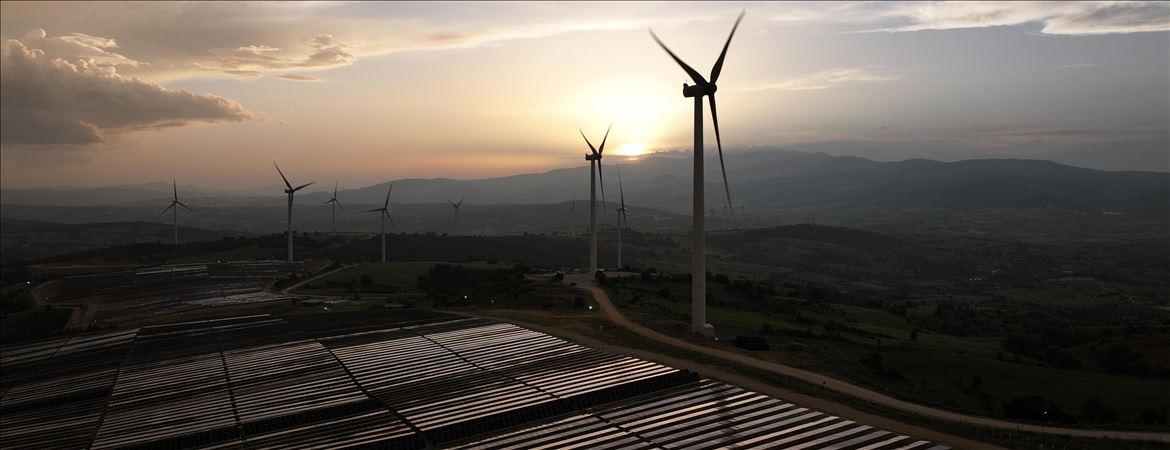
With the regulatory amendment issued by the Energy Market Regulatory Authority on March 5, the path has been opened for the Board to issue expropriation orders for privately-owned land required for renewable energy plants, provided that the applications of pre-license or license-holding companies are approved.
Ebru Arıcı, Vice President of the Turkish Wind Energy Association and General Manager of ARI-ES Enerji, stated that this regulation could reduce the commissioning time of projects from 36 months to 18 months.
Arıcı noted that wind energy in Türkiye began in 1998, and with the incentive mechanism introduced in 2005, installed capacity increased from 19 megawatts to approximately 15,000 megawatts over the following years. She added that the average time for projects to become operational is currently around five years.
She emphasized that in the next three to four years, a total of 26,000 megawatts of capacity will need to complete its permitting process, and speeding up these processes could significantly shorten this timeframe. With the “super permit” mechanism, project timelines could potentially be reduced from 36 months to 18 months.
Arıcı also highlighted that last year, 2,150 megawatts of wind capacity were commissioned, making Türkiye the second-largest country in Europe in terms of newly installed capacity. She stressed that simplifying and streamlining permit processes is crucial to achieving the 2035 renewable energy targets.
She noted that two additional regulatory amendments are expected: one concerning forest permits and another granting the Ministry of Energy and Natural Resources authority for zoning plan approvals and licensing. Both are anticipated to be implemented shortly.
Arıcı stated that Türkiye has been achieving an annual capacity addition of 5,000 megawatts in wind and solar. With the new regulations, the annual capacity required to meet the 2035 targets, estimated at 7–8 thousand megawatts, could gain significant momentum. She also mentioned that there is a project pipeline of 33,000 megawatts for storage-integrated projects, and that investments are expected to peak in 2027.







Comments
No comment yet.