


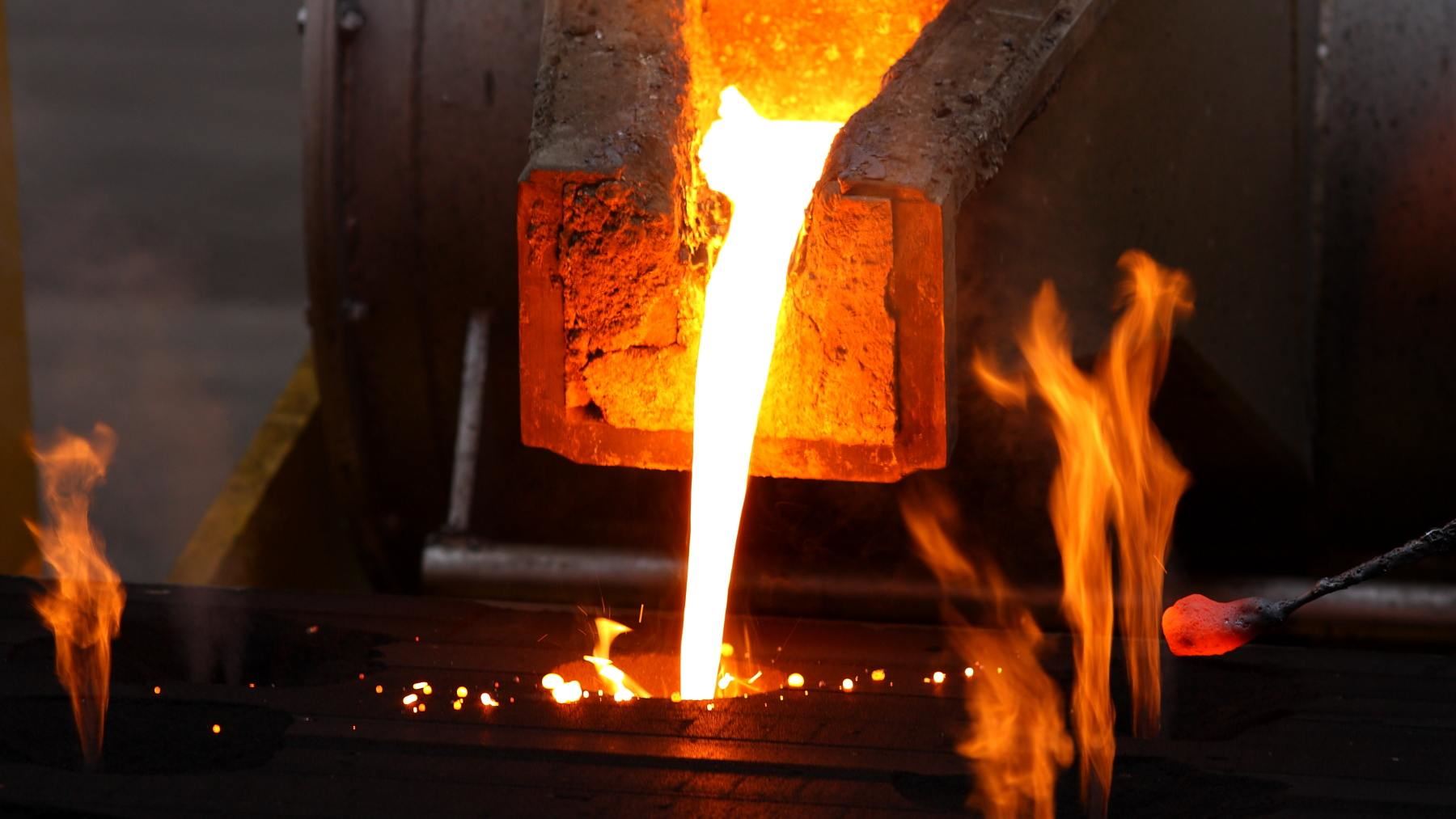
Sabic implements price adjustments in Saudi Arabia's steel market:
In a recent development, Sabic, a prominent entity in the steel industry, has announced upward adjustments in the prices of scrap, rebar, and wire rod in the Saudi Arabian market. This change in pricing reflects dynamic market conditions and key economic factors impacting the steel sector.
Price adjustments in Saudi Arabia's steel market:
- HMS (80:20): $426 per ton
- Shredded Scrap: The price has been raised to $437 per ton
- Bonus: $445 per ton
- Wire Rod: $679.76 per ton
- Rebar: $666.44 per ton
These adjustments are indicative of Sabic's response to various market dynamics, including changes in raw material costs, global economic conditions, and demand-supply dynamics within the region. The price adjustments by Sabic are likely to have ripple effects across the steel market in Saudi Arabia. These changes can impact construction and manufacturing industries, as steel prices play a crucial role in determining project costs and profitability.
Jordan Steel upholds pricing stability for December, fosters construction sector growth:
In a recent announcement, the Jordan Steel Company has declared that its rebar prices for the month of December will remain unchanged, mirroring the rates established in November. The company's steadfast pricing strategy aims to provide stability in the market amid fluctuating economic conditions.
For Grade 60 rebar EXW prices range between 432 and 440 ($1399 - $1424,90) Jordanian dinars per tonne. It is important to note that these figures exclude sales tax. However, when factoring in sales tax, the overall cost increases to approximately 515 to 525 ($1667,75- $1700,13) Jordanian dinars per tonne.
Price disparity raises questions in UAE steel market:
In a noteworthy development within the United Arab Emirates (UAE) steel industry, a considerable price disparity exceeding AED 220/tonne ($60) has emerged between the industry benchmark, Emirates Steel, and local secondary mills, notably Oman's Jindal Shadeed.
In the steel market, Emirates Steel has traditionally established the pricing benchmark for the industry. However, the noticeable price disparity between Emirates Steel and other local mills, particularly Jindal Shadeed, has sparked discussions and raised uncertainties among steel traders and industry stakeholders.
Despite secondary mills, such as Jindal Shadeed, applying discounts to their offerings, the complex market dynamics have posed challenges in narrowing the substantial gap.
Egypt's Steel market maintains consistency:
Egypt's steel market has exhibited stability throughout the week, as indicated by the latest daily monitoring of steel prices. According to reports, rebar prices in the country remained in a stable range, fluctuating between EGP 39,900 and EGP 35,750 EXW ($1291.30 - $1157.00).
Fluctuations in Yemen and production challenges in Iraq:
This week witnessed a $5 decrease in the price of construction steel in Yemen, a downturn attributed to the economic slowdown experienced at the year's end. Economic factors such as annual financial constraints, balance sheets, and profit-loss calculations are contributing to the overall sluggishness. Trade in Yemen is diminishing due to annual balances and financial constraints, leading to a notable impact on iron demand. Furthermore, the urgent need for cash has prompted many individuals to reduce prices.
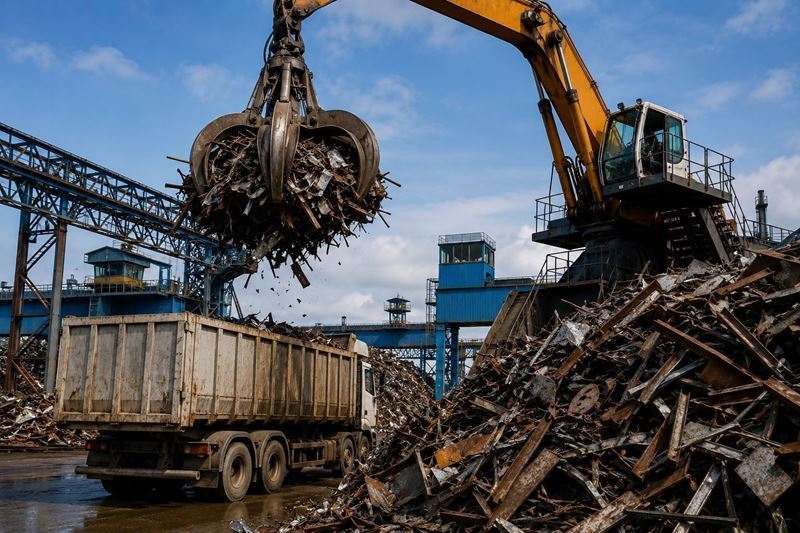
In Iraq, the shortage of scrap metal has resulted in a slowdown in production, forcing certain factories to operate below their optimal capacity for manufacturing steel products. Currently, the production rate falls short of the factory's actual capacity. Despite these hurdles, steel prices have managed to maintain a relatively stable trend over the past week.
Robust growth in Iran's steel exports:
Iran's iron and steel chain exports have seen significant growth, reaching around $4.9 billion during the first eight months of this year. This reflects an 18% increase in export value, showcasing the robust performance of Iran's steel industry. The overall steel exports, covering semi-finished and steel products, totaled an impressive 7.139 million tons, marking an 8% surge compared to the same period last year.
Notably, the export of steel pellet experienced a remarkable 114% growth, reaching approximately 6.3 million tons. Additionally, concentrate exports exhibited an astonishing surge, soaring by 761% to surpass 4.4 million tons.
Within the realm of semi-finished products, Iran's exports amounted to 4.908 million tons during the first eight months of this year, indicating an 11% increase compared to the same period last year. The value of semi-finished products exports reached $2.4 billion, reflecting a substantial 6% growth in export value. These trends highlight the resilience and competitiveness of Iran's steel sector in the global market.
Commodity exchange transaction report:
The commodity exchange at the Esfahan Steel Market on December 4, 2023, witnessed notable transactions in various steel sheet categories, reflecting the dynamic nature of the market.
Cold-Rolled Sheet (Esfahan Steel Company):
- Supply: 7,000 tons
- Demand: 8,500 tons
Competitive Pricing:
- Highest: 366,799 Iranian Rials
- Average: 360,659 Iranian Rials
- Lowest: 358,899 Iranian Rials
The market for Cold-Rolled Sheet B demonstrated robust activity, with a supply of 7,000 tons and strong demand at 8,500 tons. Competitive pricing dynamics saw the highest transaction reaching 366,799 Iranian Rials, an average of 360,659 Iranian Rials, and a lower end at 358,899 Iranian Rials.
Galvanized Sheet (Esfahan Steel Company):
- Supply: 5,000 tons
- A transaction involving 2,250 tons occurred at the base price of 414,597 Iranian Rials.
Colored Sheet ( Isfahan Steel Company):
- Supply: 8,500 tons
- A transaction involving 1,800 tons occurred at the base price of 472,693 Iranian Rials
The Colored Sheet market showcased a substantial supply of 8,500 tons, with a noteworthy transaction involving 1,800 tons at the base price of 472,693 Iranian Rials.
These transactions underscore the active and diverse nature of the Isfahan Steel Market, providing insights into the pricing trends and trade volumes for different steel sheet categories. The market's responsiveness to supply and demand dynamics further contributes to the overall vibrancy and competitiveness of the commodity exchange.





Comments
No comment yet.