


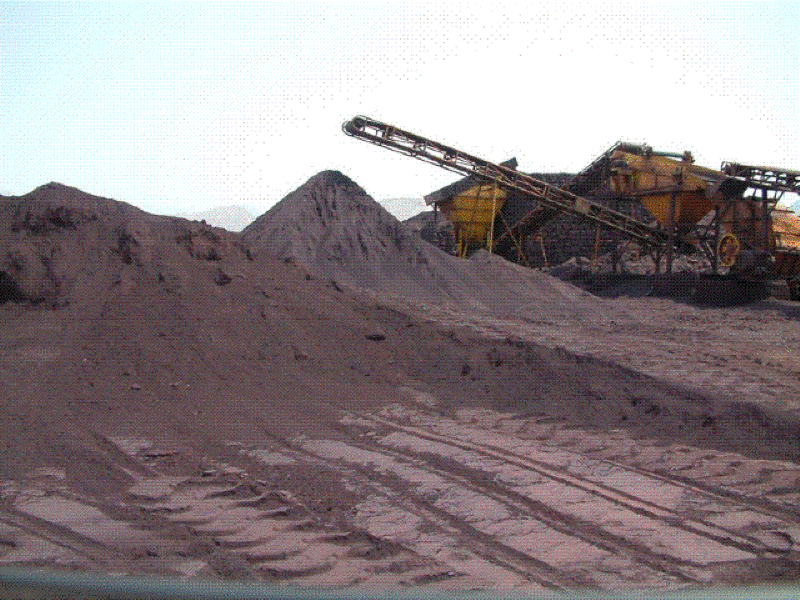
Iron ore price rose Wednesday as heavy rains disrupted southeast Brazil's iron ore industry, Vale halted operations and regulators were sent to monitor the impact on the tailings dams.
Dalian iron ore futures were up 1.9%. The benchmark value of 62% Fe imported into northern China was changing hands at $133.68 per ton in morning trading, up 3.5% from Tuesday's close, according to Fastmarkets MB.
Gerdau SA, Cia Siderurgica Nacional SA and Usinas Siderurgicas de Minas Gerais SA also suspended their activities in Minas Gerais this week.
It has reportedly suspended services on the Estrada de Ferro Vitoria a Minas Gerais railway and production in the southeast and south systems, in part "to ensure the safety of its workers and communities," said a statement on Monday.
The region represented 40% of Vale's production in the nine months to September, while the company reiterated its production target of 320 million to 335 million tons in 2022. Analysts said production could now be at the lower end of the range.
Regular operations continue for the Northern system, where Vale produces 60% of the total annual iron ore volume.
According to the country's mining regulator, in December Brazil had 40 tailings dams, 36 of which were in Minas Gerais at emergency level. Three (ie all) of these belong to Vale.
On the demand side, traders are watching the spread of the ohmron variant in top consumer China, where the northern port city of Tianjin is a center of infection.
Goldman Sachs Group Inc. cut its country's growth forecast for this year from 4.8% to 4.3% due to the difficulty of controlling the variant.
"Spot prices for iron ore are expected to remain stable," Mysteel Research & Consulting said in a note, citing high activity from blast furnaces, restocking factories and interrupting supplies from Brazil.
“Our view of the iron ore price is unchanged for 2022, with an average of 100 tonnes lower than 2021, but still at historically high levels. Producers face lower steel production in China due to environmental controls, the weakening of the real estate construction market and energy pressures on manufacturing.”



Comments
No comment yet.