


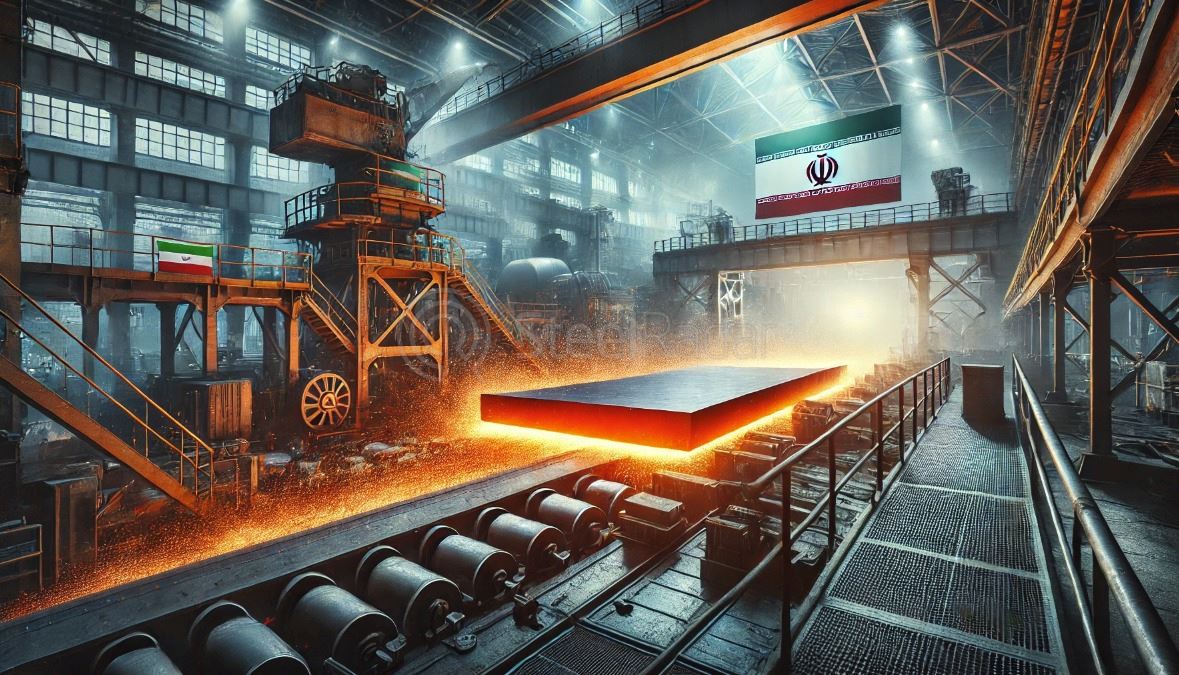
Iran's steel industry is grappling with multiple challenges, primarily stemming from ongoing electricity and gas shortages that have severely disrupted production and export operations. These energy constraints have led to a drastic 40% reduction in production volumes, forcing partial closures in many steel production facilities. The resulting higher production costs, payment delays, and financing burdens have left the sector in a precarious position.
Despite the adversity, Iran's steel exporters are eyeing potential opportunities. Reconstruction efforts in Syria and Gaza could offer new export channels, with Turkey and Iraq serving as transit hubs for shipments of billets and slabs. Additionally, the possibility of U.S. sanctions on China could open doors for Iranian producers to participate in these projects, as China's role may be curtailed.
However, the current market landscape remains challenging. Domestic demand for steel has stagnated, while export demand has waned due to falling global prices. Iranian producers, unable to meet customer price expectations, are hesitant to engage in trade. Last week, mills tested offer prices at $425-435 per tonne (FOB), but buyers responded with counteroffers of $410-420 per tonne, a range deemed unattractive by producers. Competing offers from Egypt further complicate matters, as they come in at the lower end of this range.
Market volatility is further heightened by political uncertainty. Concerns over former U.S. President Donald Trump’s potential return have dampened construction investments, weakening demand for steel. Moreover, many producers are struggling to remain profitable, finding little relief in the prospect of continued operations under such conditions. Industry players are also monitoring potential policy changes, such as adjustments to the NIMA exchange rate, which could impact their production and pricing strategies.
The widening gap between buyer and seller expectations has led to the cancellation of tenders by prominent companies like Arfa Iron and Steel Company and Chadormalu Industrial and Mining Company. As a workaround, some producers have begun collaborating with local traders, selling their products in rials at slightly above domestic market prices. These traders then handle the export process, providing an alternative but less-than-ideal solution for struggling suppliers.
Slab Market Overview
In the slab market, Mobarakeh Steel Company's recent tender concluded at $405 per tonne (FOB), with shipments scheduled for Southeast Asia in February. Market sources suggest that acceptable prices for slabs this week range between $390-395 per tonne (FOB), reflecting ongoing price pressures in the segment.
Meanwhile, Khuzestan Steel Company has issued tenders for 30,000-50,000 tons of billets and an equal volume of slabs, targeting delivery in late February. These tenders, set to close on January 15, could provide greater transparency in the semi-finished steel export market if significant trades materialize.
As the Iranian steel industry navigates these uncertain times, market participants remain cautiously optimistic about potential recovery opportunities while grappling with immediate operational and financial challenges.





Comments
No comment yet.