


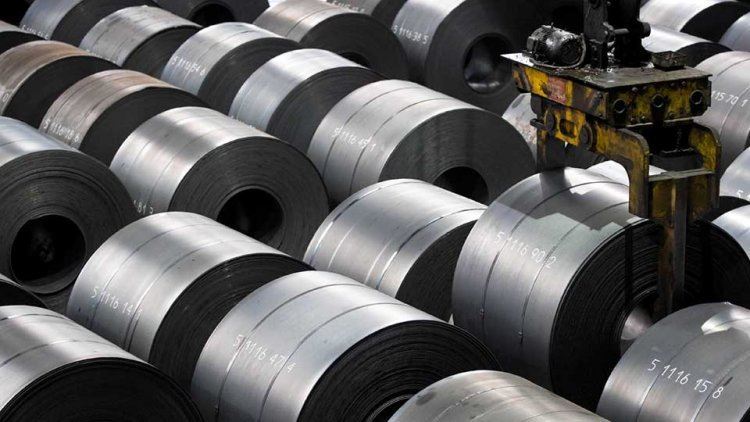
Iranian steel industry officials say many countries have shifted their orders to Russia as Moscow offers lower prices and jeopardizes Iran's revenues.
Speaking to the Sharq newspaper in Tehran, Reza Shahrestani, member of Iranian steel producers' associations, said that Iran's steel exports have stalled in the last two months, as Iran's biggest customers, China, Afghanistan, Thailand and South Korea, have shifted their orders to Russia. He stressed that this development has so far deprived Iran of more than $5 billion in steel exports.
Shahrestani warned that the same scenario is repeated for other metals and could jeopardize petrochemical exports, which generate larger export revenues.
Iranian media and analysts have expressed concern that Russian oil has become cheaper after international sanctions against Moscow in recent weeks and that China, in particular, will be persuaded to buy crude oil from Russia instead of Iran.
Despite US sanctions on oil exports, Tehran has managed to increase its crude oil shipments since the Biden Administration began nuclear talks with Tehran and less Trump-era restrictions were imposed on third parties doing business with Iran.
Iranian officials are taking their share of the increase in crude oil deliveries and revenues, although it's not clear how much foreign currency gets into Tehran's coffers. Some say that China pays Iran not in cash but by delivery of goods, which will not be easy with US banking sanctions against Iran.
In the four years since former president Donald Trump withdrew from the 2015 nuclear deal and imposed sanctions on oil exports, Iran has sought to offset the loss of oil revenue by increasing its exports of non-crude petrochemicals and steel. In the last 12 months, Iran's non-oil exports have approached 50 billion dollars.
Shahrestani told Sharq that Russia is offering 15-20 percent discount for its steel and the impact on Iran's traditional markets is already clear. It is reported that Russia offers a discount of 20 dollars per barrel for its crude oil, which exceeds 110 dollars per barrel in the world markets.
Iran's steel industry also faces internal hurdles, according to Reza Mohtashamipur, an official at the ministry of industry and mines, who told state television last month that the 17-22 percent tax on steel exports is hurting the industry. He argued that the tax made Iranian steel less competitive in international markets. While Iran is offering 15 percent cheaper steel to foreign buyers, Russia is now offering more discounts.
According to Shahrestani, another obstacle for steelmakers is the lack of electricity during peak seasons. With the hot summer months approaching, electricity is often rationed and steel mills receive less energy, hampering production.
The drop in export revenues comes at a sensitive time for Iran, which has stopped food import subsidies to save foreign currency and triggered a spike in prices. Many analysts and former politicians warn of mass protests as millions face starvation. There are already occasional anti-government protests in small cities and towns, but there have been no eruptions in major cities.



Comments
No comment yet.