


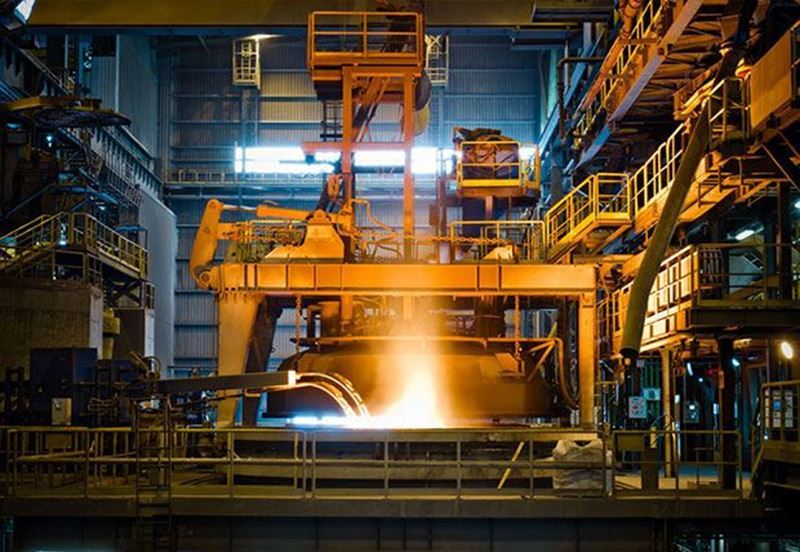
The Turkish rebar and steel industry, which was the 1st in Europe and 7th in the world in terms of production amount until two years ago, is experiencing troubled times due to the excessive increase in electricity and natural gas prices. After the share of energy in the total cost in the sector increased from 8% to 28%, there was a 17.8% decrease in production in October and 10.1% in the first 10 months. In the same period, orders decreased and sales prices decreased. Painted materials sold for $1,450 in the 8th month last year, compared to $855 in the same month this year. The selling price of galvanized steel decreased from $1,200 to $750. Thus, the sector came under pressure both in terms of prices and in terms of increasing energy costs.
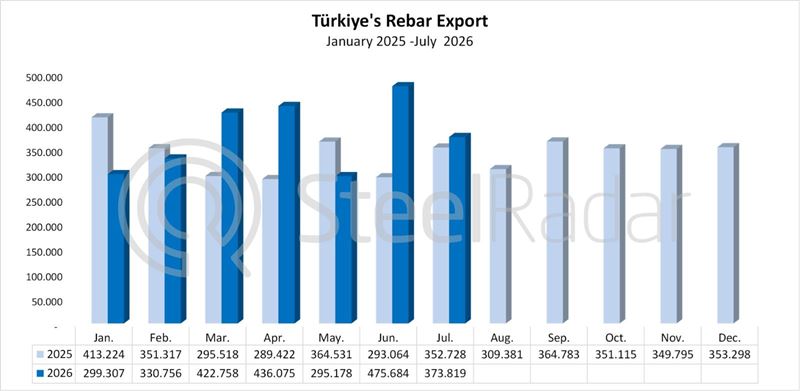
The source of the decrease in production in the sector is not local consumption, but exports. There was an 11.5% increase in local consumption in October and a decrease of only 2.5% in the first 10 months. In exports, 42.3% in quantity and 51.3% in value in October; As of January-October, there was a decrease of 18% in quantity and 6.5% in value. While production and exports decreased, imports from Russia, India and China increased. Billet imports increased by 148% in October from Russia, which reduced billet prices and turned to Turkey. In the first 10 months, HRC imports from China increased from 161 thousand tons to 669 thousand tons.
“We have no chance to compete internationally”
This picture has created a crisis in the sector. Saying that the extraordinary increases in energy prices have destroyed the chance of international competition, the producers stated that the share of electricity in the total cost of converting scrap into steel, excluding raw materials, is 60%, and that it is not possible for the producer to withstand this for a long time. Factories on the Iskenderun-Payas line, one of the clustering regions of the sector, turned to practices such as sending their workers on paid-unpaid leave, quitting working with subcontracted workers, reducing capacity and reducing shifts. It has been observed that factories in this region have been heavily reducing workers in recent months.
“We pay twice as much for electricity compared to other countries”
While 1 kilowatt electricity used by iron and steel factories in Turkey is 20-22 cents on dollar basis, the producers explain that this figure is 10-12 cents in America, 14-16 cents in Europe, and less than 10 cents in the Far East. He states that the difference corresponds to 55-60 dollars in production per ton, and this increases to 70-75 dollars with natural gas prices. Producers, who said that they lost 100-150 dollars per ton for about 8-9 months, said that they lost their chance to compete internationally. A general manager from the industry said, “When Europe started to impose sanctions on Russia because of the war, all steelworkers liked it first, they thought, 'What a good market for us.' However, Russia, which could not sell to Europe, started to sell dumped and very cheap steel to Turkey. Then, offers from the Far East began to come at incredible prices. Their energy is also very cheap. We do not have a chance to compete with steel coming from countries such as Korea, Japan and China, which have raw material advantages and high technology. There is also a danger like Iran. They have both energy and ores. We hear that Iranian steel is also entering Turkey. This is a big problem,” he said.





Comments
No comment yet.