


According to the statements made at the conference, the sector faces serious challenges, despite positive developments such as stabilization in steel production and optimization of the diversity structure.
The development resistance and increase in product diversity in the steel industry supports the transformation and improvement of sub-production facilities, resulting in the development of high-quality products. However, despite this improvement, supply and demand imbalances in the market cause significant declines in steel prices.
Rebar experienced a significant decline in the first quarter as a reflection of this imbalance. The main rebar futures contract opened at 3,972 yuan/tonne (548 USD) on the first trading day of this year, falling to 3,450 yuan/tonne (476 USD) by the end of March. This represents a decline of more than 13% in the first quarter.
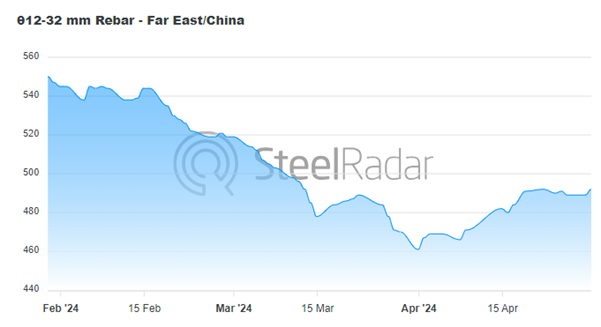
In April, rebar prices started to recover. According to Steel Radar's evaluation, rebar prices, which were recorded as 467 USD on April 1, rose to 492 USD at the end of April.
In May, the contradiction between supply and demand is expected to become evident again as seasonal demand weakens. This situation may create further weakening pressure on steel prices. These challenges can have a negative impact on the quality and efficiency of the industry's operations.
China's rebar industry may have to take various measures to ensure supply and demand balance in the coming period. These may include steps such as adjusting production capacity, demand incentives and market regulations. However, the industry may need more comprehensive and sustainable solutions to overcome these challenges.
As a result, although China's rebar industry faces various challenges, there are uncertainties about the future of the industry. Efforts to restore the balance of supply and demand will be one of the important factors that will determine the future performance of the sector.





Comments
No comment yet.