


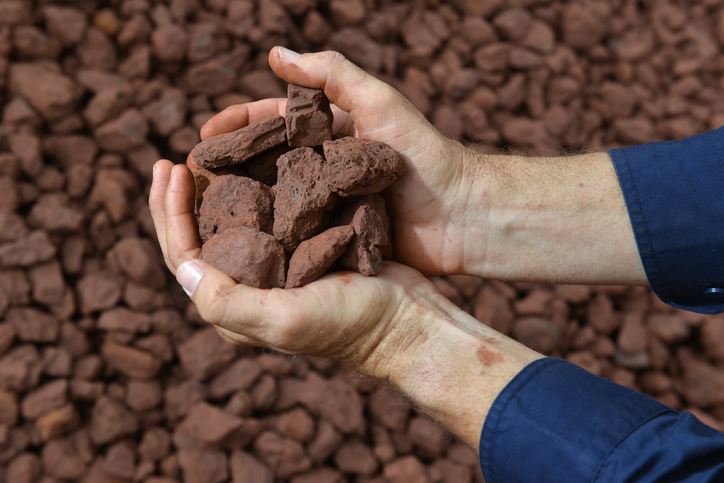
Iron ore futures declined to a two-week low on February 2 as traders reconsidered demand expectations in the world's largest consumer China, despite expectations for more policy impulse to support the country's economic recovery.
Iron ore and steel prices in China reached multi-month highs in January, as markets recovered from early November as a result of Beijing's increased policy support for the troubled real estate sector and the lifting of strict COVID-19 controls.
The steelmaking component has risen more than 9% on the Singapore Stock Exchange this year, while steel benchmarks in China, the world's largest producer of construction and fabrication materials, have also monthly gains since November.
A government official said on Feb. 2 that China's imports and exports face a tough environment amid rising risks of global recession and slowing foreign demand.
Benchmark 62% iron ore imported into northern China decreased 2.2% to $124.68 per ton on the morning of February 2. The top-traded May iron ore on China's Dalian Commodity Exchange DCIOcv1 closed the day at 841.50 yuan ($125.29) per tonne, down 3.3%. It previously hit 839 yuan, the lowest level since January 18. Benchmark March contract SZZFH3 for SGX iron ore declined as much as 3.8% to $121.20 per tonne.
Other Dalian steelmaking inputs also decreased; coal DJMcv1 fell 0.4% and coke DCJcv1 fell 2.2%.
On the Shanghai Future Exchange, rebar SRBcv1 fell 2%, hot rolled coil SHHCcv1 fell 1.8%, wire rod SWRcv1 fell 0.6% and stainless steel SHSScv1 fell 3.4%.
"We believe that more stimulus and background spending will be bring up on the agenda at the National People's Congress in March, which will likely increase demand for the commodity further," said ING commodity strategist Ewa Manthey.



Comments
No comment yet.