


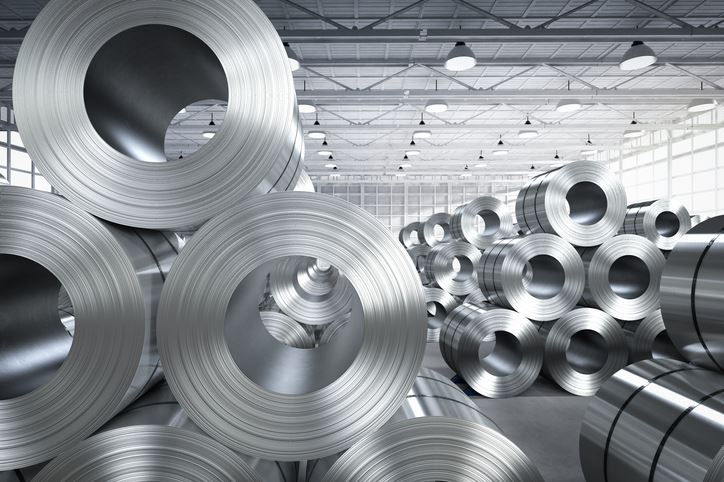
In 2024, the export price of basic hot-rolled steel from the Black Sea region experienced a significant decline. Influenced by increased competition, weak demand, and changes in supply dynamics, exporters faced considerable challenges in maintaining profitability and market share.

At the beginning of the year, Russian-origin HRC was offered at approximately $580 per ton FOB Baltic Sea and $590–$595 per ton FOB Black Sea. Transactions were reported at $605–$610 per ton CFR Türkiye and around $615 per ton CFR Egypt. By the end of 2024, export prices had dropped to $490 per ton on a FOB basis (Black Sea), down from $550–$560 per ton in the first half of the year.
Several factors contributed to this downward trend. Asian suppliers, particularly from China, offered more competitive pricing, which intensified market competition and exerted downward pressure on prices. Key markets, including Türkiye and Europe, experienced reduced demand for imported HRC due to sluggish economic activity and a downturn in steel-consuming industries. Additionally, the suspension of export duties by Russia led to an oversupply of steel products in the market, further driving prices down.
This decline in HRC export prices created significant challenges for exporters in the Black Sea region. Lower prices directly impacted the profitability of steel producers and exporters. Exporters also faced intensified competition from Asian suppliers, requiring more strategic pricing and market approaches. Many struggled with excess steel products, which led to increased inventory in distribution networks while they waited for demand to improve.
Looking ahead, the global steel market is expected to face continued challenges. One Russian market participant remarked on the situation, stating, “Forecasts for domestic steel prices for January remain negative. Metallurgic plants are hoping for a recovery closer to spring, but the beginning of the year will be difficult for everyone. The main question facing all market participants today is what to do with excess steel products. Most likely, companies will simply have to put up with the expansion of stocks in their distribution network and wait for demand to improve.”
The World Steel Association forecasts a modest recovery in 2025, with global steel demand projected to grow by 1.2%, reaching approximately 1.772 billion tonnes. However, persistent oversupply, coupled with new production capacities, is likely to maintain pressure on steel prices. Declining capacity utilization rates could potentially lead to further price reductions in the near term.
In summary, the year 2024 highlighted significant headwinds for the Black Sea HRC export market. While a modest recovery is anticipated in 2025, exporters will need to adapt strategically to navigate ongoing market challenges.





Comments
No comment yet.