


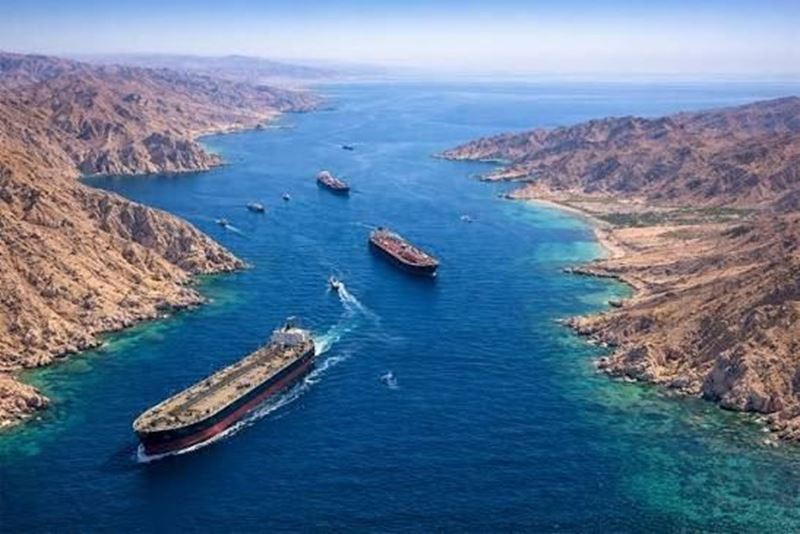
Under the memorandum of understanding reached between the United States and Iran on June 14 and put into effect on June 18 with the signatures of the parties, it was decided to reopen the Strait of Hormuz to commercial shipping traffic. Following the agreement, vessel traffic resumed in the Strait of Hormuz—one of the most critical maritime passages of global trade—while with the easing of geopolitical tensions that have negatively affected the logistics sector since February, uncertainties and high risk premiums in global supply chains are also expected to decrease.
In the Strait of Hormuz, where an average of 130 commercial vessels passed per day before the war, vessel traffic had almost come to a halt after February 28. Although there has been a noticeable increase in crossings following the US–Iran agreement, current traffic levels remain approximately 70% below pre-war levels.
Gradual normalization in the spot market stands out
Speaking to AA, UTIKAD President Bilgehan Engin stated that geopolitical tensions in the Strait of Hormuz and the resulting increases in freight rates, insurance costs, and risk premiums have been among the main factors shaping the global maritime transport market throughout 2026.
Engin noted that during the crisis period, especially in tanker and container shipping, spot freight rates and war risk insurance premiums reached historic highs. He added that with the easing of tensions in recent months and the beginning of normalization in transit routes, a clear softening trend has been observed in the spot market.
He emphasized that this decline is not a sudden collapse but a gradual and fluctuating normalization process, explaining that while insurance costs have decreased rapidly, freight rates have not fallen at the same pace due to persistent structural cost factors.
Engin stated that the risk premium in critical passages such as Hormuz has not completely disappeared but has only been repriced at lower levels, and therefore spot market bottom levels are expected to remain significantly above pre-crisis prices.
New contracts are shaped with lower risk premiums
Bilgehan Engin said that shipowners and major logistics companies have started revising high-priced long-term contracts signed during the crisis through index-linked or renegotiable flexible models.
He noted that in fixed-price contracts, sudden changes are limited due to legal obligations, while in new-period contracts a transition toward lower risk premiums and more balanced pricing structures is being observed.
Engin stated: “Overall, despite short-term spot declines, the sector is evolving toward a new balance that includes a more cautious and lasting risk premium in the medium term.”
Return via Cape of Good Hope is rebalancing prices
Engin recalled that during the crisis, many vessels were diverted to the Cape of Good Hope route due to security risks around Hormuz, which artificially increased ton-mile demand and created temporary capacity tightness in global shipping.
He stated that the reversal of Cape of Good Hope diversions will not create an abrupt oversupply in the market; instead, it will lead to a gradual easing in the spot market and a more competitive pricing environment with shrinking margins. In the medium term, the new price equilibrium will be shaped by demand growth and fleet discipline.
Recovery expected in Gulf ports
Engin noted that during the war period, security risks around the Strait of Hormuz negatively affected not only maritime transport but also hinterland connectivity and inland logistics flows in the Persian Gulf and Red Sea regions.
He stated that some ports partially lost their role as transit hubs during this period, while transshipments via alternative routes increased costs and extended delivery times. With normalization, these ports are expected to reintegrate into main trade lanes.
He added that Gulf ports in particular are expected to recover rapidly in energy exports and Asia-linked container transport, while recovery in the Red Sea corridor will be more gradual due to persistent security perceptions.
Alternative corridors are becoming permanent
Engin emphasized that “near-shoring” practices and multimodal transport corridors developed by global logistics companies are no longer temporary crisis solutions.
He noted that major logistics firms are increasingly making hybrid logistics models—supported by rail, short-sea shipping, and regional distribution hubs on the Asia–Europe corridor—permanent. Engin stated that although restored stability in the Strait of Hormuz will increase the attractiveness of traditional sea routes, it will not completely eliminate alternative corridors.
Bilgehan Engin concluded by stating that global supply chain management is now based not only on cost optimization but also on risk distribution and ensuring supply security.
Source: AA





Comments
No comment yet.