



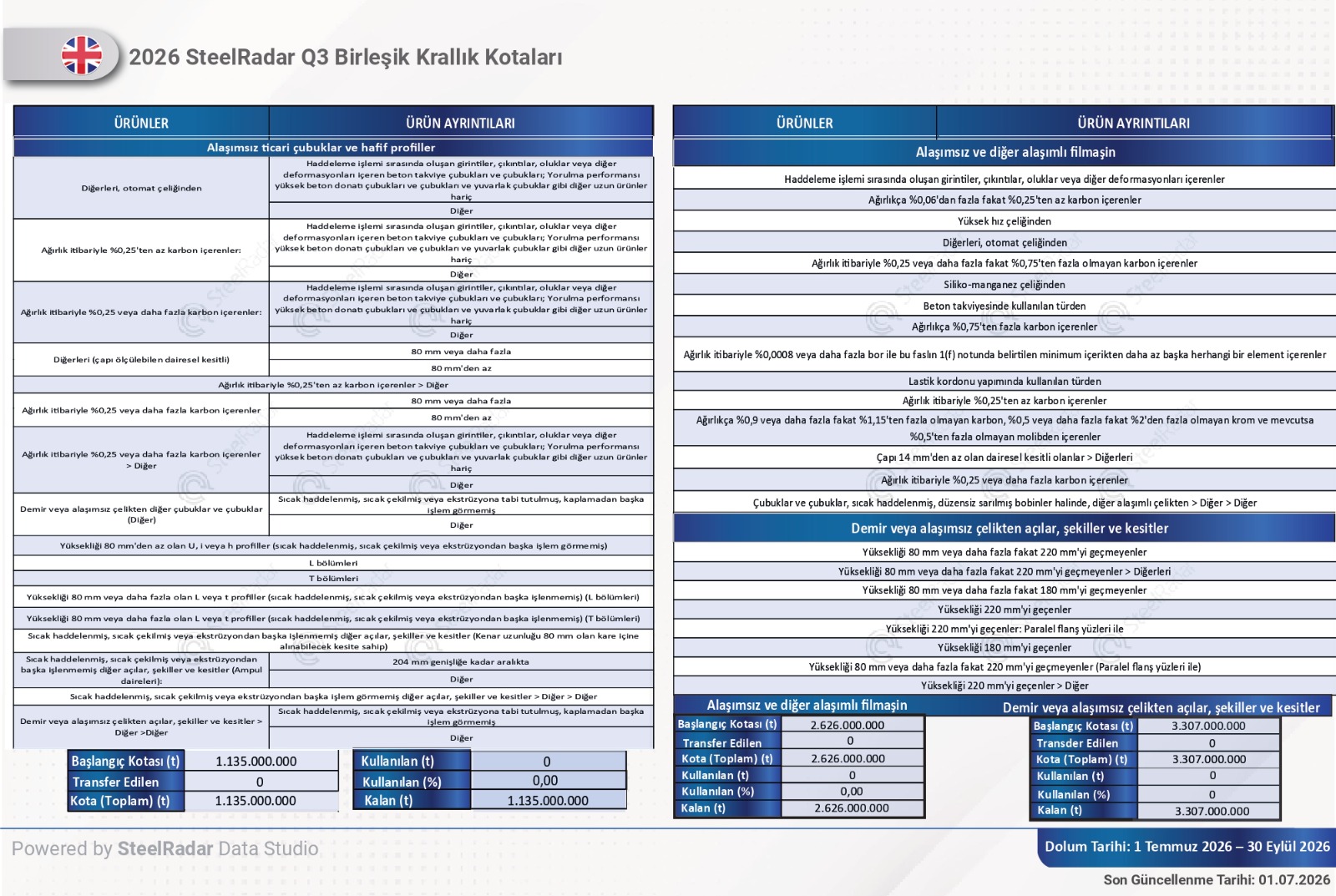
The UK introduced its provisional steel import quota system on July 1, 2026, with the aim of protecting the domestic steel industry and strengthening local production. Under the new measures announced in March, steel import quotas have been reduced by approximately 60% compared with previous levels, while imports exceeding the allocated quotas will be subject to a 50% tariff. The measures apply to steel products that can be produced in the UK and form part of the government's strategy to increase domestic production capacity, strengthen supply chains, and reduce import pressure.
Looking at the quota allocation, the hot-rolled plate segment, for example, shows a clear imbalance that is likely to directly shape trade flows. The reduction of the "other countries" quota from 25.1 million tonnes in the previous quarter to 3.6 million tonnes under the new system points to a significant tightening for non-EU suppliers. In addition, the allocation of 191 thousand tonnes for the US and 8.4 million tonnes for South Korea indicates that suppliers outside the EU will face more limited access to the UK market. In contrast, the EU's quota of 50.2 million tonnes exceeds that of all other regions, suggesting that the UK will continue to rely structurally on Europe for this product segment.
In this context, the quota system appears to redirect trade rather than restrict it outright. Given the EU's substantial allocation, the main supply route is expected to remain concentrated in Europe, while access for other countries is likely to depend increasingly on quota utilization rates and price competitiveness. As a result, the measures are expected to lead not to a sharp decline in overall trade volumes, but rather to a geographical redistribution favoring the EU and a loss of market share for non-EU suppliers.
The new steel import quota system, which entered into force in the UK on July 1, is not expected to create supply shortages in the short term. As importers built up inventories ahead of the implementation, no significant market tightening is currently anticipated, with the main effects expected to become more apparent during the final quarter of the year.
In the medium term, however, quotas and higher import costs are expected to strengthen upward pressure on steel prices, with some market expectations pointing to increases of 30–35%. Larger and financially stronger companies are expected to gain a competitive advantage, while the use of bonded warehouses is likely to increase and supply chain planning is expected to become more critical. During this period, companies are expected to reduce their dependence on a single supplier and adopt longer-term inventory planning strategies.
At the same time, market participants believe the impact of the new system will be felt gradually rather than through an immediate shock. The pace of quota utilization, product-specific supply conditions, and price movements—particularly from October onward—are expected to be the key factors determining the overall direction of the market.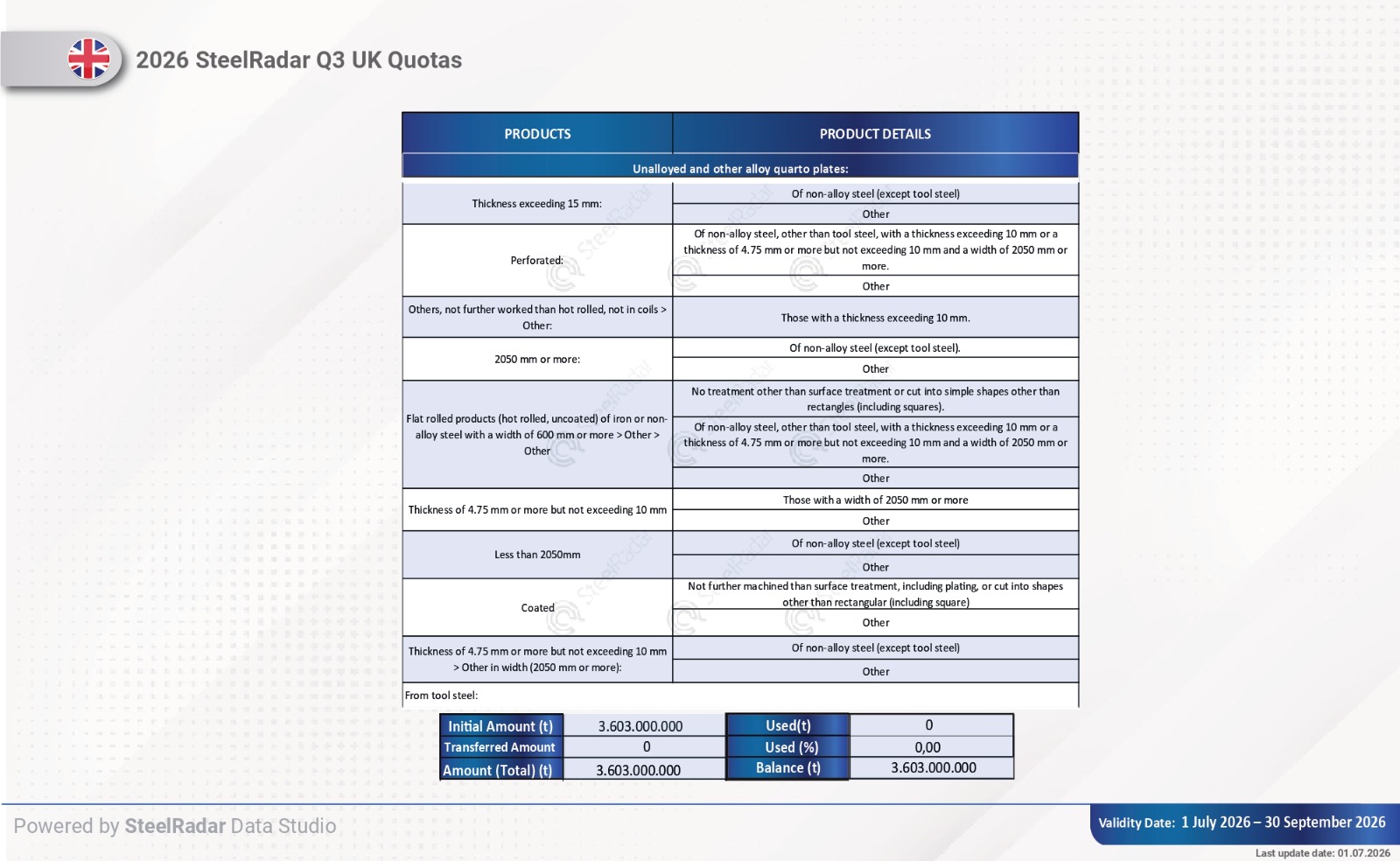






Comments
No comment yet.