


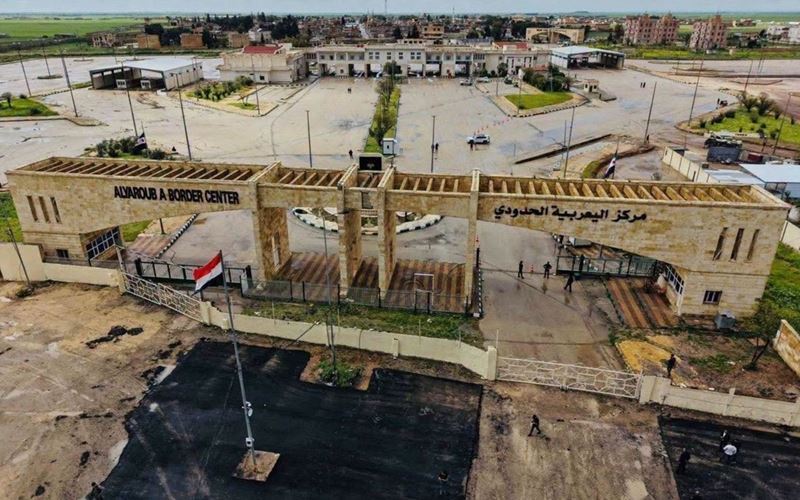
The active use of the Rabia Border Gate in Mosul has been described by the Iraqi central government as a significant economic and logistical step, while raising concerns within the Kurdistan Regional Government (KRG).
The new route effectively started after an international truck fleet departed from Türkiye and entered Iraq through Syria, turning the Rabia Border Gate in Mosul into one of the alternative transit points for regional trade. The Iraqi government described the development as an important gain in terms of increasing economic diversification and strengthening trade relations with neighboring countries.
Head of the Iraqi Border Ports Authority Omar Al Waeli stated during the passage of Turkish trucks through Rabia that the new transit line would position Iraq more strongly within global logistics networks. He emphasized that the route is also a key part of the “Development Road” project, which aims to establish a connection between Türkiye and Basra.
On the other hand, the new trade line was approached cautiously by the Kurdistan Regional Government. Member of the Iraqi Parliament’s Economy Commission Sirwa Mohammed argued that highlighting the Rabia Border Gate is a move aimed at sidelining the Ibrahim Khalil Border Gate in Duhok. Mohammed stated that customs coordination between Erbil and Baghdad should be established rapidly in order to protect the regional economy.
Distance advantage also played a role in the preference for the new route. According to information provided by officials, a truck departing from Türkiye’s Nusaybin district can reach Mosul through Rabia in approximately 180 kilometers, while the current Ibrahim Khalil route extends to nearly 300 kilometers. The nearly 120 kilometer difference provides a major advantage in terms of transportation time and fuel costs.
The development was also welcomed positively on the Syrian side. In a statement issued by the Syrian General Authority for Land and Sea Ports, it was noted that thanks to customs facilitation measures provided to Turkish trucks, the country has started to regain an active role in international trade routes after many years.
The new corridor is expected to create more visible impacts on regional trade balances and logistics flows in the upcoming period.




Comments
No comment yet.