


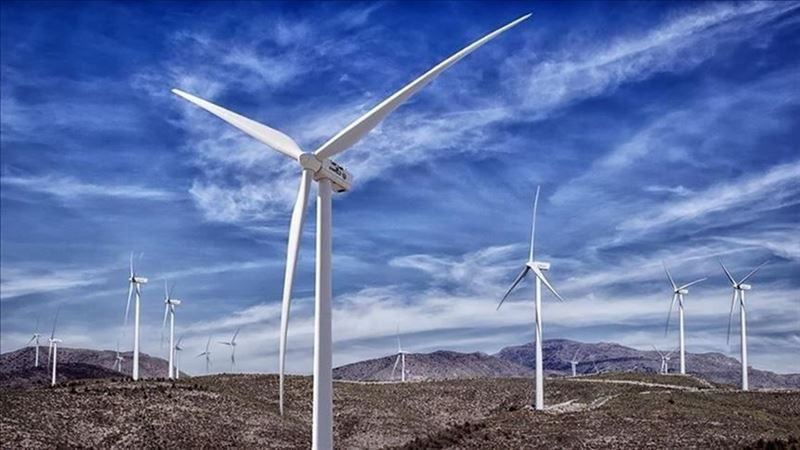
Speaking to an Anadolu Agency reporter, İbrahim Erden said that around 150 industrial companies in Türkiye currently serve the wind energy ecosystem, noting that the country has evolved into not only a project developer but also a strong equipment manufacturer. He emphasized that Türkiye’s proximity to the markets of Europe, the Middle East, North Africa, the Caucasus, and Central Asia provides a significant competitive advantage.
Erden stated that the wind energy sector includes 7 tower plants, 3 blade factories, and 4 generator and gearbox facilities, adding that more than 20,000 people are employed across industry, construction, operation, and maintenance.
Highlighting Türkiye’s strengths in fast delivery, cost advantages, and engineering capabilities, Erden said that continuity in the domestic market is critical for the sector’s sustainable growth. He pointed out that a regular YEKA schedule, a predictable installation pace, and export-supporting policies are key factors influencing investment decisions.
Erden noted that 2.1 gigawatts of new installations planned for 2025, along with consecutive YEKA tenders, have improved visibility for the sector. He added that the introduction of offshore wind projects could trigger new investments in areas such as towers, blades, cables, and port logistics.
Referring to the 4.3-megawatt turbine developed through the collaboration between Elektrik Üretim AŞ and ASELSAN, which has reached an 80% localization rate, Erden said this demonstrates Türkiye’s technological development capacity. He added that growth in wind energy is now increasingly dependent on grid integration and system infrastructure rather than turbine technology alone.
Erden stressed that accelerating grid investments and providing predictable connection capacity to investors are critical, noting that exchange rate risk and revenue uncertainty continue to slow down projects on the financing side.
He also highlighted that the projected 7.5 gigawatts of battery capacity by 2035 indicates the growing role of storage in the energy transition, adding that reducing uncertainties remains the most important factor for investors.




Comments
No comment yet.