


A metal made from the second most abundant element on earth has become scarce, threatening everything from car parts to computer chips, and creating another hurdle for the world economy.
The shortage of metallic silicon triggered by the production cut in China has pushed prices up 300% in less than two months. It's the latest in a series of disruptions, from battered supply chains to a power crisis, creating a devastating mix for companies and consumers.
The worsening situation has forced some companies to declare force majeure. On Friday, Norwegian chemicals manufacturer Elkem ASA said it and several other companies that make silicone-based products are suspending some sales due to shortages.
The Metallic Silicon issue also illustrates how the global energy crisis is cascading across economies in various ways. The shutdown in China, by far the world's largest silicon producer, is the result of efforts to reduce power consumption. For many industries, it is impossible to avoid the fallout.
Silicon, which makes up 28% of the earth's crust by weight, is one of the most diverse building blocks of humanity. It's used in everything from computer chips and concrete to glass and car parts. It can be purified into ultraconductive material that helps convert sunlight into electricity in solar panels. And it's the raw material of silicone, a water- and heat-resistant compound commonly used in medical implants, caulk, deodorants, oven mitts, and more.
Despite its natural abundance in raw forms such as sand and clay, warnings have been issued in recent years that increased industrial demand risks creating an impossible shortage for raw materials such as gravel. Now, with China restricting production of high-purity silicon metal, the unexpected fragility of the silicon supply chain is exposed to an alarming degree.
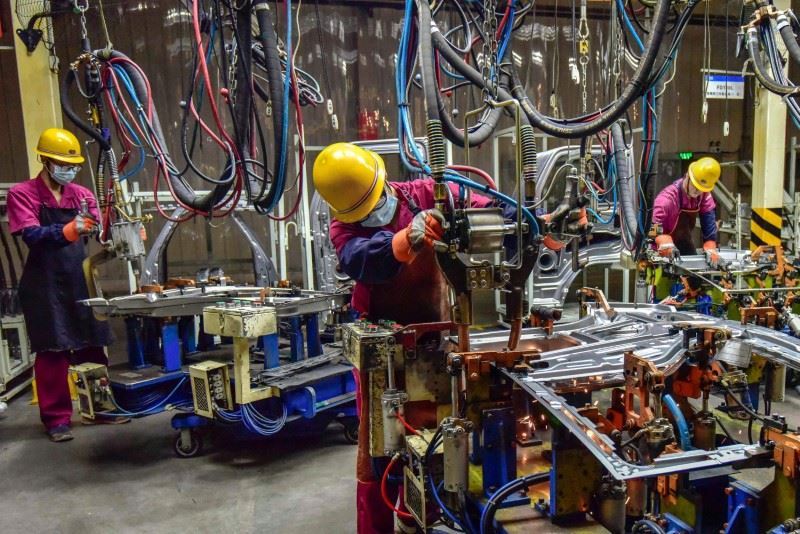
For automakers, where silicon is alloyed with aluminum to make engine blocks and other parts, the knockdown results are of particular concern. Besides silicon, they are also facing an increase in magnesium, another alloy component that is facing production problems during China's power crisis.
“If you have metallic silica supply constraints, then you have a problem,” said Keith Wildie, commercial manager for aluminum alloy manufacturer Romco Metals, by phone from London. "There's still some supply there, but it's clearly trading at a very high swap price."
Silicon metal is made by heating ordinary sand and coke in a furnace. For most of this century, its price has ranged from about 8,000 to 17,000 yuan ($1,200-2,600) per ton. Producers in Yunnan province were then ordered to reduce their output to 90% below August levels from September to December due to power outages. Prices have since climbed as high as 67,300 yuan.
Yunnan is China's second largest producer, accounting for more than 20% of production. Sichuan, which also faces power cuts, ranks third with approximately 13%. Top producer Xinjiang has yet to experience major power issues.
Along with higher prices for metals such as petroleum, aluminum and copper, silicon shortages are feeding an already held squeeze in supply chains from manufacturers to shippers, trucking companies and retailers. Their choice is to either suck it up and take the margin kick or pass the cost on to customers.
In both cases, the damaging twin effect on inflation and growth has raised concerns about the stagflation forces prevailing globally.
Solar Costs
The shortage in the solar industry, where a refined and purified form is used in photovoltaic panels, is already bubbling.
The price of solar grade polysilicon rose 13% on Wednesday following supply cuts, reaching the highest level since 2011. It has increased by more than 400% since the beginning of June 2020.
“This is another excuse for polysilicon manufacturers to raise the price, and the pricing environment for solar modules is very tense right now,” said Jenny Chase, global head of solar research at BloombergNEF.
However, its impact on the price of solar panels is apt to be limited. Polysilicon manufacturers are enjoying higher margins this year, putting them in a position to absorb higher raw material prices better than other industries, BloombergNEF analysts said in a report on Thursday.
Permanent Famine
Silicon also plays an important role as a softening agent in aluminum alloys. It makes the metal less brittle when manufacturers turn metal into different products needed in everything from cars to household appliances.
“We've had this before,” said Buddy Stemple, CEO of Constellium Rolled Products and president of the U.S. Aluminum Association, at an industry conference in Washington. "Hopefully it's very focused on supply chain disruptions that can come back in a satisfactory period of time to keep things going."
Shanghai Metals Market senior analyst Yang Xiaoting said that prices are expected to rise around current levels over the next summer until more production kicks in in the second half of the year. Demand is increasing from industries such as solar energy and electronic equipment.
“There would be a shortage of industrial silicon even if there were no restrictions on energy consumption,” he said.








Comments
No comment yet.