14,105.44 TRY BIST 100 BIST 100
53.58 EUR EUR EUR
46.87 USD USD USD
6.94 CNY CNY CNY
0.13 CNY CNY/EUR CNY/EUR
40.97 TRY Interest Interest
76.18 USD Fossil Oil Fossil Oil
6.28 USD Copper Copper
90.94 USD Silver Silver
98.70 USD Iron Ore Iron Ore
380.00 USD Shipbreaking Scrap Shipbreaking Scrap
6,089.00 TRY Gold (gr) Gold (gr)
98.00 USD Iron Ore 61% Fe Iron Ore 61% Fe

The United States has launched a Section 232 investigation into anthracite coal imports

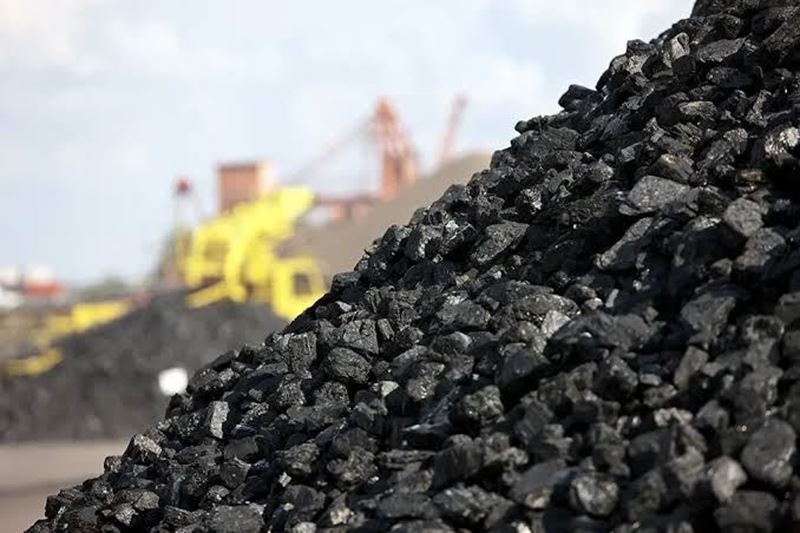
The U.S. Department of Commerce announced on June 29, 2026, that it had initiated an investigation under Section 232 of the Trade Expansion Act of 1962 to assess the impact of anthracite coal imports on national security

The United States has launched a Section 232 investigation into anthracite coal imports

According to the notice published by the Department of Commerce, the investigation covers products classified under HTSUS tariff codes 2701.11.0000 (Anthracite Coal) and 2701.12.0010 (Metallurgical Bituminous Coal). The announcement stated that these products are of critical importance for domestic steel production and industrial processes and are also considered among the steel derivatives that may be subject to Section 232 measures.

The Department stated that anthracite coal is one of the highest-quality coal types due to its high carbon content (86–97%), low volatile matter content, and high calorific value. It emphasized that anthracite coal is used particularly in electric arc furnace (EAF) steelmaking as a foaming agent and charge material, thereby supporting critical production processes for the industrial, defence, and infrastructure sectors.

As part of the investigation, the U.S. Department of Commerce invited interested parties to submit written comments, data, analysis, and other relevant information and documentation to the Bureau of Industry and Security (BIS) by July 21, 2026.

During the investigation process, the Department will assess, in particular, the United States’ current and future demand for anthracite coal, the capacity of domestic production to meet internal demand, the risks arising from dependence on foreign supply chains, the potential impact of import concentration among certain countries or suppliers, the effects of foreign government subsidies and unfair trade practices on the competitiveness of U.S. producers, and the impact of state-supported excess production on market prices.


Comments

No comment yet.

Only +plus subscribers can access this content.

SUBSCRIBE now to share your thoughts on the markets and get more comments.
SUBSCRIBE If you already have an account Sign In

Most read news

Japan imposes provisional antidumping duties on stainless steel from China and Taiwan

Friday, July 10, 2026

Subdued demand continues to weigh on MENA steel market

Friday, July 10, 2026

BIR: Downward correction in scrap prices following heavy buying activity in Türkiye.

Friday, July 10, 2026

Tosçelik Spiral Boru has been awarded BOTAŞ’s natural gas pipeline contract.

Friday, July 10, 2026
Follow List
Expand
Your watch list is empty

Add your favorite commodities for quick access and don't miss the latest price change news.


There are no news categories you follow
Edit Notification Preferences
E-bulletin subscription
Sign up to receive the latest news and daily iron prices by e-mail and sms
Become a Plus Subscriber Now!
Try it free for 3 days!
Subscribe Now
Neutral Prices
Be informed
Provincial Iron Prices
Comments and Analysis
Subscribe Now