


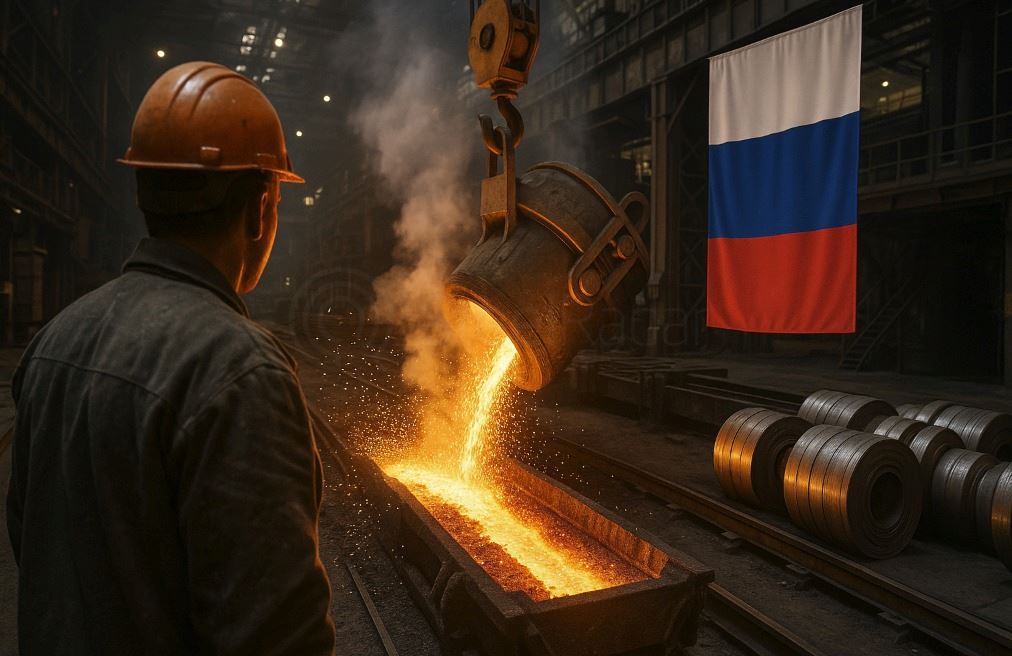
The situation has also affected investor sentiment. Since the beginning of 2025, shares of major Russian steelmakers have lost around half their value and are now trading at their lowest levels in roughly a decade.
High interest rates continue to weigh on steel consumption in Russia. Activity remains subdued in key steel-consuming sectors such as construction, machinery manufacturing and household appliance production. During the first quarter of 2026, Russian steel demand fell by 15% year on year, while steel prices declined by 7%.
External markets remain challenging as well. The downturn in China's construction sector has pushed Chinese mills to increase exports aggressively. Global steel exports reached a record 131 million tonnes in 2025, while Chinese steel prices have remained near ten-year lows since August 2024. This has kept pressure on prices across most export markets.
Russian exporters are also facing increasing trade barriers. The United States, the European Union and India have all tightened measures to protect domestic steel producers. India introduced a 12% safeguard duty on steel imports in April 2025, with the measure set to remain in place for three years before gradually declining.
The billet market has lost momentum in recent weeks. The price increases seen earlier this year during the escalation in the Middle East have largely disappeared. By the end of May, Russian billet export prices had fallen below $490/t as Turkish demand weakened and Chinese suppliers lowered their offers.
Pressure has increased further because Chinese billet prices in Türkiye have fallen by $10-15/t. Chinese material for July-August shipment is currently offered at $525-530/t CFR. Russian billet is available at around $515-520/t CFR, but buyers are reportedly looking for prices closer to $505-510/t CFR.
Despite the weaker market, Russia strengthened its position in Türkiye during the first quarter and became the country's largest billet supplier. Shipments more than doubled compared with the same period last year. Competition is becoming tougher, however, as additional suppliers enter the market.
During the second week of June, Russian billet prices remained largely unchanged. Billet was assessed at $485/t FOB Black Sea, while offers for July shipment were reported at $495-500/t FOB. Russian material was offered at approximately $510/t CFR Türkiye and $530/t CFR Egypt. Billet from Donbas was quoted at $490-491/t FOB Novorossiysk.
Russian suppliers also continued to secure sales in Asia. Market participants reported that between 20,000 and 60,000 tonnes of Russian-origin billet recently changed hands in Taiwan at workable levels of $490-495/t CFR.
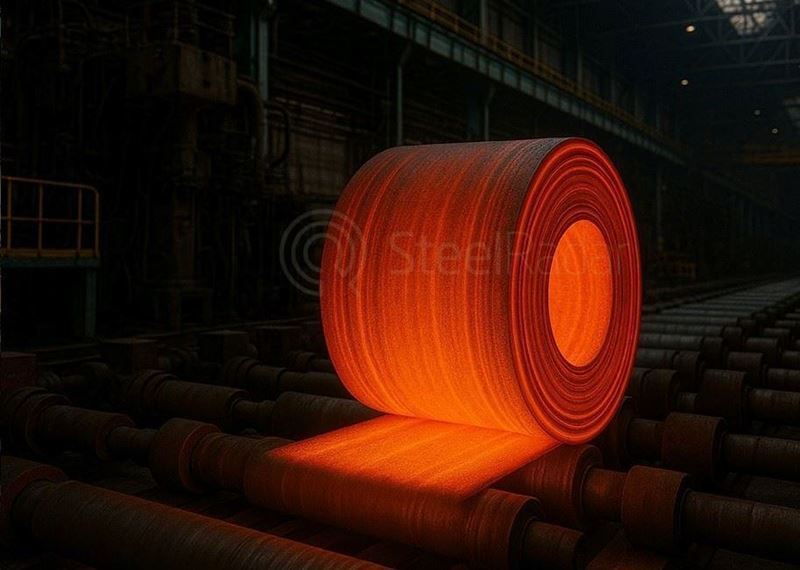
The flat steel segment has performed somewhat better than long products. Hot-rolled coil prices increased by $5/t during the week to around $535/t FOB Black Sea.
At the same time, the pace of price growth has slowed. Inventory replenishment by independent metal traders has been one of the main reasons behind the recent increase in prices, but this support is unlikely to last indefinitely. Final consumption improved slightly due to seasonal factors, although the increase remains limited.
Russian mills raised domestic hot-rolled sheet prices in June and are hoping to repeat the increase in July. Some producers also expect another upward adjustment in coil prices at the beginning of the third quarter.
The welded pipe segment has shown some improvement as well. Prices have been rising by approximately RUB 500-1,000/t per week in several regions.
Whether mills succeed in pushing through further increases will depend largely on the broader economy. Industry participants continue to argue that stronger demand will require either additional government stimulus or a significant reduction in interest rates. Small rate cuts spread over several months are unlikely to have a major impact on steel consumption.
The scrap market has started to strengthen after a relatively stable May. Prices for 3A-grade scrap delivered by rail in the Ural Federal District moved within a narrow range throughout the month, averaging RUB 21,842/t excluding VAT.
Toward the end of May, market participants began reporting higher prices. Current expectations point to increases of around RUB 500/t per week during June.
Several factors are supporting the market. Demand from producers of construction steel products has improved somewhat, pig iron exports have increased, and some steelmakers have raised scrap consumption in their production mix. Scrap collection volumes have also declined as the sector continues to undergo regulatory changes and stricter compliance requirements.
Most market participants do not expect a sharp rise in scrap prices. If scrap becomes significantly more expensive, steelmakers may switch to alternative metallic raw materials, limiting further gains.
Overall, the Russian steel market remained under pressure during the second week of June. Hot-rolled coil and scrap prices have shown some improvement, while billet prices have largely stabilized after recent declines. However, weak domestic demand, high borrowing costs, strong competition in export markets and continued pressure from Chinese steel exports remain the main challenges facing Russian producers.






Comments
No comment yet.