


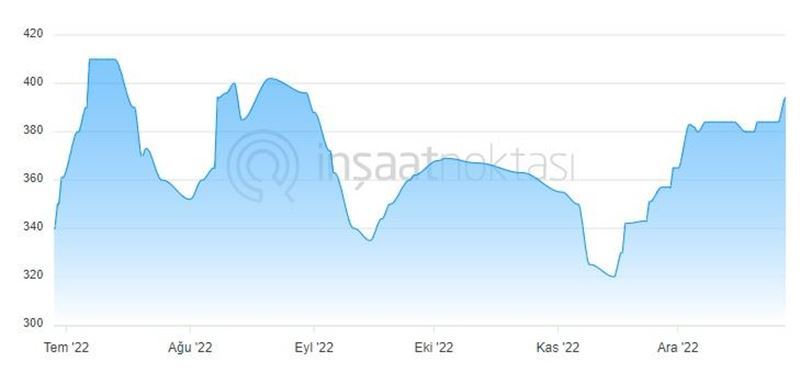
Scrap availability is tight due to low industrial activity and weak consumer confidence in major scrap exporting regions to Turkey, such as the UK, Europe, the Baltic and the US.
The usual seasonal decline in scrap collection rates during the winter months also affected supply.
Steelmakers, along with the sharp increases in electricity and gas prices during the year, as well as the 55% increase in the minimum wage, put pressure on the costs of the mills. It tightened the profit margins.
Many manufacturers, who think that 2023 will be challenging, are hopeful for the second half of the year. Factories that continue to use 50-55% of capacity believe that it is impossible to stop production completely, and therefore export figures should be increased.
It is predicted that the demand for scrap will increase globally due to carbon emissions, and thus more competition will arise for Turkey, which is dependent on imports.
Turkey's imported scrap prices are expected to be strong in the first quarter of 2023. According to the latest scrap deals, agreements were reached for 80/20 scrap at $396/tonne. New offers are hovering around $400/ton and above.
Billet prices are also predicted to rise above the $600 level, while the increase in raw material prices poses serious problems for producers' profit margins.
Rebar prices, which were around $700 at the beginning of 2022, made high gains in March and April due to the effects of the Russia-Ukraine war. Price levels have moved up to the $940-960 range.
While the rebar prices in the market, which started to weaken as of the fifth month, closed in the range of $760-780 in May, the price ranges traded in other months were as follows:
June 630-750 USD
July 610-710 USD
August 615-670 USD
September 660-715 USD
October 650-710 USD
November 630-660 USD
December 655-690 USD





Comments
No comment yet.