


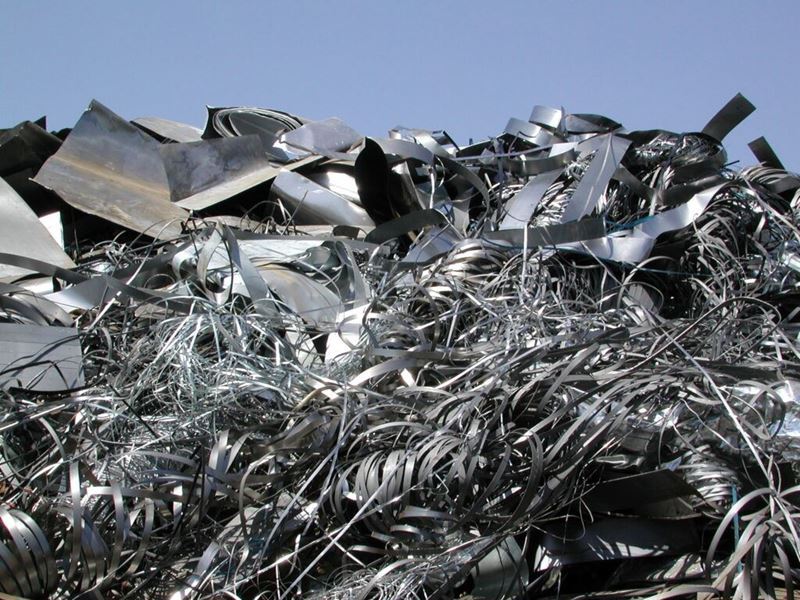
It was reported that the 17th edition of the “World Steel Recycling in Figures” report, prepared by the BIR Ferrous Division, has been published. Covering the 2021–2025 period and consisting of a total of 60 charts and tables, the study was presented to the public during the BIR Ferrous Division meeting held in Gothenburg, Sweden.
During the meeting, BIR Ferrous Division President Shane Mellor announced the publication of the report, while Statistics Advisor Rolf Willeke reviewed its key findings.
According to the report, data relating to the global steel industry were based on assessments sourced from worldsteel. Global crude steel production declined by 1.9% last year to approximately 1.85 billion tons. It was noted that 69.4% of production was carried out through basic oxygen furnaces and 30.3% through electric arc furnaces. While oxygen-based production declined, electric steel production recorded a slight increase.
Global direct reduced iron (DRI) production increased by 4.9% to approximately 153 million tons. India remained the largest producer, with output rising by 7.4% to around 58.9 million tons.
Recycled steel usage increased by 4.5%
The report stated that total recycled steel consumption in major countries and regions increased by 4.5% to 480 million tons despite a 2.5% decline in crude steel production. China’s recycled steel consumption rose by 8.3% to 227 million tons, maintaining its position as the world’s largest consumer.
These countries and regions account for approximately 75% of global steel production, highlighting the significant role of recycled steel in worldwide output.
According to calculations included in the report, approximately 630 million tons of recycled steel are used annually in global steel production. This contributes to avoiding around 950 million tons of CO₂ emissions each year, while also generating energy savings and supporting the conservation of natural resources.
High recycling ratio in Türkiye
The share of recycled steel in crude steel production was reported at 86.8% in Türkiye, compared with 23.6% in China.
Türkiye remained the world’s largest importer of recycled steel in 2025 with 18.768 million tons. Its main suppliers were the United States and the Netherlands. Imports from the United States declined by 20.4% to 3.608 million tons, while imports from the Netherlands edged down by 0.1% to 2.764 million tons.
India’s recycled steel imports fell by 5% to 8.040 million tons. Imports from the United States declined by 11.4% to 1.320 million tons, while imports from the United Kingdom fell by 11% to 890,000 tons.
EU-27 maintained its position as the largest exporter
The EU-27 remained the world’s largest exporter of recycled steel in 2025, exporting 16.684 million tons despite a 2% decline. Türkiye and Egypt were its main export markets, with exports to Egypt increasing by 13.4%.
Within the EU-27, the Netherlands remained the largest individual exporter, with exports rising by 4.39% to 3.922 million tons.
The United States retained second place with exports of 11.767 million tons, despite an 18.4% decline. Its main export destinations were Türkiye and Bangladesh.
Exports from the United Kingdom increased by 4.4% to 6.532 million tons, while exports from Mexico rose by 34.1% to 1.599 million tons. Exports from Singapore increased by 33.3% to 1.262 million tons, and exports from Japan climbed by 17.96% to 7.711 million tons.
Meanwhile, exports from Canada declined by 5.4% to 4.280 million tons, while exports from Hong Kong fell by 8.7% to 1.100 million tons.
The report noted that the EU-27 and the United States continue to dominate global recycled steel trade on a net export basis and that export price trends generally moved in parallel throughout the year.
The meeting was held in Gothenburg, Sweden, where BIR Ferrous Division President Shane Mellor delivered the opening remarks and Statistics Advisor Rolf Willeke gave the presentation.
It was also noted that BIR is the international trade association of the recycling industries and has members from more than 70 countries.





Comments
No comment yet.