


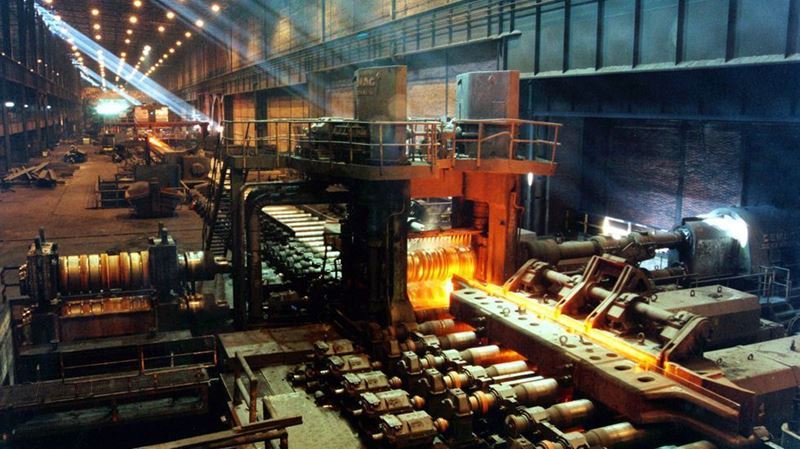
The Türkiye Çelik Üreticileri Derneği (TÇÜD) has announced Türkiye’s steel production, consumption, and foreign trade figures for January 2026.
Accordingly, Türkiye’s crude steel production reached 3.4 million tons in the first month of the year. With this increase, Türkiye maintained its position as Europe’s largest steel producer, making a strong start to 2026.
In January 2026, finished steel consumption declined by 1.7% year-on-year to 3.5 million tons.
Decline in Steel Exports and Imports
In January, Türkiye’s steel product exports decreased by 18.4% in volume to 911,800 tons, and by 21.1% in value to USD 600.1 million, compared to the same month of 2025.
During the same period, steel product imports decreased by 26.1% in volume to 1.3 million tons, and by 26.5% in value to USD 879.4 million.
Thanks to the sharper decline in imports, the export-to-import coverage ratio improved by 4.6% points, rising from 63.6% to 68.2%.
Decline in Global Steel Production
According to January 2026 data released by the World Steel Association, global crude steel production decreased by 6.5% year-on-year to 147.3 million tons.
During the same period:
-
China’s crude steel production declined by 13.9% to 75.3 million tons.
-
India’s production increased by 10.5% to 15.1 million tons.
-
The United States raised its production by 3.3% to 7 million tons.
“Bilateral Agreements Are Gaining Increasing Importance in Global Trade”
Veysel Yayan, Secretary General of TÇÜD, stated:“In January 2026, Türkiye made a strong start to the year by increasing its crude steel production by 5.8% to 3.4 million tons, maintaining its position as Europe’s largest steel producer. Our steel product exports declined by 18.4% in volume and 21.2% in value, partly due to a 33% drop in exports to the EU market. However, the 26.5% decrease in import value 4.3% points higher than the decline in exports raised the export-to-import coverage ratio from 63.6% to 68.2%.
While China’s production decreased by 13.9%, India’s 10.5% increase demonstrates the continuation of its growth momentum in the steel sector. The Free Trade Agreement (FTA) signed between the European Union and India goes beyond a conventional trade deal. It represents a comprehensive strategic partnership approach that places steel at its core, supports decarbonization processes and demand design, incorporates standard-setting mechanisms, and includes investment guidance tools.
Türkiye’s inability to automatically become a party to the free trade agreements signed by the EU with third countries creates a structural disadvantage, as it cannot simultaneously secure the same advantages as countries like India in the EU market.”
Yayan added:“Considering India’s competitive advantage having already reached its 2030 capacity target of 200 million tons and raising it to 300 million tons, as well as increasing its 2047 target from 350 million tons to 500 million tons and the EU’s FTA with MERCOSUR countries, it is evident that bilateral agreements are becoming increasingly important in global trade.
In this context, it is crucial to update the Customs Union agreement between Türkiye and the EU under fair conditions and to ensure the full implementation of the existing Free Trade Agreement provisions, thereby exempting Türkiye from quota practices.”




Comments
No comment yet.