


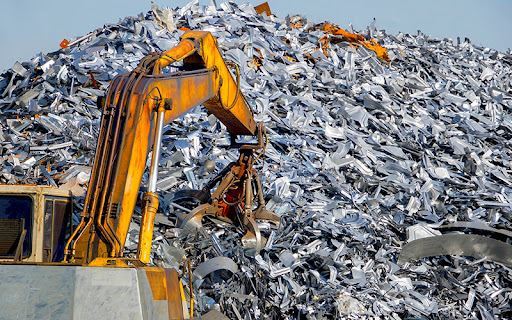
The European Commission has published a draft regulation regulating the export of industrial waste, including ferrous and non-ferrous scrap. The regulation does not prohibit the export of materials, but does impose certain provisions that may restrict such shipments.
European companies exporting scrap and waste must provide an independent inspection showing that buyers of these materials can recycle them in accordance with European environmental standards. At the same time, stricter requirements apply for deliveries to non-OECD countries.
According to European experts, the new rules may complicate the supply of ferrous and non-ferrous scrap to developing countries. In 2019, EU countries exported 3.6 million tons of ferrous scrap, 532 thousand tons of stainless scrap, 535 thousand tons of aluminum and 602 thousand tons of copper scrap to non-OECD countries. Approximately 2.3 million tons of ferrous scrap were supplied to Egypt, India and Pakistan.
In addition, the project of the European Commission proposes a series of measures to improve the European market for secondary raw materials. Simplifying cross-border procurement procedures, introducing common criteria and standards, etc. It is stated that European companies only get 12% through recycling. from raw material. According to the European Commission, this share needs to be increased.
According to their estimates, EU countries export around 33 million tons of recyclable materials annually, which is 16% of the global indicator. A further 70 million tons are traded within the EU and 16 million tons of scrap and waste are imported.
The project of the European Commission was sent to the European Parliament and the European Council. In these institutions, the approval process of a regulation can take approximately one year. Provisions for the creation of a European market for recyclable materials will come into force two years after approval, and export regulation - three years later, that is, no earlier than 2025-2026.




Comments
No comment yet.