


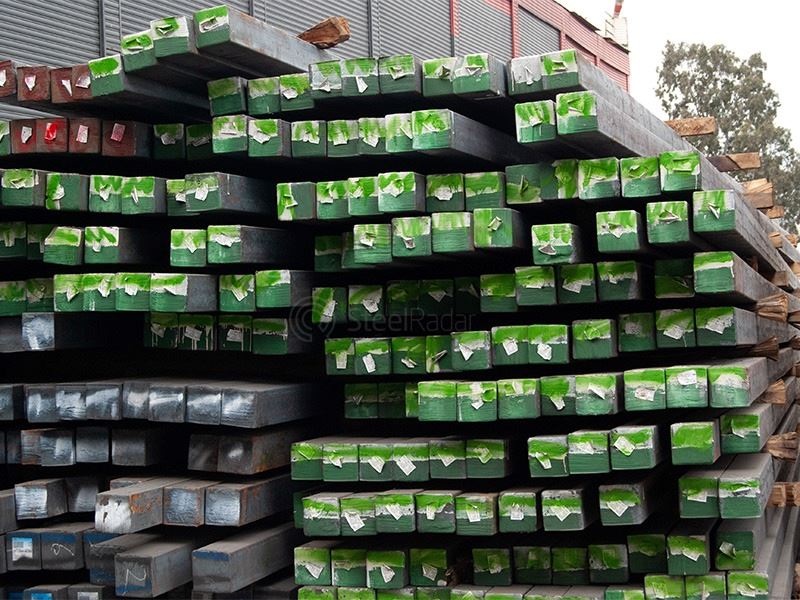
While the support of iron ore raw material is weakening, purchases in the sub-sector are mostly based on demand. While steel traders try to convert their profits into cash, steel mills distribute resources directly. This situation causes spot steel billet prices to drop by 10-20% and trading activities remain limited.
As of May 28, steel billet prices in Tangshan remained stable at (XD) 3,540 yuan/ton (488 USD) and (ST) 3,550 yuan/ton (489 USD). While direct transaction performance remained average, the warehouse spot price including tax was reported as 3,600 yuan/ton (496 USD). While finished product prices rose steadily, overall transaction performance remained weak. As pressure mounted on funds towards the end of the month, futures performed poorly throughout the session and there was a lull in market trading overall.
As of May 22, billet stocks held by re-rollers decreased by 24,800 tonnes week on week to 422,000 tonnes. Surveys show that some re-rollers have halted production for maintenance due to deepening losses in finished steel sales, thus reducing purchases of semis. This caused warehouse billet stocks to decline.
Most market traders prefer to wait and watch cautiously due to uncertainties. Although macroeconomic policies are still hot, the industrial side is under pressure, requiring a careful approach in the market. Steel traders and producers are closely following the current situation and possible future developments.
This stagnation in the steel billet market is considered as a reflection of the uncertainties on the industrial side and the weakness in the spot market. The decrease in demand, decline in stocks and limited trading activities reveal the current difficulties of the sector. Actors in the market continue to monitor the situation closely and try to determine their strategies according to future developments.





Comments
No comment yet.