


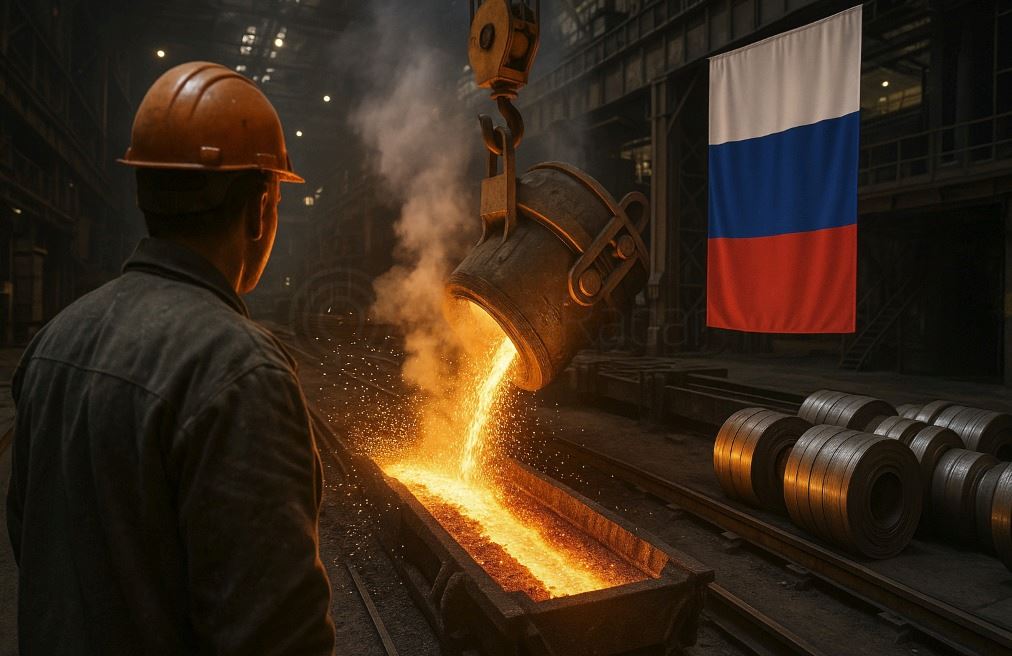
Domestic rolled steel prices on an ex-works basis are likely to remain relatively stable, easing slightly to around $590/t, representing about a 1% decline from current levels. In contrast, export quotations at ports could strengthen, with FOB prices projected near $500/t, roughly 9% higher than last year. In 2025, the domestic premium averaged around $155/t, with EXW prices at approximately $583/t and export values near $458/t FOB.
For several years, the Russian domestic market offered stronger margins for steelmakers, particularly as sanctions restricted access to certain export destinations. While local prices in ruble terms may gradually recover during 2026, currency depreciation could offset that improvement in dollar terms. Under such conditions, exports become relatively more attractive for producers seeking to stabilize revenues.
The segments most exposed to price pressure are expected to be rebar and other long steel products, which depend heavily on construction activity. Weakness in this sector is already affecting demand. Steel pipe prices could also face adjustments if industrial investment remains subdued. The broader market slowdown reflects multiple factors, including tight credit conditions and ongoing challenges in both construction and machinery manufacturing.
Steel consumption in Russia has already contracted sharply. In 2025, demand for rolled steel products dropped by around 14% year-on-year to 38.9 million tonnes, and the downward trend may continue through 2026 if key consuming industries fail to regain momentum.
By the end of the year, the domestic premium over export alternatives could shrink to around 20–25% below current levels, with the difference between local and overseas markets in some cases falling to low single-digit percentages. During certain periods, the gap may almost disappear entirely. In late February, mills attempted to lift rebar prices by about 2,500 rubles per tonne, which would have created a premium of roughly 3,000–5,000 rubles, but buyers showed limited willingness to accept the increase.
At the same time, exports have already been rising. Russia shipped around 12.1 million tonnes of steel in 2025, marking a 13% increase year-on-year and placing the country among the six largest global suppliers. The growth was supported by the removal of export duties that had been introduced in 2024, combined with weaker domestic demand that pushed producers to seek alternative markets. Some estimates suggest the real export volume could be significantly higher depending on the product categories included.
The Middle East continues to serve as the main destination for Russian steel shipments. However, rising geopolitical tensions in the region could complicate further expansion. Turkey and North Africa remain important outlets, while part of the exported material may also move through intermediaries before eventually reaching European markets.
Global demand trends could offer limited support. Steel consumption in developing economies outside China is expected to grow by about 4.7% in 2026, which may allow Russian producers to expand exports by another 5–10% compared with 2025 levels. However, sanctions, logistical hurdles, payment restrictions, and the finite capacity of external markets will likely cap any more aggressive growth in overseas sales.






Comments
No comment yet.