


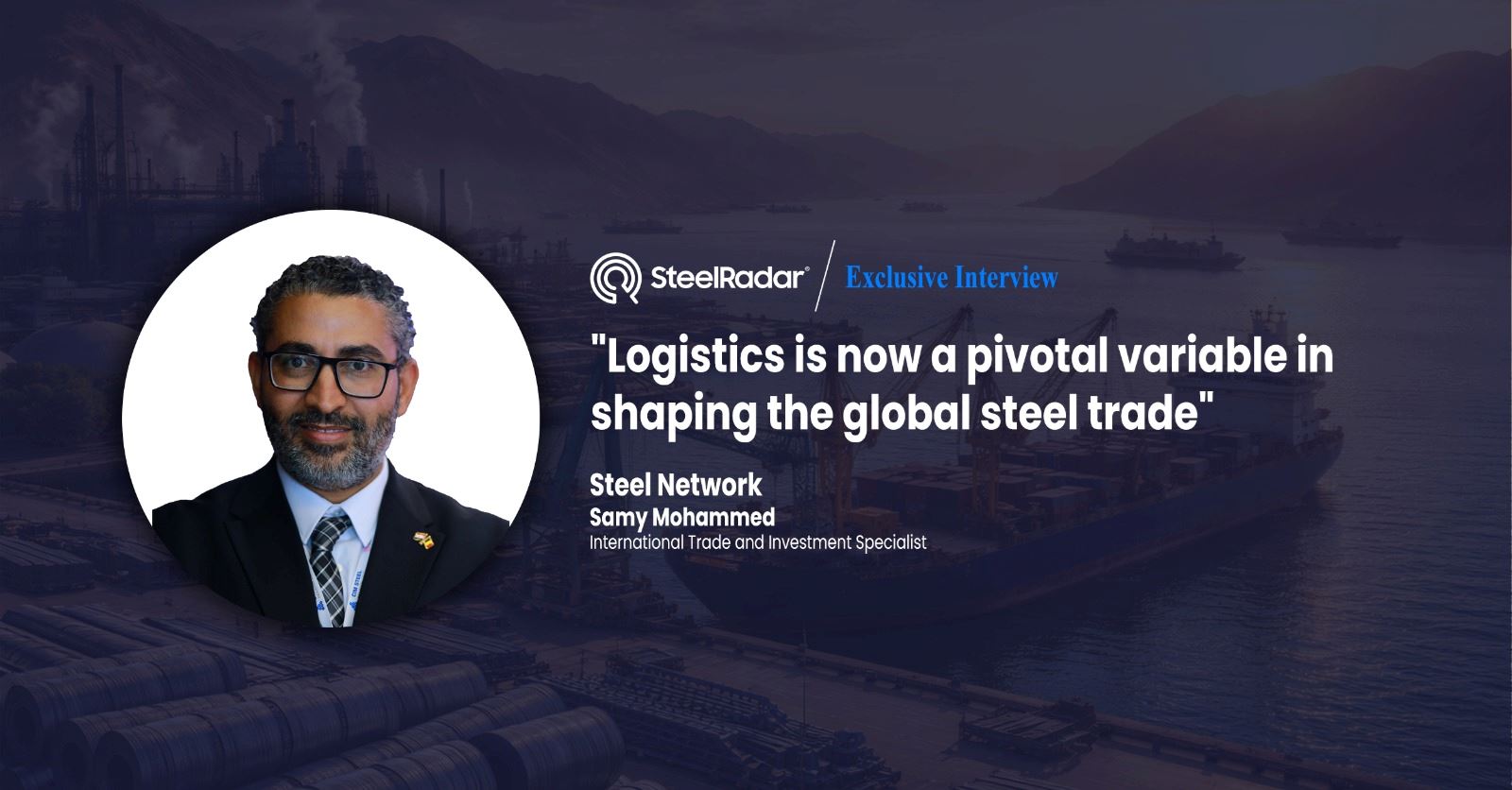
Samy Mohammed provided a comprehensive sectoral roadmap, covering a wide perspective ranging from the risks posed by dependency on the Strait of Hormuz to the upward revisions in FOB and CFR prices of Chinese-origin products. Highlighting how disruptions in Gulf-linked supply chains have narrowed arbitrage opportunities between Türkiye, the Middle East, and Asia, Mohammed shared key insights into new 'resilience-oriented' logistics strategies essential for corporate survival.
Freight and logistics are now the main factors determining steel prices. How are the geopolitical tensions in the Middle East affecting the steel industry, and what changes have you observed in iron and steel supply chains?
The impact is already visible across both raw materials and finished steel flows. The most immediate pressure is on supply chains connected to the Gulf, particularly those dependent on the Strait of Hormuz for the movement of iron ore, pellets, ferroalloys, refractories and semi-finished steel.
At this stage the issue is not only material availability, but also whether cargo can move reliably and on schedule. Many steelmakers in the Gulf still hold enough raw material cover to continue operating in the near term, but uncertainty is rising around cargoes already in transit or waiting to discharge. If disruption continues, the market could begin to see tighter raw material availability, especially for producers dependent on imported metallics and inputs.
A second visible change concerns semi-finished steel trade. Iranian billet and slab have become significantly less reliable as regular export supply. As a result, buyers in Southeast Asia and nearby markets are increasingly turning to alternative sources, particularly China and other Asian producers.
This shift is already changing regional trade flows and supporting prices for replacement material.
A third development is logistical rerouting. Cargoes that would normally discharge through Gulf ports are in some cases being redirected to alternative ports followed by inland transport. This extends delivery times and increases cost. In practical terms, logistics has moved from being a background factor to becoming a central variable shaping steel trade.
“Increasing freight and logistics risks have narrowed the arbitrage opportunities between regions”
Shipping rates have increased significantly recently. According to current data, what is the rate of increase in shipping costs, and how has this situation affected regional steel trade?
Freight costs have increased sharply and in some routes the rise has been large enough to change the economics of steel trade.
On key routes from northern China into the Middle East and the Eastern Mediterranean, freight to Jeddah has moved from roughly $40 per tonne before the conflict to around $62 per tonne, and in some cases even higher when bunker adjustment factors are included. Freight to Türkiye has followed a similar pattern, rising from about $40 per tonne to approximately $62 per tonne. Shipments to Damietta increased from around $38 per tonne to roughly $55–60 per tonne. Overall, this implies increases of approximately 45–60% on several major routes.
Equally important is the volatility. Freight validity is short and prices are moving quickly. In some cases exporters are reluctant to quote CFR prices with confidence because freight can change before a transaction is concluded.
This has already affected trade behavior. Buyers are pushing back against higher landed costs while exporters are becoming more cautious with new offers. Some transactions are delayed, renegotiated, or suspended. In effect, higher freight and logistics risk are compressing arbitrage opportunities between regions.
Export prices have also begun to adjust. Over the past two weeks Chinese export prices have moved upward across several products. Billet increased from about $445 per tonne FOB to around $459 per tonne. Hot-rolled coil rose from roughly $460 per tonne to about $486 per tonne, while cold-rolled coil increased from around $525 per tonne to roughly $562 per tonne. Freight pressure is clearly contributing to this upward adjustment in delivered prices.
What are the most preferred maritime routes for steel shipments currently, and how do these route choices reflect on freight prices?
Current routing decisions increasingly reflect operational reliability rather than simply the lowest freight.
For Asia-to-Europe cargoes, market participants are paying greater attention to routes that avoid the highest-risk areas, even when those routes are longer. For shipments involving the Gulf region, the response has been more operational: alternative discharge ports are being used when possible, followed by inland trucking or feeder logistics.
In practical terms this means that cargoes originally intended for ports such as Dammam or Jebel Ali may instead be redirected to locations such as Jeddah, Sohar, Fujairah or Khorfakkan depending on product and final destination. These alternatives are not necessarily cheaper in freight terms, but they are often more workable under current conditions.
This reflects a broader shift in how steel trade logistics are evaluated. Historically buyers focused mainly on freight cost and transit time. Under current conditions, factors such as insurance availability, vessel willingness, port accessibility and delivery certainty are playing a much larger role. As a result, route selection today increasingly reflects the need to ensure execution rather than simply minimize freight.
“In current market conditions, security of supply is almost as important as price”
In the current environment of uncertainty in the global steel market, how do you think companies should update their procurement and logistics strategies?
In the current environment companies need to move toward a more resilience-based procurement strategy.
The first priority should be diversification of supply sources and routes. Overdependence on a single origin or shipping corridor can quickly become a vulnerability when geopolitical risks increase.
The second priority is to evaluate total landed cost, not just mill price. A competitive FOB offer can quickly become less attractive once freight volatility, insurance costs, inland transportation and potential delays are taken into account.
Third, companies should build greater logistics flexibility into contracts and planning. This includes alternative discharge ports, flexible delivery terms and contractual provisions that account for freight volatility and potential disruptions.
Finally, inventory strategies may need to be reviewed. The current environment does not necessarily require excessive stockbuilding, but it does suggest that companies should reassess minimum safety stock levels for critical materials when lead times become less predictable.
In practical terms the companies that will perform best in this environment are those that treat procurement and logistics as an integrated risk management function. Under current market conditions, security of supply is becoming almost as important as price.
If disruption in Gulf shipping persists for several more weeks, logistics costs rather than mill prices could become the primary driver of regional steel price formation.
Overall, the current tensions in the Middle East are demonstrating how quickly geopolitical risk can translate into logistics disruption for the steel industry. Rising freight costs, rerouted cargoes, and uncertainty around key maritime corridors are already reshaping trade flows between Asia, the Middle East, and Europe. If these conditions persist, supply chain resilience and logistics flexibility will become increasingly important factors in global steel market dynamics.



Comments
No comment yet.