


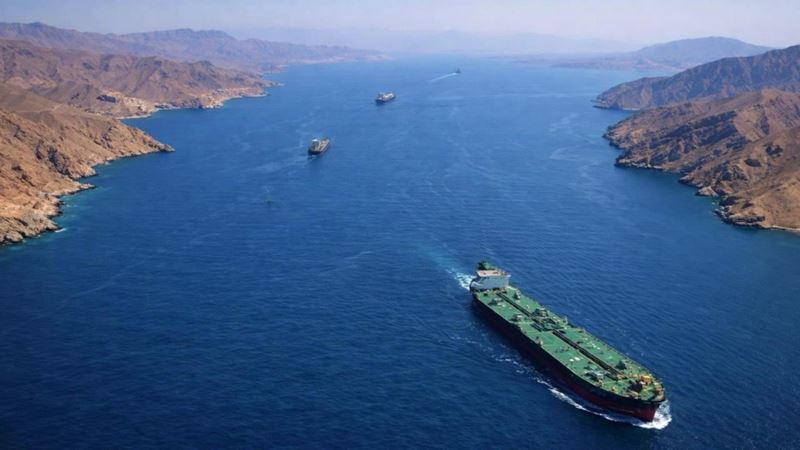
It was stated that the new system became active as of May 5, and that vessel transit procedures will henceforth be managed through the newly established bureaucratic structure.
According to Iranian officials, vessels will submit applications regarding transit permits and regulations via info@PGSA.ir. The process is said to be managed through a “secure corridor” under the supervision of the Iranian Revolutionary Guard Corps Navy.
On the U.S. side, it was reported that the “Freedom Project” related to the Strait of Hormuz has been suspended. Former U.S. President Donald Trump was said to have paused the project at Pakistan’s request as part of a tactical break aimed at achieving a “full and final agreement.” However, it was noted that the United States continues to maintain its military presence in the region through the Fifth Fleet.
Data regarding maritime traffic in the region indicated a noticeable decline in transit activity. According to Lloyd’s List data, only a limited number of vessels passed through on May 5–6, while the 2025 daily average was approximately 60 vessels. Some ships were reportedly redirected to routes via the Suez Canal and the Cape of Good Hope due to increasing risks.
Volatility was also observed in the oil market. Due to the critical role of the Strait of Hormuz in global energy transportation, Brent crude oil prices reportedly increased by 8% within one week.
It was also stated that the Iranian Parliament is considering the implementation of transit fees depending on vessel type and flag, as well as restrictions on ships belonging to certain countries. Developments in the region were said to continue keeping tensions high in the Strait of Hormuz and increasing uncertainty in global energy markets.





Comments
No comment yet.