


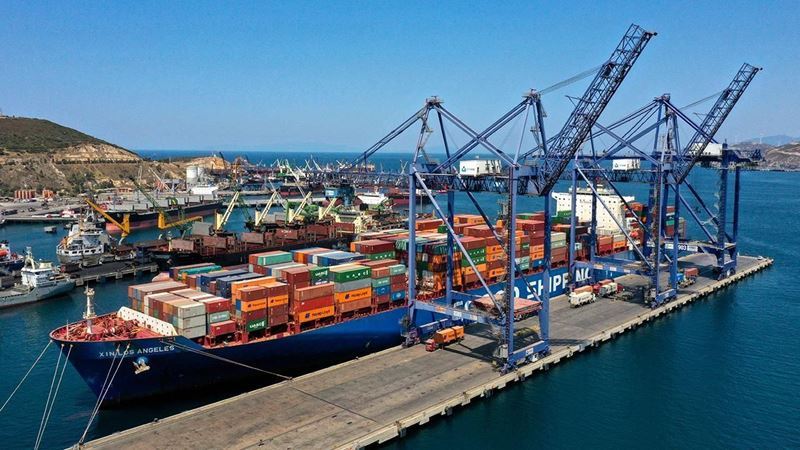
Driven by trade diplomacy initiatives and the support provided to exporters, Türkiye’s total exports increased by 4.5% in 2025 to reach USD 273.4 billion. This marked the fifth consecutive year of export growth for the country. According to data from the Turkish Exporters Assembly (TİM), 18 of 26 sub-sectors increased their exports, while 8 sectors experienced a decline. Exports to Germany increased by USD 1.732 billion compared to the previous year, followed by the United Kingdom and the United States in second and third place, respectively.
Mehmet Ali Yalçındağ, Chairman of the DEİK Türkiye–Germany Business Council, stated that Türkiye’s approximately USD 20 billion in exports to Germany accounts for 8.36% of its total exports, adding that Germany’s role as a production and distribution hub for Europe has made Türkiye an indispensable nearshoring location. Emphasizing that well-established supply chains in sectors such as automotive and machinery have strengthened exports, Yalçındağ noted that amid ongoing economic uncertainty, Türkiye’s importance as a strategic trade partner for Germany has further increased.
Stressing the need to strengthen Türkiye–Germany–EU relations, Yalçındağ said that a shared vision is essential on both the commercial and political fronts. He added that Germany should provide stronger support for Türkiye’s EU accession process, and underlined that contacts between the Turkish business community and German public and private sector representatives play a critical role in trade diplomacy by influencing decision-making processes.
Highlighting the importance of updating the Customs Union, Yalçındağ warned that excluding Türkiye from Europe’s “Made in Europe” approach developed in response to Asia could render the customs mechanism ineffective. He noted that active lobbying efforts are therefore being carried out within the relevant processes.
Yalçındağ stated that automotive, machinery, metal products, and electrical equipment are the main sectors driving exports to Germany, adding that the 36.1% increase in automotive exports in 2025, surpassing USD 6.5 billion, clearly demonstrates the strength of Türkiye–Germany supply chains. He also pointed to areas with strong potential to boost Türkiye’s position in the German market, including renewable energy, high value-added products, and digitalization-focused industrial solutions.
In his outlook for 2026, Yalçındağ said that bilateral trade volume could expand depending on Germany’s growth performance. He noted that automotive, machinery, electrical-electronics, and defense-aerospace sectors hold strong growth potential, emphasizing that Türkiye’s global export success in defense and aerospace in particular represents a significant opportunity for strengthening relations with Germany.



Comments
No comment yet.