


China
During the week of March 4-8, Chinese prices for commercial grade hot-rolled coils (HRC) for export continued to decrease due to weak overseas demand. The export price of Chinese SS400 4.75mm HRC dropped to $545/t FOB from Tianjin port, marking a third consecutive weekly decline. Similarly, China-origin SPCC 1.0mm cold-rolled coil prices also fell to $638/t FOB Tianjin. Chinese steelmakers responded to the weak demand and falling domestic prices by cutting export offers for flat products. For instance, some mills in North China reduced export quotations for Q195 HRC to $530/t CFR Vietnam and lowered export prices for Q235 HRC to around $544/t CFR Vietnam. Additionally, a leading steel trader in East China decreased its export price for SS400 HRC to $545/t CFR Vietnam. Despite these price adjustments, the appetite for China-origin hot coils among Vietnamese buyers remained low due to the continuous decline in domestic Chinese HRC prices. In other regions, a deal involving 10,000 tonnes of China-origin HRC was struck in the United Arab Emirates at a price of $617/t CFR.
Billet prices in Tangshan, North China's Hebei province, experienced a decline from March 4 to March 10, attributed to subdued demand in the finished steel market and limited growth in billet demand. The price of Q235 150mm square billet dropped to Yuan 3,440/tonne ($478.8/t) including VAT, down by Yuan 80/t or 2.3% compared to March 3. Additionally, billet stocks in commercial warehouses and ports in Tangshan decreased by 7.7% on week to total 1.44 million tonnes as of March 7. In terms of supply, daily output of billets among surveyed steelmakers in Tangshan increased by 6.8% on week, with some mills raising output after narrowing losses. The average cost of producing billets dropped, and the average loss when selling semis decreased as well.
India
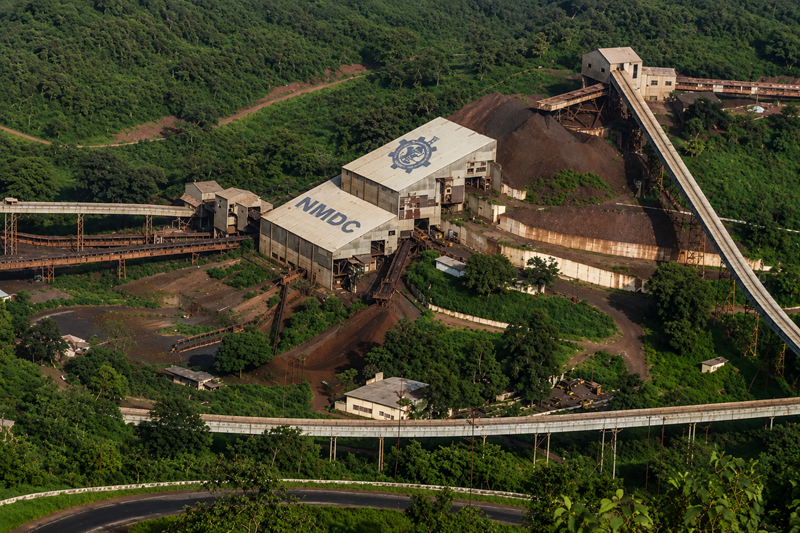
India, the world's largest sponge iron producer, is facing a shortage of sponge iron due to extensive exports of iron ore, leaving insufficient quantities for domestic use. Sponge iron manufacturers, reliant on purchasing iron ore, are experiencing operational losses due to the scarcity and increased costs. Industry associations are calling for government intervention, proposing a reduction in the export threshold for iron ore to better serve the sponge iron industry's needs. Miners argue that exports mainly consist of low-grade iron ore with limited domestic demand. Iron ore exports surged in 2023 following the removal of export duties, exacerbating concerns amid rising steel production. To address the crisis, experts advocate for urgent government action, including resolving pending litigations to reopen closed mines and potentially banning all forms of iron ore exports.
HRC prices in India have been declining since January. HRC, which was priced between 652-664 USD in January, dropped to 647-654 USD in February and 642-644 USD in March. The decline in prices since January may underline the change in supply and demand due to the influence of global and local economic factors. Although ups and downs were observed in prices in the intermittent period between March 4 and March 12, HRC prices continued their stable course. On March 12, the HRC price was fixed at 643 USD. It can be predicted that pressures on prices may continue in the coming period. However, the stabilization seen in prices in March can be interpreted as a search for some kind of balancing or stability.
Vietnam
The hot rolled coil (HRC) import market in Vietnam remains subdued due to declining Chinese prices. Offers for SAE 1006 HRC from Tier I mills in China are at $585/tonne CFR Vietnam, with lower-priced offers at $575/t CFR from lower-tier mills. However, no deals for SAE 1006 HRC have been reported. Deals for April shipments of commercial grade HRC from China are transacting at $528-540/t CFR for various thicknesses and grades. Sales of HRC are slowing down, attributed to the depressed global HRC market and weakness in China's steel market. Orderbooks for rerollers in Vietnam are only filled for the first half of May, reflecting the challenging market conditions. SAE grade HRC assessed at $575-580/t CFR Vietnam, unchanged from the previous week.
A prominent mill reportedly sold 50,000 tonnes of actual-weight rebar at $555/t CFR Hong Kong last week. This decision seems logical as Vietnamese rebar export prices hover around $570-575/t CFR Cambodia, with cheaper freight costs to Hong Kong. Additionally, the mill recently decreased its scrap purchase prices by $20-24/t.
Similar to a previous instance two weeks ago when the same Vietnamese mill sold a significant volume to Singapore and Hong Kong at $560/t CFR, it's observed that the mill is maintaining a high official export price. This week, the mill's rebar offer price stands at $565/t FOB, although last week it was at $570/t FOB.
Malaysia
A Malaysian mill reduced its direct offer for theoretical-weight rebar for April delivery to $545/tonne, trucked to Singapore for orders of minimum 10,000 tonnes, down from $555/t the previous week. The market trend is prompting mills to invite bids rather than issuing offers, with falling raw material prices being the primary reason for the market downturn.
Hong Kong
In Hong Kong, offers for actual-weight rebar from a Malaysian mill decreased to around $545-550/t CFR. Chinese actual-weight rebar is being sold in Hong Kong at $545/t CFR for base sizes of 16mm diameter material. However, this price cannot compete with the Malaysian mill's trucked offer at $545/t delivered. Weak iron ore prices and sluggish Chinese domestic steel demand were cited as factors contributing to the price decline, exacerbated by the absence of clear policies to support China's property market following the recent National People’s Congress meeting.
Taiwan
Market participants in Taiwan noted sluggishness in the market following the Lunar New Year. Feng Hsin Steel Co., Ltd., a Taiwan-based company, maintained its product prices for the week. Rebar, scrap, and section steel prices were unchanged at NT$19,400/ton, NT$10,500/ton, and NT$26,700/ton, respectively. The company reported no quotations for US scrap shipment last week. Additionally, Japan's H2 scrap prices decreased to US$365/ton, and US containerized scrap prices declined to US$355/ton. However, Australian iron ore prices increased to US$116.55/ton.




Comments
No comment yet.