


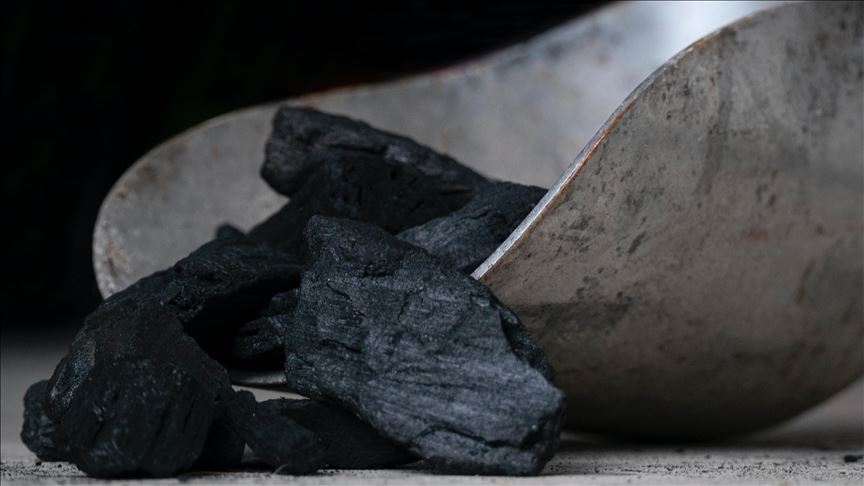
The uncertainties caused by the Russia-Ukraine war and the rapid rise in natural gas and electricity prices have quadrupled the prices of coal in the markets in the last 1 year, bringing its tonne to over $400.
Brian Ricketts, General Secretary of the Brussels-based European Coal and Lignite Association (EURACOAL), of which Turkish Coal Enterprises (TKİ) is a member, made evaluations about the latest situation in the coal markets.
Reminding that the price of coal in September futures contracts in the European markets is currently at the level of 405 dollars, Ricketts said, "Coal prices will not stay this high forever. It will go down." said.
Pointing out that it is difficult to predict the future of coal prices at this stage, Ricketts said, "We have seen that coal prices have increased very rapidly. In other words, prices are both at historically high levels and very volatile. Therefore, you cannot make predictions in such a market." used the phrases.
Ricketts stated that coal prices were around $100 in this period last year, and $60 in the previous year, and have increased rapidly in the last period.
Reminding that the natural gas flow from Russia to Europe is likely to be interrupted, especially in winter, Ricketts said, "Many European countries are planning to burn more coal this winter due to the crisis." he said.
Emphasizing that especially Germany, England, France, Italy, Spain, Netherlands, Austria, Poland, Hungary, Czechia and Greece have more electricity generation potential than coal in Europe, Ricketts noted that these countries have reopened their coal power plants or extended the operating periods of their power plants. .
Ricketts stated that despite the crisis, coal was not a "saviour" in the eyes of Europeans, but that it is now viewed more favorably than in the past.
Pointing out that European countries understand that relying on imported natural gas is a mistake, Ricketts stated that the EU is focusing on the renewable energy agenda against this situation.
Coal will fill the gas gap.
Drawing attention to the fact that coal will fill the gap left by natural gas in the transition to renewable energy, Ricketts said that at this stage, the EU can take steps to relax certain regulations related to coal due to energy supply security.
Ricketts stated that the aim of the EU countries at this stage is to ensure energy stability in the face of this difficult situation they face, and that there will not be a major change in EU energy and climate policy due to the crisis.
Recalling that the share of coal in Europe's electricity production was around 15 percent last year, Ricketts said, "We expect electricity production from coal to be higher this winter due to the gas crisis. The share of coal has already risen and will probably rise even higher. By the end of the year, the share of coal in electricity generation will be 20 percent. can rise above it." made its assessment.
Coal supply problems
Ricketts pointed out that there are some difficulties in the supply of coal, and stated that thermal power plants in the EU are relatively far from the ports where coal is supplied, and that there are serious problems in the transportation of coal to the power plants.
Reminding that the water levels are insufficient for transportation, especially in large canals used to transport coal, Ricketts stated that coal is transported on railways, bottlenecks and supply problems are experienced for this reason.
Recalling that the EU imposed a coal import ban in mid-August within the scope of its sanctions against Russia, Ricketts emphasized that coal stocks in ports increased in this process.
Stating that coal cannot come to Europe from Russia at this stage, Ricketts said that coal is now supplied from countries such as the USA and Indonesia.
Ricketts said that Russia can only sell its coal in international markets just slightly above the production cost, that Russia is not at all satisfied with the prices it applies, and that the countries that buy coal are satisfied with this situation.
Emphasizing that the coal supply can come from a wide variety of source countries, Ricketts noted that Europe can supply this product from other sources.
No new coal power plant investment
Ricketts stated that he did not expect any country in Europe to invest in new coal power plants or coal mines due to the gas crisis, and that the EU climate policy prevented this.
Stating that carbon prices do not drive the coal markets in Europe in the current situation, Ricketts said, "Natural gas drives coal prices. The increase in gas prices also pushed coal prices up." said.
Pointing out that there has been no significant increase in the production costs of coal recently, Ricketts emphasized that the increase in coal prices was driven by market dynamics and high gas prices.
Ricketts added that while gas storage levels are currently looking good in Europe, gas will certainly be very expensive during this period.
Before the sanctions, Russia was the country that supplied the most coal to EU countries. Russia was making about 25 percent of its coal exports to Europe.
EU countries, on the other hand, supplied 45 percent of total coal imports and 70 percent of thermal coal used in electricity generation from Russia.
According to data from the Russian Ministry of Energy, Russia sold 48.7 million tons of coal to the EU in 2021.



Comments
No comment yet.