


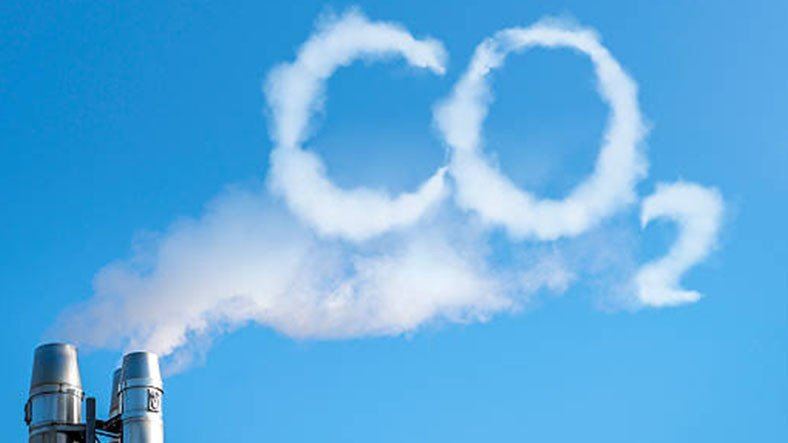
As global natural gas prices are entering a winter that is expected to break records, sector executives say that the crisis in natural gas stumbles not only in the energy sector, but also in the fertilizer and carbon dioxide sector, which works with natural gas, and that this situation may disrupt production in many sectors from steel to food.
While the production costs of carbon dioxide, which has many different uses in cold drinks, animal slaughterhouses and nuclear power plants, are no longer a profitable business for the European producer due to natural gas prices, producers choose to outsource ammonia production in addition to carbon dioxide on the continent.
The UK has warned food producers to be ready for a 500% increase in carbon dioxide prices. According to the news of Dünya newspaper, carbon dioxide (CO2), which is used intensively to stun animals in meat combines and slaughterhouses, as well as in carbonated beverage production, emerges as a by-product in fertilizer manufacturing, where natural gas is the biggest input cost.
“The continent’s carbon dioxide supply has fallen by 50% due to costs”
Nippon Gases, one of the world's largest carbon dioxide distributors, states that the bottleneck in carbon dioxide supply, which was first felt in England, may spread to Europe as well. Nippon Gases, which sold about $1.5 billion worth of industrial natural gas across Europe last year, estimates that the continent's carbon dioxide supply has dropped by 50 percent, and says "other countries in Europe will also suffer from supply constraints." The Japanese company prioritizes nuclear power plants, meat producers and manufacturers that use carbon dioxide for medical purposes in European countries including Sweden, France and Germany.
“Producing ammonia in Europe is no longer profitable”
Norwegian chemical group Yara, which announced last week it will reduce ammonia production by 40 percent, also supports Nippon's statements, and CEO Svein Tore Holsether said, "Our cash flow is in the negative. "With today's gas prices, it is no longer profitable to produce ammonia in Europe." Holsether says that 1 ton of ammonia they produce costs $900 of natural gas, which means a loss of $300 for each tonne sold.
In England, two fertilizer plants of CF Industries were shuttered due to natural gas prices. Now the government is trying to help the facilities reopen with financial support "for just a few weeks". Because in the absence of carbon dioxide produced in fertilizer plants from the beverage sector to the chicken and meat sector, it is estimated that there may be new closures.
European energy ministers meet to discuss crisis
European Union energy ministers will discuss rising energy prices in Europe on September 22. In addition, a group of deputies from the European Parliament asked the European Commission to investigate the role of Russia's state-owned gas producer Gazprom in the crisis. Gazprom says it has fulfilled all its commitments with the EU.
FRANCE announced on September 15 that it will provide 100 Euro bill support to 5.8 million households.
Data from September 20 in GERMANY show that household gas bills increased by 11.5%. In addition, some energy experts have warned that some energy suppliers in the country may go bankrupt.
GREECE announced on September 14 that it will provide energy incentives to most households until the end of the year. A 9 euro incentive will be given for the first 300 kilowatt-hours of electricity consumed during the month.
It has been announced that short-term measures of 3 billion Euros will be taken in ITALY, which will be used to counter the rise in retail energy prices.
PORTUGAL Energy Minister said on 21 September that electricity bills will be fixed for households by being regulated in 2022.
SPAIN told the member states that speculators in the carbon market should be restricted and called on them to increase their natural gas reserves.
ENGLAND, on the other hand, is starting to provide state loans to energy companies in the crisis where two more energy companies went bankrupt yesterday.
OPEC: Gas crisis could create turbulence in oil
As the problems in natural gas supply continue to hit both suppliers and customers in Europe, the Organization of the Petroleum Exporting Countries (OPEC) warned that the crisis will have an impact on the oil markets.
Iraq and Nigeria: Oil demand rises if gas crisis worsens
Iraqi Oil Minister Ihsan Abdul Jabbar said on Wednesday he expects demand for crude oil to increase as natural gas consumers turn to alternative fuels.
Mele Kyari, of Nigeria's state-owned oil company, says the crisis could increase demand for oil by 1 million barrels and raise crude oil prices by $10 in the next six months.
Since both OPEC members are eager to increase their production, their predictions are not normally evaluated very objectively in the market, but with the natural gas crisis, the markets support this view and Brent futures are approaching this year's peak at $75.
With the weekly decline in crude oil stocks in the USA exceeding expectations, the hurricanes disrupting the supply and the natural gas crisis, Brent rose by more than 1.5 percent to $ 75.58 yesterday. WTI, on the other hand, rose almost $1 to $71.80.
Arda Yali, General Manager of Elin Energy:
“Cement, fertilizer, mining, frozen food, oil and steel are affected”
In the crisis Europe experienced due to the rally in natural gas prices, Turkey's hydroelectric capacity tries to prevent this price increase wave. I think that Turkey will start to turn to renewable energy sources more in the face of increasing natural gas prices. Serious shortages in the supply of liquid carbon dioxide will affect the cement, fertilizer, mining, petroleum, frozen food and steel industries.






Comments
No comment yet.