


Turkish long steel market saw downward price movements across both semi-finished and finished steel products during the first week of July. Weak domestic demand, insufficient export orders, and declining scrap costs prompted producers to adopt more competitive pricing strategies.
The most notable development in the semi-finished segment was Kardemir's new billet sales round, launched approximately one month after its previous sales announcement. The producer reduced its billet prices by $10/t, offering 150x150 mm S235JR square billet at $515/t EXW and B420 grade billet at $520/t EXW. The sale of approximately 62,700 tonnes was concluded within a short period, indicating that domestic buyers continue to favor local suppliers due to more attractive financing and payment terms. At the same time, the narrowing price gap between imported and domestic billet has significantly reduced the attractiveness of imports.
The imported billet market also remained under downward pressure. Russian billet offers declined to $495-505/t CFR Türkiye, while Chinese billet offers fell to $515-520/t CFR Türkiye. Meanwhile, growing geopolitical uncertainty surrounding Iran and extended delivery times have significantly reduced the feasibility of lower-priced Iranian semi-finished material.
A similar trend was observed in the finished steel segment. Turkish rebar export offers declined to $570-580/t FOB, with market participants noting that producers have become increasingly flexible during negotiations in an effort to secure orders amid persistently weak demand. In contrast, CIS-origin rebar prices remained largely stable at $550-560/t FOB.
In the wire rod market, domestic ex-works prices were generally quoted at $585-600/t, while export offers ranged between $585-610/t FOB. As demand continues to show little sign of recovery, producers are competing more aggressively not only on price but also by offering more flexible payment terms and commercial conditions to secure forward export orders.
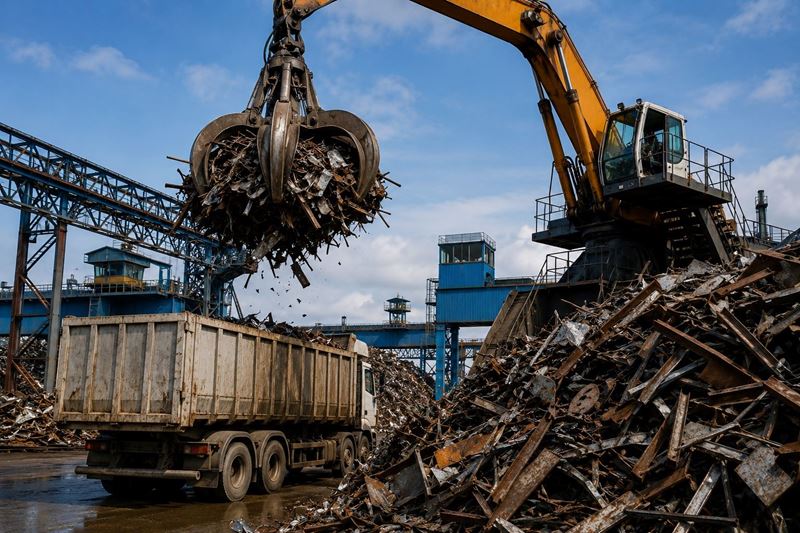
Another key factor weighing on the long steel market was the decline in scrap prices. Türkiye's import price for premium HMS 1/2 (80:20) scrap fell to around $370/t CFR, reducing production costs. However, weak end-user demand prevented this cost advantage from translating into stronger finished steel prices. Instead, producers reflected lower input costs in more competitive pricing to maintain sales volumes.
On the export side, sluggish demand in the European market persisted, while the impact of quota regulations continued to limit order volumes. As a result, Turkish producers have been seeking opportunities in alternative export destinations, although global oversupply and intense price competition continue to put pressure on export margins.
Overall, demand remains the primary factor shaping price trends in Turkish long steel market. Unless a meaningful recovery is seen in both domestic consumption and export orders, producers are expected to maintain competitive pricing strategies, while billet, rebar, and wire rod prices are likely to remain within a narrow range under continued downward pressure. A sustained market recovery will largely depend on greater stability in the scrap market, along with a stronger improvement in export demand and end-user consumption.





Comments
No comment yet.