


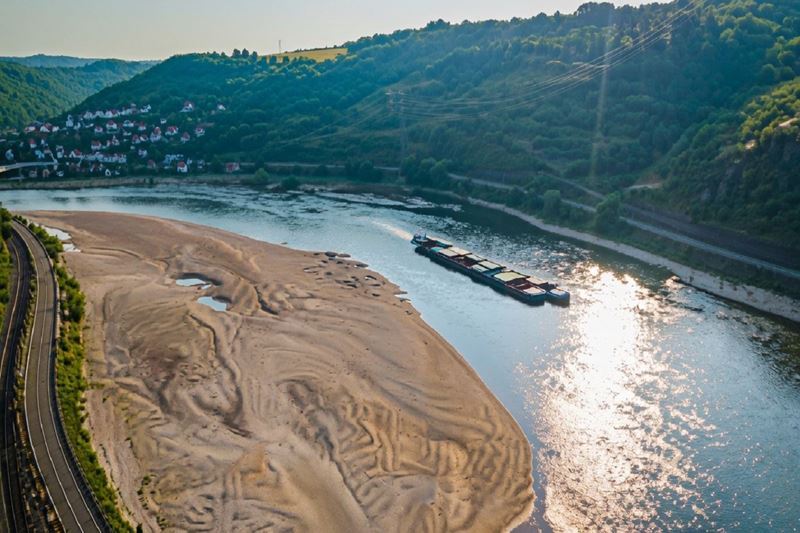
German Steel Association (WV Stahl) Managing Director Kerstin Maria Rippel attended a meeting convened by Federal Transport Minister Steffen Bilger, bringing together representatives from government and industry to discuss the impact of persistently low water levels on German industry.
Rippel described the meeting as an important signal, warning that the ongoing low water levels are creating significant challenges for industry.
She emphasized that reduced water levels pose risks to supply security and Germany's competitiveness as an industrial hub, highlighting the importance of inland waterway transport for the steel sector. According to Rippel, around one-third of the German steel industry's freight volume is transported via inland waterways.
While noting that companies have expanded storage capacity and developed more flexible logistics chains following previous low-water periods, Rippel stressed that businesses cannot compensate on their own for structural shortcomings in the country's transport infrastructure.
She called for faster implementation of measures to improve navigation conditions on the Middle and Lower Rhine, strengthen rail transport as a reliable alternative route, and provide additional rail and road freight capacity during periods of disruption.
Rippel also underlined the need for continued discussions supported by concrete measures and a binding implementation timetable, stating, "Low water levels must not become a permanent competitive disadvantage for Germany's industrial sector."



Comments
No comment yet.